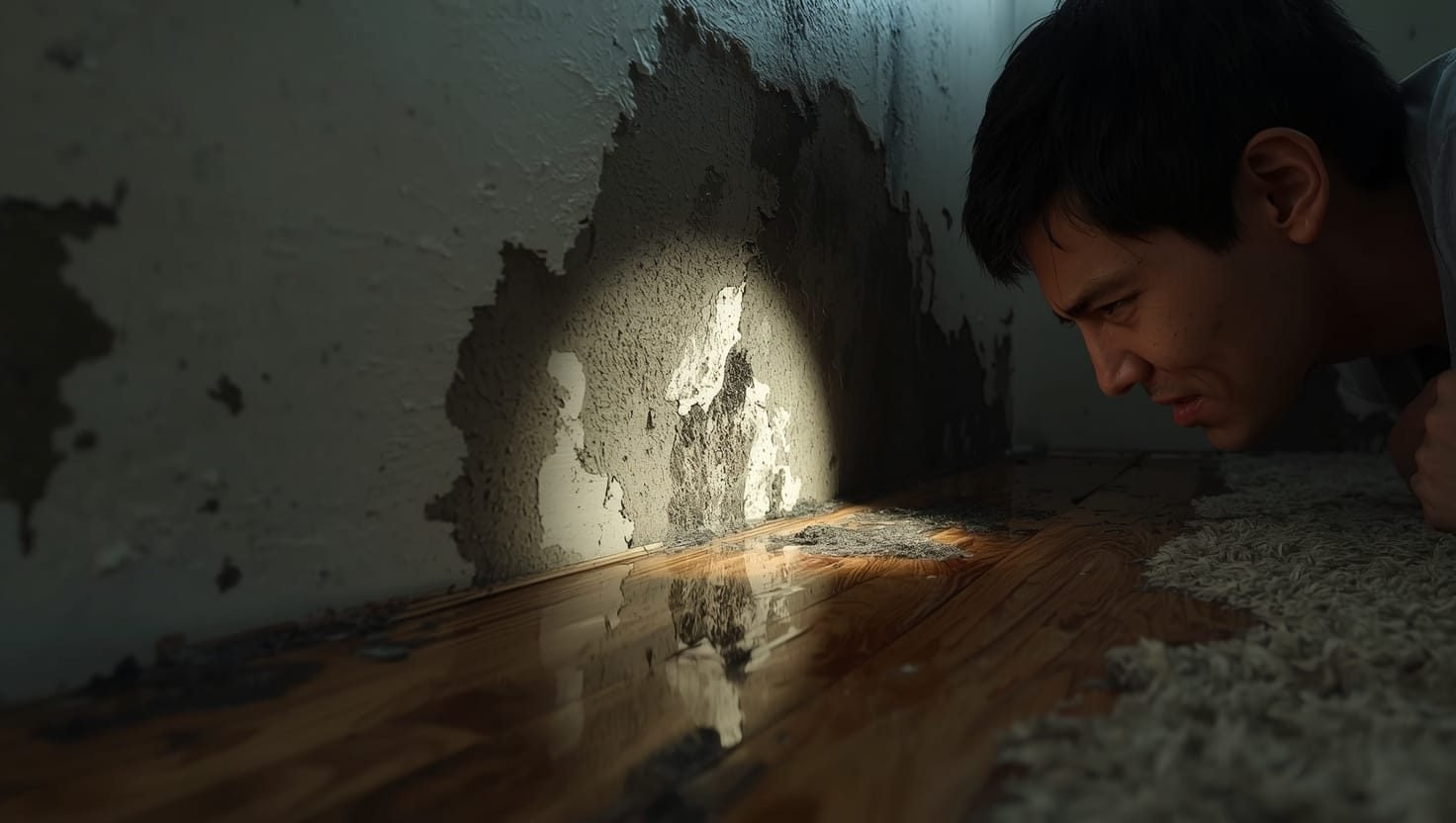
Mold Smell But No Visible Mold? Here’s Why
- Wolfe McNeel
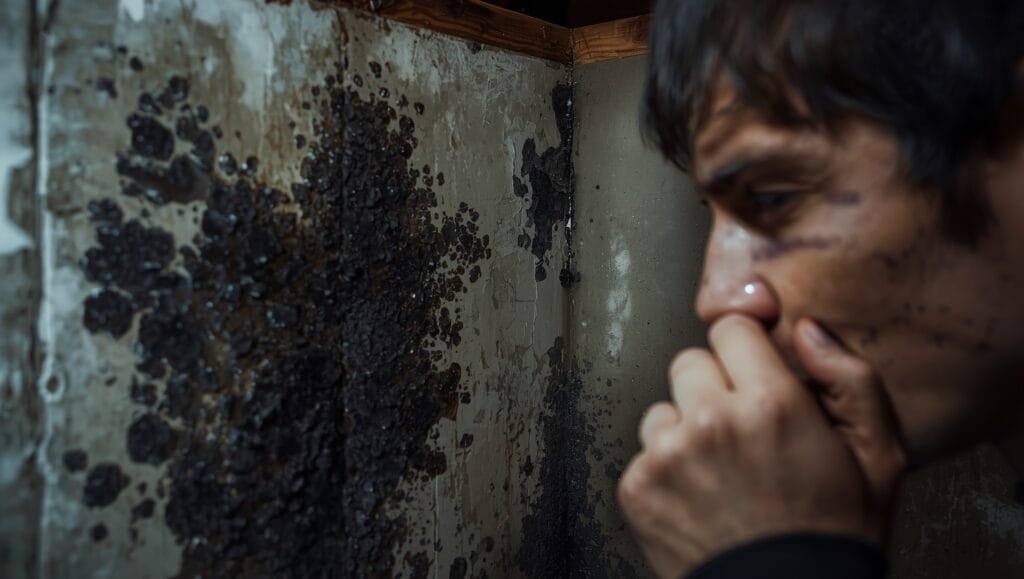
You Smell Mold but Can’t Find It—Here’s What’s Really Happening
That musty odor hits you the moment you walk through the door, but you’ve searched everywhere and found nothing visible.
Your nose isn’t lying to you.
Mold smell without visible mold is one of the most frustrating—and honestly, most dangerous—situations homeowners face.
The problem isn’t that you’re imagining things.
It’s that the mold is hiding where you can’t see it, and by the time the smell becomes obvious, it’s already colonized your walls, crawl spaces, or HVAC system.
This is exactly the scenario Walt Latuik and his team at JetDry in Rochester, NY deal with constantly.
One homeowner called after noticing a persistent musty smell in their bedroom for weeks.
They’d cleaned, aired out the space, and even replaced the carpet—nothing worked.
When Walt’s crew investigated using moisture detection equipment, they found active mold thriving behind the drywall where a slow water leak had been feeding it for months.
The repair cost $8,000 because they waited so long.
If they’d acted on that smell sooner, they would’ve caught it for under $1,500.
Why Mold Produces a Smell Before You Can See It
Mold doesn’t need to be visible to announce its presence.
In fact, you’ll smell it long before any fuzzy growth appears on your walls or ceilings.
Here’s why: mold releases volatile organic compounds (VOCs)—these are microscopic airborne particles that create that distinctive earthy, musty odor you’re picking up on.
Think of it like this—you can smell a skunk from miles away even though you can’t see the spray.
The smell comes from the mold’s metabolic process as it breaks down organic materials like wood, drywall, insulation, and fabrics.
It’s basically the mold’s way of announcing, “Hey, I’m here and I’m eating your house.”
The trapped moisture and poor ventilation in crawl spaces, attics, basements, and wall cavities create the perfect breeding ground for mold to grow silently for weeks or even months before you spot anything.
What makes this sneaky is that mold can be actively growing in spaces you rarely visit or can’t easily access.
Behind bathroom walls, inside your HVAC ducts, under subfloors, or in your attic—these are mold’s favorite hiding spots.
You’ll catch the smell, but the actual colony stays out of sight until it’s become a real problem.
Bottom line: Mold smell is an early warning system—don’t ignore it, because visible growth means the infestation’s already advanced.
Common Hidden Spots Where Mold Grows Without Being Seen
If you’re dealing with mold smell but no visible mold, the culprit is almost always hiding in one of these locations:
Inside Your Walls
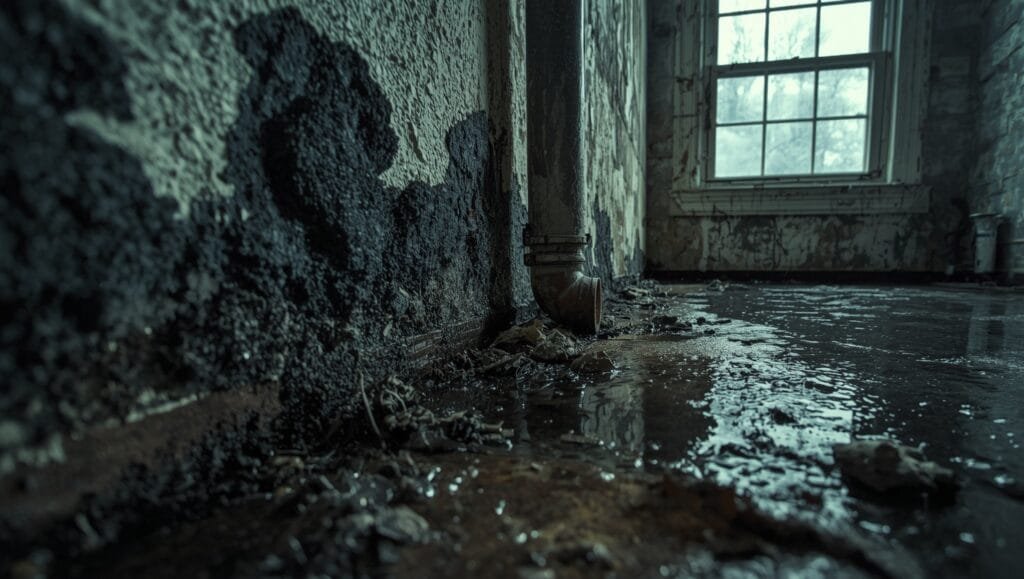
Water leaks from burst pipes, roof damage, or plumbing issues can seep into wall cavities where they sit unnoticed for weeks.
The drywall absorbs the moisture, and mold colonizes the paper backing and insulation behind the surface.
You’ll smell it before you see any discoloration on the wall itself.
By the time staining appears, the mold has already established itself deep in the structure.
HVAC and Air Duct Systems
Your heating and cooling system is basically a moisture-prone tunnel running through your entire house.
If there’s condensation buildup in the ducts—which happens when there’s high humidity or poor ventilation—mold thrives in that dark, damp environment.
The smell gets circulated throughout your home every time the system runs, but you’ll never see the actual growth unless you crawl inside the ductwork.
This is why air duct cleaning is critical if you’re noticing musty odors coming from your vents.
Attics and Crawl Spaces
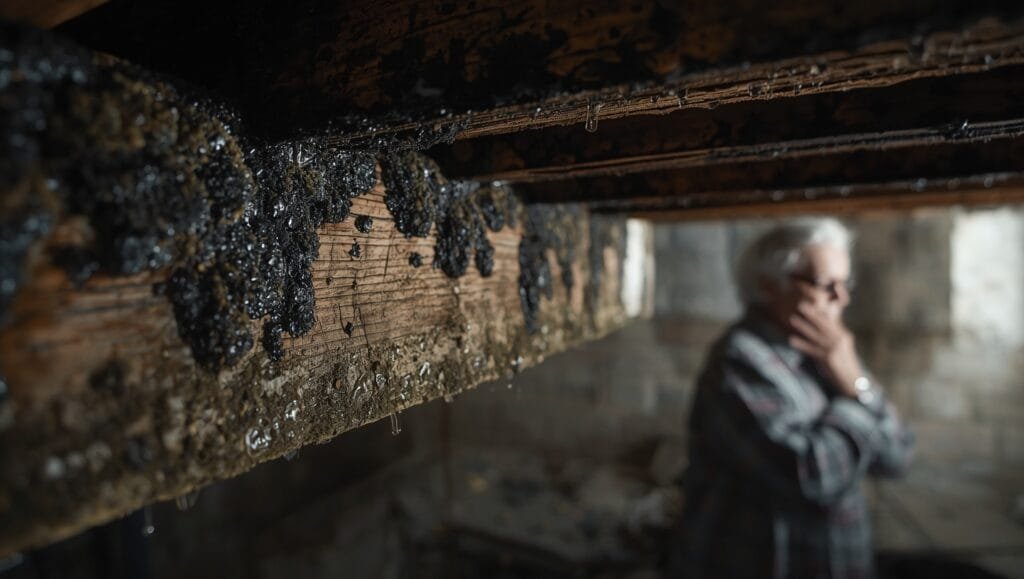
Poor ventilation, roof leaks, and inadequate insulation make attics and crawl spaces breeding grounds for hidden mold.
You might not spend much time up there, so the smell filters down through vents and gaps without you realizing where it’s coming from.
These spaces are dark, poorly ventilated, and often damp—basically a mold resort.
Subflooring and Basement Areas
Water seeping up from the foundation or coming in through cracks creates moisture under your flooring.
The subfloor absorbs it like a sponge, and mold grows in the space between the floor and the structure below.
You’ll catch the smell, especially in basements, but the actual growth is hidden beneath your feet.
Carpet Padding and Insulation
Carpet padding is incredibly absorbent and holds moisture for a long time.
If you’ve had any water event—a leak, spill, or humidity spike—the padding becomes a mold farm within 24-48 hours.
You’ll smell it before you see it, and by the time you realize what’s happening, the padding might need complete replacement along with the carpet.
Bottom line: Hidden mold hides in walls, ducts, attics, and under floors—places you rarely see but your nose can definitely detect.
How Moisture and Humidity Feed Silent Mold Growth
Mold needs three things to survive: organic material, darkness, and moisture.
Your house has plenty of the first two.
The third one—moisture—is what you actually control, and it’s also what determines whether you’ll be dealing with a mold problem or not.
Indoor humidity above 60% creates the perfect environment for mold to thrive without you ever seeing a drop of water.
You don’t need a flooded basement or a burst pipe.
Just consistent dampness, poor air circulation, and warm temperatures, and mold will start colonizing your walls, insulation, and fabrics within days.
This is especially common in bathrooms (steam from showers), basements (groundwater seepage), kitchens (cooking moisture), and laundry rooms (dryer venting issues).
The smell develops first because the mold is actively growing and releasing VOCs into the air.
Visible growth takes longer because it needs more time to accumulate enough mass to become noticeable.
One Rochester homeowner noticed a musty smell creeping through their finished basement during fall.
No water damage, no obvious leaks—just dampness.
They figured it was normal seasonal stuff and didn’t act on it.
By winter, the smell had gotten worse, and when they finally called JetDry’s mold remediation team, they found active mold growth in the insulation behind the paneling.
The moisture was coming from poor basement ventilation and groundwater seeping through the foundation.
The fix required removing affected insulation, installing a dehumidifier, and sealing foundation cracks—all because they waited months after noticing the smell.
Bottom line: High humidity creates mold before visible growth appears; catch the smell early and address moisture sources immediately.
The Real Danger: Why You Can’t Wait on a Mold Smell
Here’s the thing that keeps homeowners up at night: by the time you’re smelling mold, it’s been growing for a while.
Mold doesn’t develop overnight.
It takes time to establish colonies large enough to produce detectable odors.
That smell is essentially mold telling you it’s already won the first battle.
It’s already colonized whatever surface or space it’s hiding in, it’s already reproducing, and it’s already releasing spores into your air.
The longer you wait, the deeper it digs into your structure, the more material it damages, and the more expensive remediation becomes.
Beyond the financial hit, there’s the health factor.
Mold spores don’t stay in one place—they float through your air constantly.
People with respiratory issues, allergies, or compromised immune systems can develop serious symptoms from prolonged mold exposure, even if they can’t see the actual growth.
Kids are especially vulnerable because their lungs are still developing.
A study on mold exposure in kids found that children living in moldy environments had significantly higher rates of asthma and respiratory infections.
The problem is, parents often don’t connect the cough or constant congestion to invisible mold because there’s nothing to see.
The financial damage also compounds quickly.
Mold weakens structural materials—wood rots, drywall deteriorates, insulation loses its effectiveness.
What starts as a $2,000 remediation job can balloon to $15,000 or more if you let it sit for six months.
We’ve seen cases where the cost hit $30,000-$50,000 because homeowners didn’t act on that initial musty smell.
Bottom line: Mold smell means active infestation; waiting turns a manageable problem into a structural and financial nightmare.
How to Confirm You Actually Have Hidden Mold
You’ve got the smell, but you want to know for sure before you call in a professional.
Here’s what you can do on your own to narrow down the source:
Check moisture levels with a simple test.
Grab a moisture meter (they’re cheap, like $20-$40 on Amazon) and test drywall, carpet, wood, and other materials in areas where you smell the odor strongest.
Anything reading above 20% moisture is a red flag for mold growth.
Basements, bathrooms, and crawl spaces are your starting points.
Look for discoloration or soft spots.
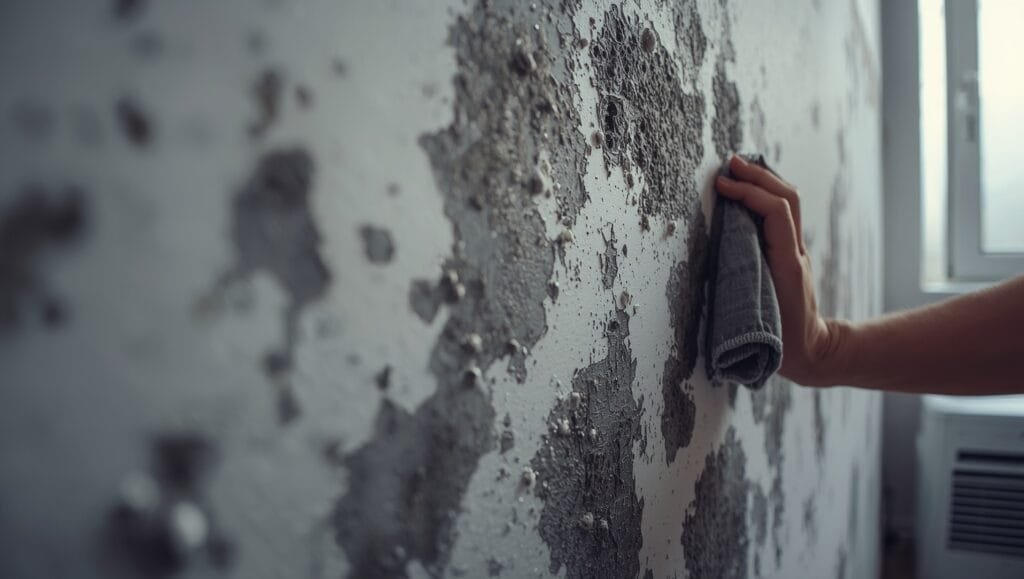
Even if visible mold isn’t obvious, water damage often leaves staining—dark spots, yellowing, or warping on walls and ceilings.
Press your fingers on drywall or wood; if it feels soft or spongy, moisture has compromised the material.
Check your HVAC system.
Pop off your return air grille and look at the filter and interior ductwork.
If you see any black or green growth, or if the filter smells musty, that’s your culprit.
Ductwork is a common source of hidden mold that circulates odors throughout your entire house.
Inspect less-visited spaces.
Attics, crawl spaces, and basement corners rarely get checked until something goes wrong.
Grab a flashlight and look for visible growth, moisture stains, or water damage in these areas.
That’s where mold often establishes itself without anyone noticing.
Run a humidity check.
Use a basic hygrometer (also cheap) to measure the humidity level in different rooms.
Anything above 60% is feeding mold growth.
Consistent high humidity, even without visible water, means mold is either already present or about to be.
If your detective work doesn’t turn up anything concrete, that’s when you call a professional.
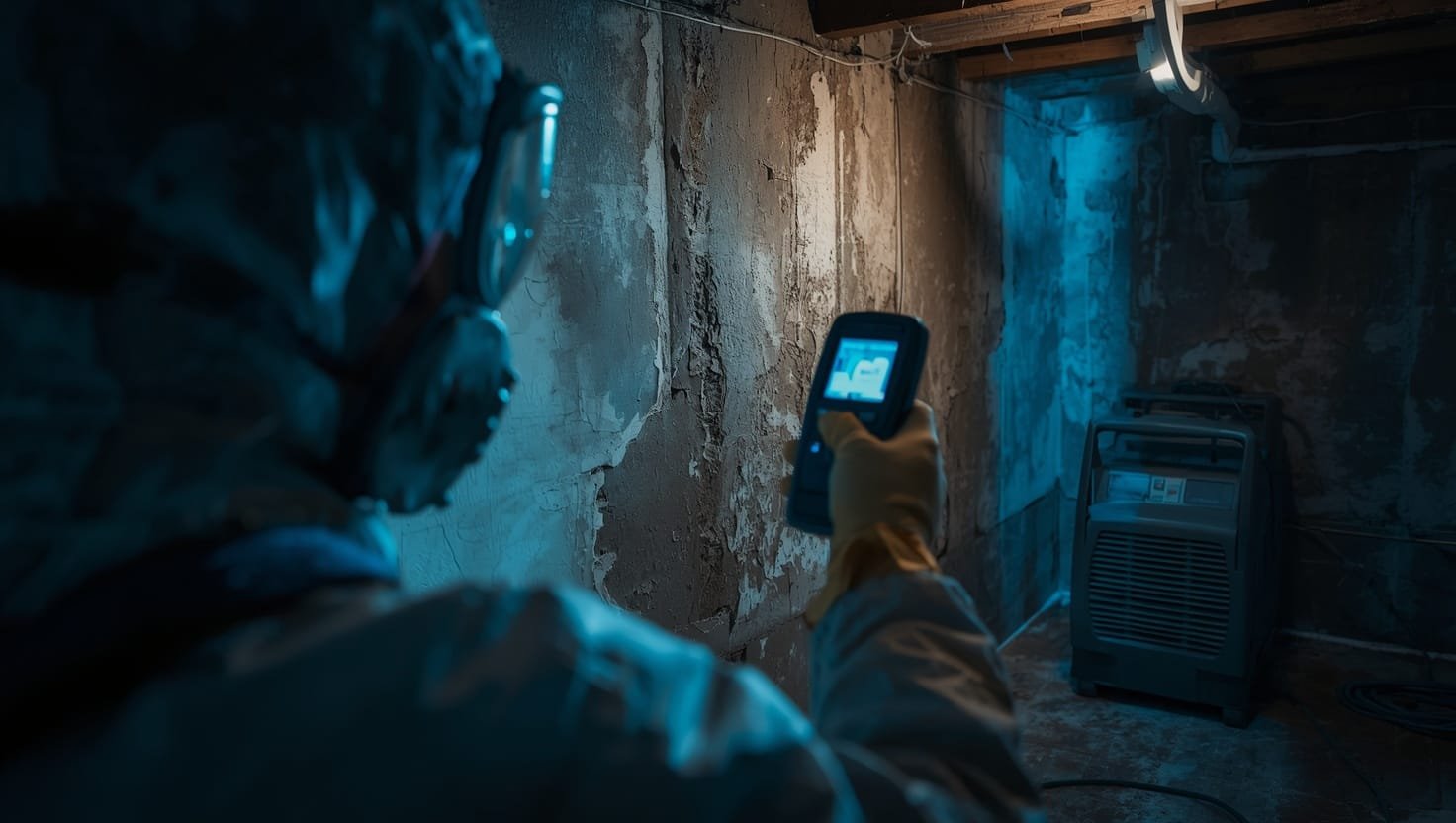
A trained mold inspector uses thermal imaging cameras, moisture detection equipment, and air quality testing to find mold you can’t see.
They’ll pinpoint exactly where the problem is and what caused it.
Bottom line: Moisture meters, visual inspection, and humidity checks help; if nothing shows up, hire a professional with proper equipment.
What Happens Next: Getting Professional Help for Hidden Mold
If you’re confident there’s mold hiding somewhere in your house, don’t try to remediate it yourself.
DIY mold removal almost always fails because you’re not addressing the root cause—the moisture source.
You might kill the visible growth, but the moisture stays, and the mold comes back within weeks.
A professional mold remediation team does three critical things:
1. They find the source.
Is it a roof leak, foundation seepage, burst pipe, or poor ventilation?
If they don’t identify and fix the moisture source, you’re just putting a band-aid on a broken leg.
The mold will return.
2. They contain and remove the contaminated material.
This might mean cutting out sections of drywall, replacing insulation, or cleaning ductwork.
It’s not glamorous, but it’s necessary to stop the infestation and prevent spores from spreading during the removal process.
3. They restore your air quality and structure.
Once the mold is gone and the source is fixed, they verify the space is clean using air quality testing.
They’ll also address any structural damage caused by the moisture and mold.
Walt and his team at JetDry’s emergency water damage restoration services handle this end-to-end.
They’ve been doing this for over 20 years in Rochester, and they’ve seen every hiding spot mold can find.
They use moisture detection technology, thermal imaging, and air quality testing to locate the problem, then they fix it properly—not just the symptom, but the cause.
One basement renovation project in Rochester uncovered a mold situation that had been brewing for years.
The homeowner smelled it but figured it was just basement dampness.
When JetDry came in to assess water damage from a foundation crack, they found mold thriving in the insulation and subfloor.
The foundation was sealed, the insulation was replaced, a dehumidifier was installed, and air quality testing confirmed the problem was resolved.
Total cost was higher than if they’d acted on the smell earlier, but the house was finally safe.
Bottom line: Professional remediation fixes the source and removes contaminated material; DIY attempts always fail because they ignore root causes.
Prevention: Stop the Problem Before the Smell Even Starts
Once you’ve dealt with mold smell but no visible mold, you don’t want to deal with it again.
Prevention is way cheaper than remediation.
Control humidity.
Keep indoor humidity between 30-50%.
Use a dehumidifier in basements, bathrooms, and crawl spaces.
Run exhaust fans in bathrooms and kitchens during and after moisture-producing activities.
Make sure your dryer vents to the outside, not into your attic or crawl space.
Fix water issues immediately.
Roof leaks, plumbing leaks, and foundation seepage are mold’s best friends.
Don’t wait on these.
A small leak today becomes a $20,000 problem in six months.
Ensure proper ventilation.
Your attic, crawl space, and basement need air movement to prevent moisture buildup.
Check that vents aren’t blocked by insulation or debris.
Consider installing a ventilation fan or dehumidifier in problem areas.
Maintain your HVAC system.
Change filters regularly, have ducts cleaned every few years, and make sure condensation isn’t building up in the system.
A clean HVAC system is a mold-free HVAC system.
Monitor humidity levels.
A cheap hygrometer in key areas alerts you to moisture problems before they become mold problems.
If humidity spikes, investigate why and address it.
Bottom line: Control humidity, fix leaks fast, ensure ventilation, maintain HVAC, and monitor—mold prevention beats mold remediation every time.
The Cost of Ignoring Mold Smell but No Visible Mold
Let’s talk numbers, because this is where the reality hits hard.
A basic mold remediation for a localized problem (like a small area of drywall) runs $1,500-$3,000.
That’s if you catch it early, the source is easy to fix, and it hasn’t spread far.
Early action on that musty smell could save you this amount.
A moderate infestation affecting insulation, subflooring, or multiple wall sections runs $5,000-$15,000.
This is where you’re replacing materials, dealing with structural damage, and potentially addressing the underlying moisture source.
A severe infestation—mold in crawl spaces, attics, ductwork, and multiple rooms—can hit $20,000-$50,000 or more.
We’ve seen cases exceed $75,000 when the infestation was left unchecked for a year or more.
That’s not even factoring in potential health costs, decreased home value, or the nightmare of trying to sell a house with a mold history.
Bottom line: Catching mold smell early costs thousands less than ignoring it and dealing with advanced infestation.
What to Do Right Now If You’re Smelling Mold
You’ve read this far, which means you’re serious about solving this problem.
Here’s your action plan:
Step 1: Trust your nose.
If you smell mold, there’s mold.
Your sense of smell is more reliable than your eyes in this case.
Don’t convince yourself it’s normal or that it’ll go away.
Step 2: Reduce humidity immediately.
Open windows, run fans, and turn on any exhaust fans you have.
If you own a dehumidifier, set it up in the area where the smell is strongest.
This won’t eliminate the mold, but it’ll slow its growth while you figure out next steps.
Step 3: Locate the source if you can.
Check bathrooms, basements, crawl spaces, and attics.
Look for moisture, discoloration, or soft spots.
Use a moisture meter if you have one.
This helps you explain the situation to a professional.
Step 4: Call a professional.
Don’t wait on this.
A trained mold inspector can find what you can’t see and recommend the right fix.
It’s an investment now that prevents a much larger investment later.
Walt Latuik and the team at JetDry in Rochester, NY are available 24/7 for exactly this situation.
They’ve spent over 20 years finding and fixing hidden mold problems before they become catastrophic.
They’ll come out, assess the situation with proper equipment, and give you a clear plan to fix it.
No surprises, no pressure—just honest expertise.
Bottom line: Act on mold smell now—don’t wait and hope it resolves itself, because it won’t.
Mold Smell But No Visible Mold—Part 2: What Happens When You Finally Take Action
So you’ve smelled it. You’ve looked everywhere. Now what?
The truth is, waiting another week costs you thousands.
One Rochester homeowner ignored a musty smell in their basement for three months—thought it was just old basement funk.
By the time they called JetDry, the smell had spread to the main floor, and mold had colonized the insulation, subfloor, and part of the foundation wall.
The remediation bill hit $12,000.
If they’d acted when the smell first hit, it would’ve been half that.
This part covers what actually happens when mold smell without visible mold gets treated—and what you need to know before you pick up the phone.
The Testing Phase: How Professionals Find What You Can’t See
When a professional mold inspector shows up, they’re not just sniffing around like you’ve been doing.
They’ve got tools.
Real ones.
A moisture meter tells them exactly where water’s hiding—behind walls, under flooring, inside cavities.
Anything reading above 20% moisture is a red flag.
Thermal imaging cameras show temperature differences that point to moisture buildup you can’t see with your eyes.
Air quality testing captures mold spores floating through your space and identifies the species.
Here’s what usually happens during an inspection:
The technician walks through your home with a moisture meter, testing walls, floors, ceilings, and HVAC components.
They check your attic, crawl space, and basement—the usual suspects.
They look at your roof for leaks, your foundation for cracks, your plumbing for signs of seepage.
They’ll pull ductwork grilles and peer inside your HVAC system.
If they find elevated moisture or visible growth, they document it with photos and thermal images.
The whole process usually takes 1-2 hours for a typical house.
At the end, you get a report that tells you exactly where the mold is, what’s feeding it, and how bad it is.
No guessing.
No assumptions.
One homeowner in Rochester had complained about a musty smell coming from her master bedroom for weeks.
She’d checked the walls, the closet, under the bed—nothing.
When JetDry’s inspector arrived with a moisture meter, they found elevated readings behind the drywall.
Turned out a pinhole leak in a water line had been slowly seeping for months.
The drywall was soft, the insulation was damp, and mold was thriving in the cavity.
Caught early, the fix was straightforward: cut out the affected drywall, replace the pipe, dry everything out, and restore the wall.
Cost: $2,800.
Had she waited six more months? $15,000+.
Bottom line: Professional testing pinpoints hidden mold before it spreads; your nose found the problem, but tools find the source.
Understanding Your Moisture Source—The Real Culprit
Here’s where most homeowners make a mistake: they focus on killing the mold and ignore where the moisture came from.
That’s backwards.
Fix the moisture source, and you fix the mold problem for good.
Ignore it, and the mold’s back in weeks.
Common moisture sources break down like this:
Roof Leaks
Water enters through damaged shingles, flashing, or vents.
It drips into the attic, soaks insulation, and mold colonizes the wood structure.
You smell it downstairs, but the actual problem’s above your head.
Plumbing Leaks
A slow leak in a water line—especially one hidden inside a wall—feeds mold for months without you realizing it.
The drywall absorbs the water, mold grows on the paper backing, and you catch the smell before any staining appears.
Foundation Seepage
Water creeps up through cracks in your foundation or seeps through porous concrete.
Basements and crawl spaces absorb this moisture like a sponge.
High humidity + dampness = mold factory.
Condensation in HVAC Systems
Your air conditioning system cools air, which creates condensation in the ducts.
If humidity’s high and ventilation’s poor, that condensation sits there and feeds mold growth right inside your ductwork.
Every time the system runs, it circulates the smell throughout your entire house.
Poor Ventilation
Bathrooms, kitchens, laundry rooms—these spaces produce moisture.
If exhaust fans aren’t venting outside (or aren’t running at all), that moisture gets trapped.
Add poor air circulation, and you’ve got a breeding ground.
Groundwater Seepage
During heavy rain or spring snowmelt, groundwater pressure pushes water into your basement through foundation cracks or porous walls.
The space stays damp, humidity spikes, and mold follows.
Once the inspector identifies your moisture source, that becomes the priority.
You can’t remediate mold without fixing this.
It’s like treating a wound while the knife’s still in it.
Bottom line: Find the moisture source first—kill the source, and you kill the mold for good.
The Remediation Process: What Actually Happens
After testing and identifying the source, remediation begins.
And yeah, it’s not glamorous.
Step one is containment.
The contaminated area gets sealed off using plastic sheeting and negative air pressure.
This prevents mold spores from spreading to clean areas while the work happens.
Step two is removal.
If drywall’s affected, sections get cut out and disposed of properly.
If insulation’s colonized, it comes out.
If carpet padding’s damp, it gets replaced.
If ductwork’s contaminated, it gets cleaned or replaced.
This is the part that costs money, but it’s necessary.
Step three is moisture control.
The moisture source gets fixed—the roof gets patched, the pipe gets replaced, the foundation gets sealed, the ventilation gets upgraded, or a dehumidifier gets installed.
Without this step, the mold comes back.
Step four is restoration.
New drywall goes up, new insulation gets installed, new carpet padding gets laid down.
The space gets brought back to normal.
Step five is verification.
Air quality testing confirms the mold’s gone and spore levels are back to normal.
You get documentation proving the problem’s been solved.
The timeline varies depending on the scope.
A small localized problem might take a few days.
A whole-house issue could take 1-2 weeks.
A severe infestation affecting crawl spaces and multiple rooms could stretch into several weeks.
One Rochester couple dealt with mold smell in their finished basement for months before calling for help.
The inspection revealed mold in the insulation, behind paneling, and in the subflooring—caused by a combination of poor ventilation and groundwater seepage.
The remediation took two weeks: first week was containment, removal, and drying; second week was installing a sump pump, sealing foundation cracks, adding ventilation, and restoring the space.
Total cost was $9,500.
But the smell was gone, the moisture was controlled, and their basement was safe.
Bottom line: Remediation fixes the source, removes contaminated material, and restores your space—all three steps matter equally.
What Mold Smell Without Visible Mold Costs You—The Real Numbers
Let’s get specific about what you’re looking at financially, because this is where most homeowners get sticker shock.
Early Catch (Smell, No Visible Growth)
$1,500-$3,500.
The mold’s been growing for a few weeks, maybe a few months.
It’s localized to one area—a small section of drywall, some carpet padding, a portion of ductwork.
The moisture source is simple to fix (a small roof patch, a plumbing leak repair).
This is the sweet spot for cost.
Moderate Infestation (Smell + Some Visible Signs)
$5,000-$12,000.
The mold’s had months to establish itself.
It’s spread to multiple materials—drywall, insulation, subflooring, possibly ductwork.
The moisture source is more complex (foundation seepage, extensive roof damage, chronic humidity issues).
You’re replacing more material and addressing bigger structural concerns.
Advanced Infestation (Pervasive Smell, Obvious Growth)
$15,000-$50,000+.
The mold’s been growing for six months or longer.
It’s colonized crawl spaces, attics, multiple rooms, and structural elements.
The moisture source is severe or ongoing (foundation flooding, chronic roof leaks, failed sump pump).
You’re looking at major material replacement, structural repairs, and potentially HVAC system replacement.
The gap between early action and late action is huge.
A $2,000 problem ignored for three months becomes a $10,000 problem.
Ignored for six months? $25,000+.
And that’s just the remediation cost.
You’re not counting decreased home value, health impacts, or the stress of living in a moldy space.
Bottom line: Act on mold smell in the first month—the difference between $3K and $30K.
Why DIY Mold Removal Fails (And Why It Matters)
You’ve probably thought about tackling this yourself.
Maybe grab some bleach, spray the area, and call it done.
Don’t.
Here’s why DIY mold removal fails almost 100% of the time: you’re treating the symptom, not the disease.
You spray bleach on visible growth, and yeah, it kills the mold you can see.
But the moisture that created it is still there.
The spores floating through your air are still there.
The hidden colonies behind your walls are still there.
Within 2-4 weeks, the mold comes back.
Sometimes it comes back worse because you’ve only killed the surface growth—the deeper network survives and rebounds stronger.
Plus, improper mold removal spreads spores.
If you’re not using containment (plastic sheeting, negative air pressure), you’re aerosolizing mold particles and contaminating the rest of your house while you work.
That’s not fixing the problem—that’s spreading it.
There’s also the liability issue.
If you do a DIY removal and it doesn’t work, you can’t claim it on insurance.
If you cause secondary damage (like spreading mold to clean areas), that’s on you.
If someone in your house gets sick from mold exposure during your botched DIY job, that’s your responsibility.
One homeowner in Rochester found mold in their basement and decided to handle it themselves.
They bought some mold killer, sprayed the affected areas, and thought they were done.
Three weeks later, the smell came back—worse.
When they finally called JetDry, the inspection revealed the original moisture source (a crack in the foundation) had never been fixed.
The mold had spread deeper into the insulation and subfloor during the three weeks they waited.
The professional remediation ended up costing $8,000 instead of the $3,000 it would’ve cost if they’d called right away.
Bottom line: DIY mold removal fails because it ignores the moisture source; you’ll spend twice as much fixing the damage.
How to Choose a Mold Remediation Company (And Avoid Getting Scammed)
Not all mold remediation companies are created equal.
Some are legit.
Some are overpriced.
Some are just looking to upsell you on work you don’t need.
Here’s what to look for:
Credentials and Certifications
Ask if they’re certified by the Institute of Inspection, Cleaning and Restoration Certification (IICRC).
This means they’ve been trained in proper mold remediation standards.
It’s not a legal requirement, but it’s a good sign they know what they’re doing.
Insurance and Licensing
Make sure they’re licensed to do remediation work in your state.
Ask for proof of general liability insurance and workers’ compensation.
If something goes wrong, you want to know they’re covered.
Detailed Inspection and Written Plan
A reputable company will do a thorough inspection (moisture testing, air quality testing, visual inspection) and give you a written remediation plan.
The plan should specify exactly what work needs to be done, where, and why.
If they’re vague or won’t put it in writing, walk away.
References and Reviews
Ask for references from past clients.
Check online reviews on Google, Yelp, and the Better Business Bureau.
If they’ve got a history of happy customers, that says something.
If they’ve got a bunch of complaints about overcharging or incomplete work, that says something else.
Transparent Pricing
Get a detailed estimate that breaks down labor, materials, and any additional costs.
If they give you a vague price with lots of “may include” language, that’s a red flag.
You want to know what you’re paying for upfront.
No Pressure Sales Tactics
Legitimate companies don’t pressure you into work you don’t need.
They explain what they found, what needs to be done, and why.
They answer your questions.
They give you time to think about it.
If they’re pushing you to sign a contract on the spot, be suspicious.
Warranty on Work
Ask if they guarantee their work.
A good company will stand behind their remediation and warranty it for a set period (usually 1-2 years).
If the mold comes back because they didn’t fix the moisture source, they should make it right.
Walt Latuik and his team at JetDry in Rochester have been doing this for over 20 years.
They’re IICRC certified, fully insured, and they’ve built their reputation on doing the job right the first time.
They don’t upsell.
They don’t pressure.
They inspect thoroughly, explain what they find, and deliver honest pricing.
That’s why homeowners in Rochester keep calling them back.
Bottom line: Check credentials, get it in writing, verify references, and avoid pressure—a good company earns your trust.
After Remediation: Keeping Mold Smell From Coming Back
Once the remediation’s done and your home’s certified mold-free, your job isn’t over.
You need to maintain the conditions that keep mold away.
This means staying on top of humidity.
Get a cheap hygrometer and keep humidity between 30-50%.
If it creeps above 60%, run a dehumidifier.
Mold loves humidity, so controlling it is your best defense.
It means keeping your HVAC system clean.
Change filters every 3 months.
Have ducts cleaned every 2-3 years.
Keep condensation from building up in your system by ensuring proper drainage and ventilation.
It means fixing leaks immediately.
A small roof leak, a plumbing drip, a foundation crack—don’t wait.
Water + time = mold.
Address it now.
It means maintaining ventilation.
Bathroom fans should run during and 20-30 minutes after showers.
Kitchen exhaust should vent outside, not into your attic.
Dryer vents should go outside.
Attic and crawl space vents should be clear and unobstructed.
It means monitoring problem areas.
If you had mold in your basement, keep an eye on it.
Check for new moisture or smell changes.
If you had mold in your attic, inspect it during seasonal transitions when moisture patterns change.
One Rochester homeowner had a mold problem in their crawl space that got remediated professionally.
They fixed the foundation seepage, installed a dehumidifier, and improved ventilation.
Three years later, they’re still monitoring humidity and keeping the space dry.
Zero mold issues since remediation.
That’s what maintenance looks like.
Bottom line: Control humidity, maintain HVAC, fix leaks fast, ensure ventilation—prevention beats remediation every time.
Frequently Asked Questions About Mold Smell Without Visible Mold
How long does it take for mold smell to go away after remediation?
Usually 24-48 hours after the contaminated material is removed and the space is dried out.
If the smell lingers beyond that, it means either the remediation wasn’t complete or there’s another moisture source feeding new growth.
Get a professional to recheck.
Can mold smell be dangerous even if there’s no visible mold?
Yes.
The smell comes from mold spores and volatile organic compounds (VOCs) that are floating through your air.
Breathing these in—especially for people with allergies, asthma, or compromised immunity—can cause respiratory issues, headaches, and other health problems.
Visible or not, the mold is releasing harmful particles.
What if I have mold smell but my inspector can’t find anything?
This happens.
Sometimes the mold is so deep inside walls or ductwork that standard testing doesn’t catch it.
Get a second opinion from another certified inspector.
Ask them to do thermal imaging and air quality testing specifically.
If two professionals can’t find it, the smell might be coming from something else (dead animal, sewer gas, etc.), but that’s rare.
How much will mold remediation cost me?
It depends on scope and source.
Early catch: $1,500-$3,500.
Moderate infestation: $5,000-$12,000.
Advanced infestation: $15,000-$50,000+.
Get a detailed estimate from a professional before committing to anything.
Will my homeowners insurance cover mold remediation?
Most standard policies don’t cover mold caused by poor maintenance or chronic moisture issues.
But if the mold resulted from a sudden, accidental event (like a burst pipe or roof leak), insurance might cover it.
Check your policy and call your agent.
Don’t assume—verify.
Can mold smell come back after professional remediation?
Only if the moisture source wasn’t fixed or if new moisture problems develop.
A professional remediation should address both the mold and the cause.
If it comes back, that’s on them—they should warranty their work.
Your Next Step: Act on Mold Smell Now
You’ve read through what actually happens when mold smell without visible mold gets treated.
You know the costs.
You know the process.
You know why waiting makes everything worse.
Here’s the reality: the smell isn’t going away on its own.
Your nose is telling you something real is happening inside your walls or ductwork.
Every day you wait, the mold’s getting deeper, the damage is spreading, and the bill is growing.
Walt Latuik and the team at JetDry’s mold remediation services in Rochester have handled thousands of cases just like yours.
They’ve caught mold early and saved homeowners thousands.
They’ve also seen what happens when people wait—and it’s not pretty.
If you’re in Rochester or the surrounding area and you’re smelling mold, don’t guess.
Don’t DIY it.
Don’t hope it goes away.
Get a professional inspection.
Contact JetDry now and schedule an inspection.
They’re available 24/7 for exactly this situation.
You’ll get answers, a clear plan, and honest pricing.
No surprises.
No pressure.
Just real help from people who’ve been doing this for over two decades.
Your home’s health depends on it.
Your family’s health depends on it.
Your wallet definitely depends on it.
Bottom line: Mold smell means action—call a professional now, not next month.
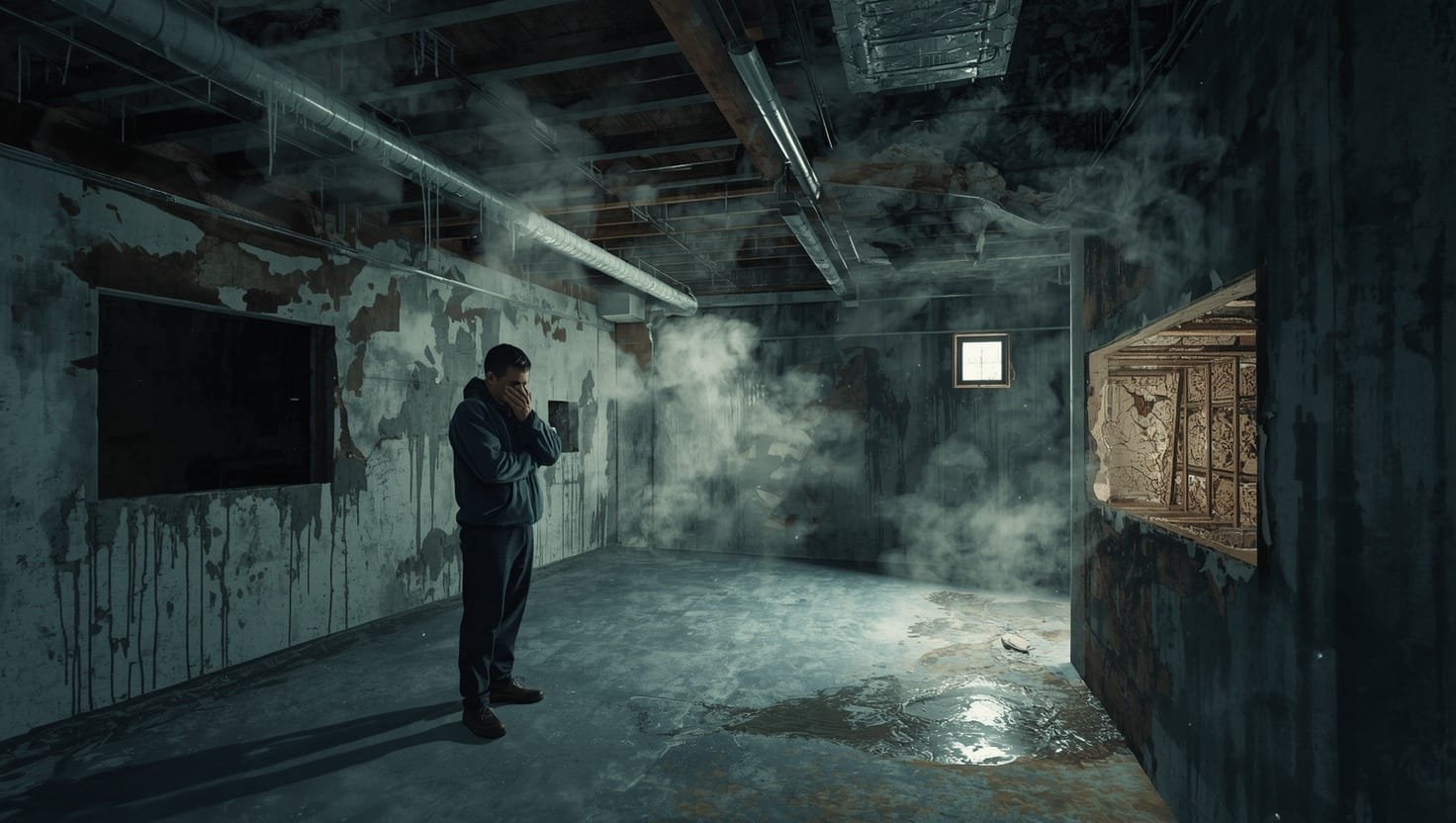
Your Mold Smell Gets Worse Over Time—Here’s Why and What That Means
The smell was faint last month.
Now it’s hitting you the moment you walk through the door.
That’s not your imagination getting worse—it’s the mold actually advancing.
One Rochester homeowner ignored a subtle musty odor in their attic for eight weeks.
They figured it was seasonal dampness.
By week nine, the smell had intensified so much that visitors commented on it immediately.
When JetDry’s team finally inspected, they found mold colonization had tripled in size.
The cost jumped from an estimated $3,500 to $9,200 because they waited for the smell to become unbearable.
That progression tells you something critical: mold smell without visible mold isn’t staying static.
It’s getting worse, spreading deeper, and consuming more of your structure with each passing week.
Understanding why this happens—and what it means for your home and wallet—changes everything about how you respond.
Why Mold Smell Intensifies as the Colony Grows
Mold releases volatile organic compounds (VOCs) as it metabolizes organic material.
The more mold grows, the more VOCs it produces.
It’s a direct correlation—bigger colony, stronger smell.
Think of it like this: a single mold spore colony the size of a dime might produce a faint odor you catch only in certain rooms or at certain times of day.
A colony the size of a dinner plate produces a smell that fills multiple rooms and lingers constantly.
A colony spreading across an entire section of drywall or insulation? That’s the smell that makes your eyes water.
The problem is timing.
Mold grows exponentially in the right conditions—warm, dark, damp spaces feed it like a growth hormone.
What starts as a small, barely-noticeable smell can double in intensity within 2-3 weeks if moisture keeps feeding it.
By the time the smell becomes impossible to ignore, the mold’s already established itself deep into whatever surface it’s colonizing.
A basement in a Rochester home had a subtle musty smell in early spring.
The homeowner noticed it but didn’t act.
By late spring, the smell had become strong enough to reach the upstairs living areas.
The inspection revealed mold had spread from one wall cavity to three separate locations—behind drywall, in insulation, and in carpet padding.
The progression took about six weeks.
The remediation bill was $14,000.
Bottom line: Intensifying mold smell means the colony’s expanding fast—delay costs you exponentially.
The Danger Zone: When Mold Smell Becomes a Health Red Flag
As the smell gets stronger, so does your exposure to mold spores.
You’re not just smelling something unpleasant anymore—you’re breathing in airborne particles that can trigger real health problems.
People with asthma, allergies, or respiratory sensitivities feel this first.
They might develop a persistent cough, increased wheezing, or congestion that doesn’t respond to typical treatments.
Kids are especially vulnerable because their lungs are still developing—chronic mold exposure can actually affect their lung capacity long-term.
The insidious part is that people often don’t connect the symptoms to mold because there’s nothing visible to blame.
They think it’s seasonal allergies or a lingering cold.
They don’t realize they’re living in an environment where mold spores are circulating through their air constantly, settling in their lungs every time they breathe.
Studies on mold exposure in children show increased rates of asthma, bronchitis, and upper respiratory infections in homes with active mold growth—even when the mold’s hidden.
The smell is essentially your body’s warning system.
When it intensifies, that warning’s getting louder.
Bottom line: Worsening mold smell means increasing spore exposure; your family’s lungs are at stake.
How Hidden Mold Spreads to New Areas
Mold doesn’t stay confined to one spot.
It spreads through moisture pathways, air circulation, and spore dispersal.
When you’ve got a moisture source feeding one colony, that same moisture often creates conditions for new colonies to establish elsewhere.
A roof leak, for example, doesn’t just affect one spot in the attic.
Water runs along roof framing, soaks into insulation in multiple areas, and creates a network of damp conditions.
Mold colonizes each of these areas independently.
From the homeowner’s perspective, the smell seems to be coming from everywhere—because it is.
HVAC systems make this worse.
If mold’s growing in your ductwork or around your air handler, the system circulates spores throughout your entire house.
You might smell it strongest in bedrooms, living areas, or bathrooms—wherever the air circulation pattern carries it.
But the actual source could be hidden inside the ducts or in the crawl space where the system runs.
Water seepage in basements and crawl spaces creates similar problems.
Moisture wicks up through concrete, spreads across multiple surfaces, and feeds mold growth in different locations simultaneously.
The smell intensifies not just because one colony’s getting bigger, but because you’re developing multiple colonies at once.
Bottom line: Hidden mold spreads to new areas; intensifying smell means multiple colonies, not just one.
The Timeline: When You Should Expect the Smell to Worsen
If you’re tracking a mold smell but haven’t called a professional yet, knowing the timeline helps you understand what’s happening.
Weeks 1-2:
The smell is subtle, maybe barely noticeable.
Mold’s been growing for a short time, but the colony is still small.
This is the window where early intervention saves the most money—we’re talking $1,500-$3,000 for remediation.
Weeks 3-6:
The smell becomes noticeable, especially in certain rooms or at certain times.
The colony’s doubled or tripled in size.
Moisture continues feeding it because the source hasn’t been fixed.
Remediation cost jumps to $5,000-$8,000.
The longer you wait in this window, the higher the cost climbs.
Weeks 7-12:
The smell is strong and persistent.
Multiple rooms smell musty.
Visitors comment on it.
The colony’s spread to new areas or multiple surfaces.
You’re looking at $10,000-$20,000+ for remediation.
Structural damage might be starting—drywall softens, wood begins to rot, insulation loses effectiveness.
Weeks 13+:
The smell is overwhelming.
You might notice visible discoloration, soft spots on walls, or actual growth.
Mold’s had months to establish itself and cause damage.
Remediation costs exceed $20,000 and can hit $50,000+ depending on how far it’s spread.
Structural repairs become necessary.
This timeline isn’t universal—it depends on temperature, humidity, the moisture source, and the type of mold.
But the pattern’s consistent: waiting makes everything worse, faster.
Bottom line: Act in week one; waiting until week eight costs you 5-10x more.
Why Your Initial Attempts to Fix It Don’t Work
Most people try something when the smell first intensifies.
They open windows, run fans, buy air purifiers, or spray air freshener.
None of it works because none of it addresses the actual problem.
Opening windows and running fans might temporarily dilute the smell, but they don’t kill the mold or fix the moisture source.
As soon as you close the windows or turn off the fans, the smell comes back—often stronger than before because you’ve just increased air circulation without removing the source.
Air purifiers and HEPA filters catch some spores, but they don’t stop the mold from growing.
You’re filtering the air while the mold continues colonizing your walls.
It’s like bailing water out of a boat while the hole in the bottom stays open.
Bleach, mold killers, and enzymatic sprays seem promising.
You spray them on surfaces where you think the mold is, and for a day or two, the smell might decrease slightly.
But the mold’s hidden behind drywall, inside insulation, or in ductwork—places these sprays can’t reach.
The surface treatment kills nothing, and the colony keeps growing underneath.
One homeowner in Rochester tried three different air freshening products over four weeks.
The smell kept getting worse.
When they finally called JetDry, the inspection revealed mold had colonized the insulation in their crawl space—completely inaccessible to any DIY spray treatment.
The failed attempts had cost them $200 and four weeks of worsening conditions.
Bottom line: DIY fixes fail because they treat symptoms, not the source; mold keeps growing underneath.
What Intensifying Smell Tells You About Moisture Control
If the smell’s getting worse, your moisture problem is either ongoing or you haven’t identified the source yet.
An ongoing moisture source means water’s still entering your home—through a roof leak that hasn’t been patched, a foundation crack that keeps seeping, a plumbing leak that’s still dripping, or consistently high humidity that never gets controlled.
As long as that moisture keeps coming, the mold keeps growing.
A hidden moisture source means water’s entering somewhere you haven’t checked yet.
Maybe it’s behind walls where you can’t see it.
Maybe it’s in your HVAC system or crawl space.
Maybe it’s seeping up from the foundation in areas you rarely visit.
The mold’s thriving because the moisture source is still active and still feeding it.
Either way, the intensifying smell is your indicator that moisture control is failing.
That’s what you need to fix first.
Kill the moisture source, and you starve the mold.
Ignore the moisture source, and the mold will keep coming back no matter what else you do.
Bottom line: Worsening smell means moisture control’s failing; find and fix the source now.
The Structural Damage That Happens While You Wait
While you’re noticing the smell get worse, mold’s quietly destroying your home’s structure.
Drywall absorbs moisture and provides perfect food for mold.
As the mold colonizes the paper backing and gypsum core, it weakens the material.
After a few weeks of mold growth, drywall becomes soft and spongy.
After a few months, it loses structural integrity entirely.
You might notice soft spots when you press on walls, or you might not notice anything until someone leans against the wall and their hand goes through it.
Wood framing, insulation, and subflooring all follow the same pattern.
Mold breaks down the material’s cellular structure, making it weaker and more prone to collapse.
What started as a moisture problem becomes a structural problem becomes an expensive renovation.
A basement renovation in Rochester uncovered mold damage that had been brewing for over a year.
The homeowner had noticed a musty smell but figured it was normal basement funk.
By the time they decided to finish the basement, the subfloor was rotted, the insulation was destroyed, and the concrete had mold blooming across its surface.
The cost to fix it—removing damaged materials, treating the foundation, replacing everything—came to $18,000.
Bottom line: Waiting means structural damage; materials weaken while you delay.
When to Call a Professional—Not When It’s Too Late
You don’t need to wait until the smell is overwhelming and visible growth appears.
In fact, waiting that long is exactly what costs you the most money.
Call a professional as soon as you notice the smell intensifying over a week or two.
Don’t wait for it to become unbearable.
Don’t wait for visible growth.
Don’t wait for health symptoms to develop.
Call early, when the problem’s still manageable.
A professional inspection identifies where the mold is, what’s feeding it, and how fast it’s spreading.
They can catch it before it spreads to multiple areas.
They can address the moisture source before structural damage becomes severe.
They can provide a treatment plan that actually works because it targets the root cause, not just the symptom.
Walt and his team at JetDry’s mold remediation services handle this every day in Rochester.
They’ve seen the difference between catching mold early and catching it late.
The early catches cost thousands less and cause way less damage.
The late catches—the ones where homeowners waited until the smell was unbearable—those are the $30,000+ jobs that could’ve been $4,000 if they’d acted sooner.
Bottom line: Call a pro when smell intensifies, not when it’s catastrophic; timing saves thousands.
What to Expect When You Finally Call for Help
When you contact a professional about mold smell that’s getting worse, here’s what happens.
They’ll schedule an inspection—usually within 24 hours if you’re in the Rochester area.
JetDry offers 24/7 emergency response, so you don’t have to wait days while the mold keeps spreading.
During the inspection, they’ll use moisture meters to find where water’s hiding, thermal imaging to identify temperature anomalies that point to moisture, and air quality testing to measure spore levels.
They’ll check your roof, foundation, plumbing, HVAC system, and crawl spaces.
They’ll document everything with photos and thermal images.
At the end, you’ll get a detailed report that tells you exactly where the mold is, what caused it, how bad it is, and what the fix will cost.
No guessing.
No surprises.
Just honest assessment and a clear action plan.
Then remediation happens fast.
The contaminated area gets contained so spores don’t spread while work’s happening.
Affected materials get removed.
The moisture source gets fixed.
Everything gets dried out and verified clean with air quality testing.
The whole process—inspection to completion—usually takes 1-3 weeks depending on scope.
Compare that to the months you might spend dealing with worsening smell and increasing damage if you keep waiting.
Bottom line: Professional inspection catches what’s hidden; remediation stops the spread fast.
FAQ: Mold Smell Getting Worse
How fast does mold spread once you smell it?
Mold can double in size every 2-3 weeks in ideal conditions—warm, dark, damp spaces.
If you’re smelling it, it’s already established; waiting another month means a significantly larger infestation.
Can I stop mold from spreading by controlling humidity alone?
Controlling humidity slows growth but doesn’t stop it if the moisture source is still active.
A slow leak, foundation seepage, or condensation in HVAC ducts will keep feeding mold even if you run a dehumidifier.
You need to fix the source.
What’s the difference between a faint mold smell and a strong one?
The intensity of the smell correlates directly to colony size and spore concentration.
A faint smell means early-stage growth; a strong smell means the infestation’s advanced and spreading.
Is it normal for mold smell to come and go?
No—if you’re noticing it intermittently, it usually means air circulation patterns are shifting.
When the HVAC system runs, you smell it more.
When windows are open, you smell it less.
But the mold’s still there, still growing.
Will opening windows make the smell go away?
Temporarily, yes—it dilutes the smell by increasing air circulation.
But it doesn’t kill the mold or fix the moisture source, so the smell returns as soon as you close the windows.
Don’t Wait Until the Smell Is Unbearable
If you’re noticing the mold smell intensifying, that’s your signal to act now.
Not next week.
Not next month.
Now.
Every week you wait costs you thousands more in potential remediation and structural damage.
Every week the smell gets stronger, mold’s spreading deeper, and your family’s breathing in more spores.
Walt Latuik and the team at JetDry’s emergency water damage restoration services in Rochester know exactly what needs to happen.
They’ve spent over 20 years catching mold problems early and stopping them before they become catastrophic.
Contact JetDry now for a professional inspection.
They’re available 24/7, they respond fast, and they’ll give you straight answers about what you’re dealing with.
The cost of inspection is minimal compared to what you’ll pay if you keep waiting.
Your home’s health and your family’s health depend on acting now—not when the smell becomes unbearable.