Mold Risks For Immunocompromised People: Here’s Why
- Wolfe McNeel
Mold Risks for Immunocompromised People: Why You Can’t Afford to Wait
Your immune system is already fighting battles you can’t see.
Adding mold exposure to that equation?
That’s a fight your body can’t win.
If you’re immunocompromised—whether from HIV/AIDS, chemotherapy, organ transplant, autoimmune conditions, or medications that suppress immunity—mold isn’t just an annoyance.
It’s a serious health threat.
While most people brush off a little mold in the basement or bathroom, your body processes it completely differently.
Mold spores that might cause mild allergies in someone with a healthy immune system can trigger severe infections, respiratory collapse, or even life-threatening complications in you.
This isn’t fear-mongering.
It’s reality.
And if you live in Rochester, NY or the surrounding area and you’ve spotted mold, you need to act now—not next week.
Professional mold remediation isn’t optional for you.
It’s essential.
Why Your Immune System Makes You Vulnerable to Mold
Here’s the thing about mold: it grows almost everywhere.
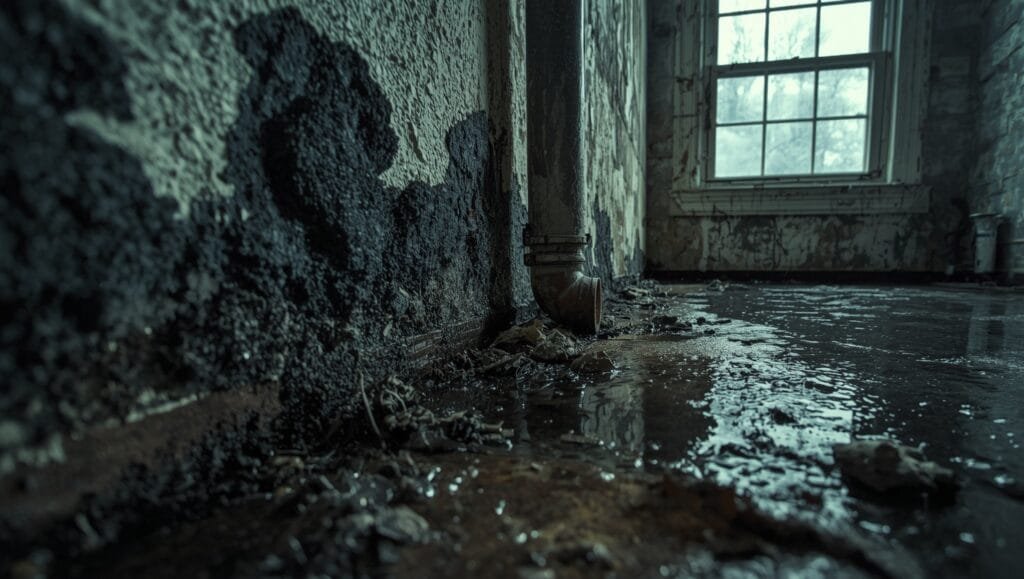
Basements, attics, crawl spaces, air ducts, bathroom tiles—anywhere moisture lingers.
For people with healthy immune systems, exposure to common household molds like Aspergillus, Penicillium, or Cladosporium rarely causes serious problems.
Maybe some sneezing, itchy eyes, or a mild cough.
But your immune system works differently.
When you’re immunocompromised, your body’s defense mechanisms are weakened or compromised—either temporarily or long-term.
This means:
- You can’t fight off mold spores as effectively as others can.
- Spores that land in your lungs can colonize and multiply without resistance.
- Mold infections can spread deeper into your respiratory system or bloodstream.
- Recovery takes longer, and complications develop faster.
The CDC warns that immunocompromised individuals face elevated risk of invasive mold infections—especially from Aspergillus fumigatus, a common indoor mold.
This isn’t theoretical.
People with weakened immunity have ended up in hospitals with aspergillosis (a serious lung infection) after prolonged mold exposure in their own homes.
Bottom line: Your compromised immunity means mold exposure carries risks others never face—period.
The Specific Health Threats Mold Poses to You
Let’s get specific about what can happen when you’re immunocompromised and exposed to mold:
Aspergillosis (Invasive Mold Infection)
This is the big one.
Aspergillus fumigatus spores are tiny—small enough to travel deep into your lungs.
In healthy people, the immune system kills these spores before they settle.
In immunocompromised people, they can take root and cause invasive aspergillosis—a serious infection that spreads through lung tissue and potentially into the bloodstream.
Symptoms include persistent cough, fever, chest pain, and shortness of breath.
Left untreated, it can be fatal.
And yeah, it sounds extreme—but it happens.
People with HIV counts below 50 cells, organ transplant recipients, and those on certain immunosuppressive drugs are at highest risk.
Allergic Reactions and Asthma Exacerbation
Even if you don’t develop an invasive infection, mold exposure can trigger severe allergic reactions.
Your weakened immune system overreacts to mold proteins, causing inflammation in your airways.
If you have asthma or chronic lung disease, this can escalate quickly into a dangerous situation—wheezing, difficulty breathing, and potentially asthma attacks that land you in the emergency room.
Sinusitis and Chronic Respiratory Issues
Prolonged mold exposure often leads to chronic sinusitis (sinus inflammation) and persistent respiratory problems.
For immunocompromised people, these infections are harder to clear and more likely to recur or worsen over time.
Secondary Infections
Mold-damaged airways are entry points for bacterial and viral infections.
Once mold compromises your respiratory lining, secondary infections can follow—pneumonia, bronchitis, or other serious complications.
Bottom line: Mold doesn’t just irritate you—it can colonize, infect, and spread in ways healthy immune systems prevent.
Where Mold Hides in Your Home (And Why You Might Not See It)
Here’s the dangerous part: you don’t always know mold is there.
Visible mold in the bathroom is obvious.
But mold thrives in hidden spaces where moisture accumulates and oxygen is limited.
Common hiding spots include:
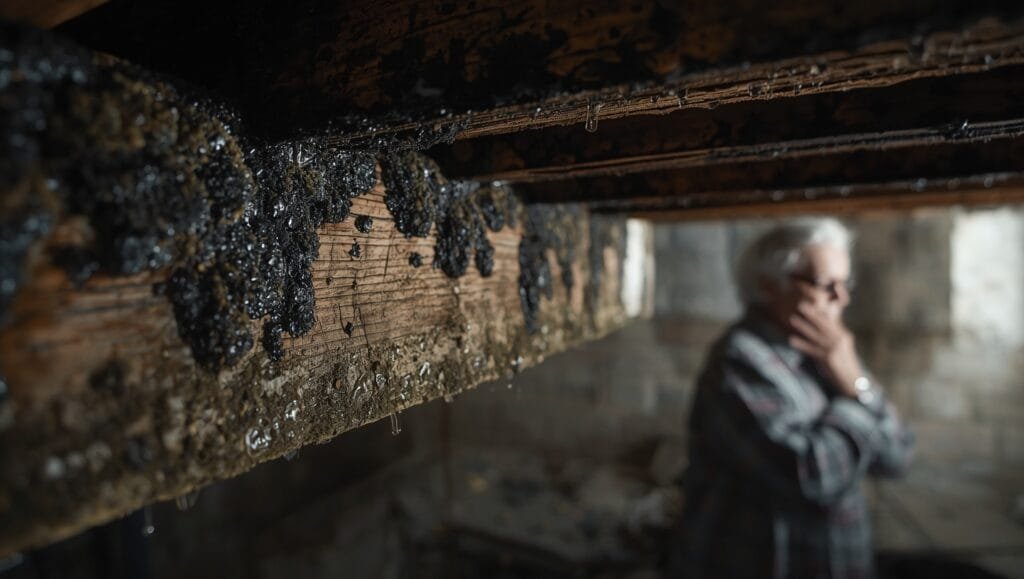
- Attics: Roof leaks, poor ventilation, and condensation create perfect conditions.
- Basements and crawl spaces: Groundwater seepage, poor drainage, and humidity are mold magnets.
- Air ducts and HVAC systems: Moisture trapped inside ductwork spreads mold spores throughout your entire home every time the system runs.
- Walls and insulation: Water damage from burst pipes, leaks, or flooding can hide behind drywall for months.
- Under flooring: Carpet padding and subfloors absorb water and become breeding grounds.
- Around windows and doors: Condensation and poor sealing create moisture pockets.
One homeowner in Rochester discovered mold in their attic three months after a roof leak.
They’d assumed the damage had dried out.
It hadn’t.
By the time they found it, the mold had spread across 40% of the attic space.
For an immunocompromised resident, that level of exposure could’ve been catastrophic.
The problem: mold doesn’t announce itself.
You won’t know it’s actively releasing spores into your air unless you’re looking for it—and most people aren’t.
Bottom line: Mold hides where you can’t see it, spreading silently until it becomes a serious problem.
Why “Just Clean It” Doesn’t Work for Immunocompromised People
You might think: “I’ll just buy some bleach and clean it myself.”
Don’t.
This is where a lot of immunocompromised people make a dangerous mistake.
Here’s why DIY mold cleanup is risky for you:
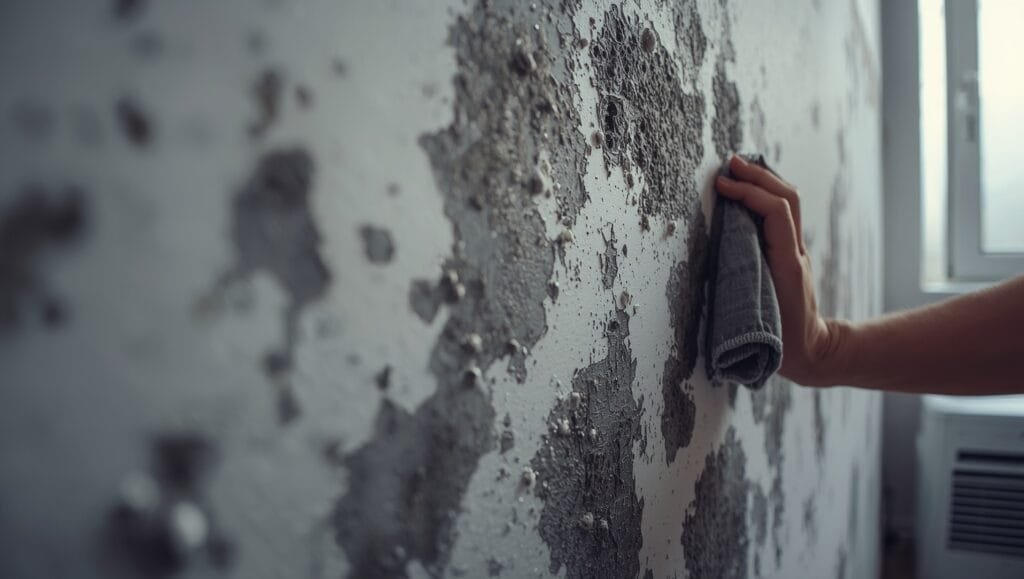
Spore Disturbance: When you scrub or spray mold, you release millions of spores into the air.
You’re not killing them—you’re aerosolizing them.
For someone with a healthy immune system, this is annoying.
For you, it’s a direct pathway to respiratory infection.
Incomplete Removal: Surface cleaning doesn’t address mold in walls, insulation, or ductwork.
Mold will return—often worse than before.
Exposure Risk During Cleanup: You’re breathing in spores the entire time you’re working.
Even with a mask, you’re at risk.
And if you have respiratory compromise already, this is genuinely dangerous.
Potential for Spread: Without proper containment, mold spores migrate to other areas of your home—potentially contaminating spaces that were previously clean.
Professional mold remediation services use HEPA filtration, negative pressure containment, and proper disposal methods.
They remove mold at the source—not just from surfaces.
This matters enormously for you.
Bottom line: DIY mold cleanup puts you at direct risk; professional remediation is the only safe option.
The Cost of Waiting (And Why Speed Matters)
You might be tempted to delay mold remediation.
Maybe you’re hoping it’ll go away on its own.
Maybe you’re worried about cost.
Maybe you just haven’t gotten around to it yet.
For someone who’s immunocompromised, waiting isn’t just inconvenient—it’s actively dangerous.
Here’s what happens when mold sits untreated:
Day 1–7: Mold begins colonizing.
Spore count increases daily.
You’re breathing in more and more spores without knowing it.
Week 2–4: Mold spreads to adjacent materials (drywall, insulation, wood).
Structural damage begins.
Your respiratory symptoms may worsen—coughing, congestion, fatigue.
Month 2–3: Mold has established itself deeply.
If you have underlying respiratory conditions or severe immunocompromise, symptoms escalate—fever, severe cough, shortness of breath.
Hospital visits become possible.
Month 4+: Extensive structural damage.
Mold remediation becomes exponentially more expensive and invasive.
Your health may have deteriorated significantly.
One person we know called their doctor after two months of living with attic mold.
They thought they had a bad cold.
It was early aspergillosis.
They ended up hospitalized for three weeks.
The hospital bills?
Over $40,000.
The mold remediation that should’ve cost $3,500 initially?
Now $12,000 due to spread.
Speed isn’t just about avoiding complications.
It’s about preventing financial devastation and protecting your life.
Bottom line: Delaying mold removal costs your health and your wallet—act now or pay much more later.
Signs You Have a Mold Problem (And When to Call Professionals)
You should be on alert for these warning signs:
- Visible mold: Black, green, or white patches on surfaces, especially in bathrooms, basements, or around windows.
- Musty odor: That earthy, damp smell often indicates mold growth—even if you can’t see it.
- Water stains: Brown or yellow discoloration on ceilings, walls, or around pipes suggests past or ongoing moisture.
- Respiratory symptoms: Persistent cough, wheezing, chest tightness, or difficulty breathing—especially when you’re home.
- Allergic reactions: Itchy eyes, sneezing, or nasal congestion that worsens indoors.
- Recent water damage: Leaks, flooding, burst pipes, or high humidity without proper drying.
- Soft or discolored drywall: Indicates moisture penetration and likely mold growth behind surfaces.
If you spot any of these—especially if you’re immunocompromised—don’t wait for it to get worse.
Contact a professional mold remediation company immediately.
Professional inspectors can identify mold in hidden spaces using moisture meters, thermal imaging, and air quality testing.
They’ll tell you exactly what you’re dealing with and what needs to happen next.
Bottom line: Any sign of mold + immunocompromise = time to call professionals now.
What Professional Mold Remediation Actually Involves
If you’ve never dealt with professional mold removal, here’s what the process looks like:
1. Assessment and Testing
Professionals start by identifying all mold sources—visible and hidden.
They use moisture detection equipment, air quality testing, and visual inspection to map the full extent of contamination.
2. Containment
The work area is sealed off using plastic sheeting and negative pressure systems.
This prevents spores from spreading to uncontaminated areas of your home.
This is the part DIY cleanup can’t do.
3. Removal
Contaminated materials are removed and disposed of properly.
Surfaces are cleaned with antimicrobial solutions.
HEPA filtration systems run continuously to capture airborne spores.
4. Drying and Dehumidification
The area is thoroughly dried using industrial-grade equipment.
Humidity is brought to safe levels to prevent regrowth.
5. Restoration
Damaged materials are replaced—drywall, insulation, flooring, etc.
The space is restored to pre-damage condition.
6. Prevention
Professionals identify and address the moisture source—roof leaks, poor drainage, ventilation issues, etc.
Without fixing the root cause, mold returns.
For someone who’s immunocompromised, this professional approach isn’t a luxury—it’s essential.
You’re not exposed to spores during the process, and the mold is actually removed rather than just hidden.
Bottom line: Professional remediation contains spores, removes mold completely, and prevents regrowth—DIY can’t do any of that.
Why Mold in Air Ducts Is Especially Dangerous for You
If mold grows in your HVAC system, you’re essentially breathing it in every single day.
Your heating and cooling system circulates air throughout your entire home.
If that air passes through moldy ducts, you’re getting a steady stream of spores.
Air duct mold is particularly hazardous because:
- You can’t see it without professional equipment.
- It spreads spores to every room in your house.
- Surface cleaning won’t reach mold deep inside ductwork.
- It recirculates constantly—you’re exposed 24/7.
For immunocompromised people, this is a serious problem.
Professional air duct mold removal uses specialized equipment to clean ducts thoroughly and safely.
Bottom line: Moldy air ducts pump spores into every breath you take—get them cleaned professionally.
Humidity Control: Your First Line of Defense
Mold needs moisture to grow.
Period.
Control humidity in your home, and you prevent mold from establishing itself in the first place.
For immunocompromised people, this is preventive medicine.
Target humidity levels:
- Ideal range: 30–50% relative humidity.
- Too low: Below 30% can cause respiratory irritation.
- Too high: Above 60% encourages mold growth.
How to keep humidity in check:
- Use dehumidifiers in basements, bathrooms, and crawl spaces.
- Run exhaust fans in bathrooms and kitchens during and 20 minutes after showers/cooking.
- Ensure gutters and downspouts direct water away from your foundation.
- Fix leaks immediately—don’t let them sit.
- Insulate pipes to prevent condensation.
- Use air conditioning during humid months to reduce indoor moisture.
- Ensure proper ventilation in attics and crawl spaces.
You can monitor humidity with an inexpensive hygrometer (around $15–30).
Check it weekly, especially in problem areas like basements.
Bottom line: Keep humidity below 50% and mold has nowhere to take hold.
Insurance, Documentation, and Your Health Records
Here’s something many immunocompromised people overlook: documentation matters.
If you have mold in your home and you’re immunocompromised, keep records of:
- When you discovered the mold or water damage.
- Photos of visible mold and water stains.
- Any health symptoms that appeared or worsened (dates, descriptions).
- Doctor visits or hospital trips related to respiratory issues.
- Professional inspections and remediation reports.
- Invoices and receipts for all mold-related work.
Why?
If your health deteriorates due to mold exposure, this documentation becomes evidence.
It also helps with insurance claims if water damage caused the mold.
Some homeowners’ insurance policies cover mold remediation if it results from a covered peril (like burst pipes or storm damage).
Others don’t.
Check your policy—and get professional documentation of the cause.
Bottom line: Document everything—it protects your health claim and your insurance case.
You’re Already Fighting Enough Battles
If you’re immunocompromised and you’ve found mold in your home, don’t try to handle this alone.
Walt Latuik and his team at JetDry have spent over 20 years protecting Rochester, NY homes from mold, water damage, and contamination.
They understand the urgency when your health is on the line.
JetDry’s professional mold remediation services use containment, HEPA filtration, and complete removal—not shortcuts.
They’re available 24/7 for emergencies.
Contact JetDry now and protect your health before mold becomes a crisis.
Mold Testing for Immunocompromised People: What You Need to Know Before It’s Too Late
You’re feeling worse.
Your cough won’t go away.
You’ve been tested for everything—flu, COVID, bronchitis.
All negative.
But your doctor keeps asking: “Any water damage in your home? Any musty smells?”
If you’re immunocompromised and you’re experiencing respiratory symptoms that don’t have a clear cause, mold might be the invisible culprit.
The problem?
You can’t see most mold.
You can’t smell it consistently.
And your weakened immune system can’t fight it off like someone else’s would.
This is where mold testing becomes critical.
Not optional.
Not “something to do eventually.”
Critical.
Most people don’t realize that testing and remediation are two different things.
Testing tells you what you’re dealing with.
Remediation fixes it.
For immunocompromised individuals, you need both—and you need to understand what the tests actually mean before you make decisions about your health and your home.
Why Standard Mold Testing Might Not Work for Your Situation
Here’s the thing most mold testing companies won’t tell you: not all tests are created equal.
If you call a random contractor and ask them to “test for mold,” they might run an air quality test that looks for spore counts in the air.
That’s useful.
But it’s not the whole picture—especially when you’re immunocompromised.
Standard air tests measure what’s floating around right now.
They don’t tell you where the mold is growing.
They don’t identify the specific species.
And they don’t account for hidden colonies that aren’t actively releasing spores at the moment you’re being tested.
One Rochester homeowner—immunocompromised from a recent organ transplant—had an air test done.
Results came back “normal.”
Three weeks later, she developed a respiratory infection.
When professionals came back with moisture detection and thermal imaging, they found extensive mold in the attic and inside her HVAC ducts.
The initial test had missed it entirely.
The air test only catches spores that are actively airborne.
If mold is dormant, wet, or hidden behind walls, the test won’t detect it.
For someone with a compromised immune system, that’s dangerous.
Bottom line: Air tests alone don’t find hidden mold—you need comprehensive testing with visual inspection and moisture detection.
The Three Types of Mold Tests You Should Understand
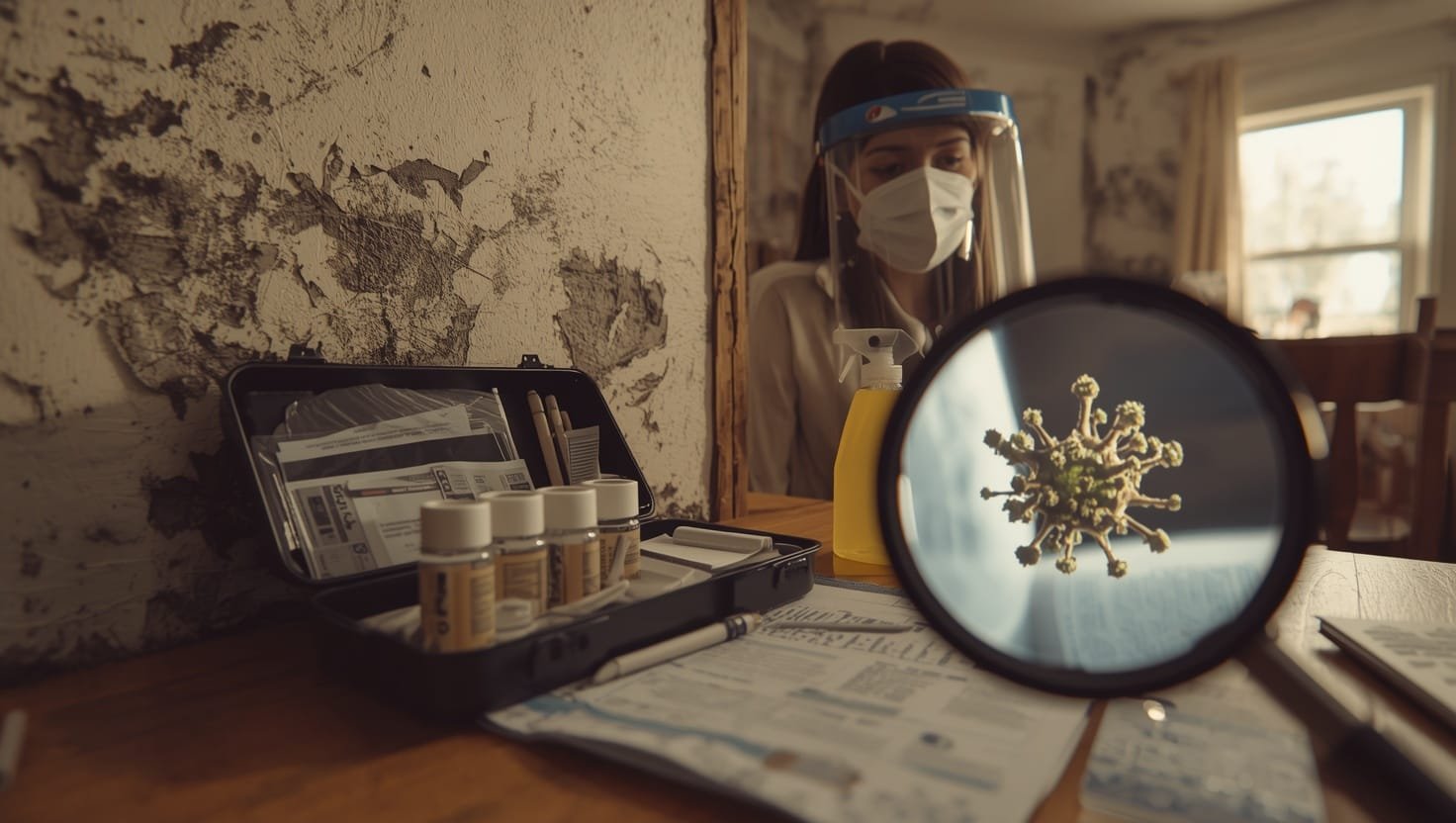
Professional mold testing comes in three main varieties.
Each one answers a different question.
For immunocompromised people, you need to know what each test does—and doesn’t do.
Air Quality Testing (Spore Counts)
This is what most people think of when they hear “mold test.”
A professional sets up equipment that pulls air samples over a period of time, then sends them to a lab to count spores.
What it tells you: How many mold spores are floating in your air right now.
What it doesn’t tell you: Where the mold is coming from or if there’s mold hiding in walls, ducts, or insulation.
This test is useful as a baseline, but it’s incomplete.
Mold can be actively growing somewhere in your home while air quality tests come back normal.
Surface Testing (Swabs and Tape Samples)
A professional swabs or tapes a visible area of suspected mold and sends the sample to a lab.
The lab identifies the species and spore count on that specific surface.
What it tells you: What type of mold is on a surface you can see.
What it doesn’t tell you: How much mold is hidden behind that surface or in other areas of your home.
Surface testing is good for confirming what you’re looking at, but it only works if you can see the mold.
And we’ve already established that most mold hides.
Moisture Detection and Thermal Imaging
This is the heavy hitter.
Professionals use moisture meters and thermal imaging cameras to find wet spots and temperature variations that indicate hidden moisture and potential mold growth.
What it tells you: Where moisture is hiding—inside walls, under floors, in attics, in ducts.
What it doesn’t tell you: The exact species of mold (you’d need a lab test for that), but it tells you exactly where to look.
For immunocompromised people, this is the test that actually matters.
It finds the mold before it becomes a respiratory emergency.
Professional mold remediation companies in Rochester, NY like JetDry use all three methods together—not just one.
That’s how they catch what others miss.
Bottom line: Moisture detection and thermal imaging find hidden mold; air tests alone leave dangerous gaps.
What Mold Test Results Actually Mean for Your Health
So the lab calls back with results.
Maybe it says “Aspergillus detected.”
Or “elevated spore count.”
Now what?
Here’s where a lot of people get confused—or scared unnecessarily.
A mold test result isn’t a diagnosis.
It’s a measurement.
It tells you what’s there, not what it’s doing to you.
But for immunocompromised people, the interpretation changes.
If you have a healthy immune system and a test shows low levels of common household mold like Penicillium or Cladosporium, most doctors would say “keep an eye on it, but don’t panic.”
If you’re immunocompromised and the same test shows the same levels, the response should be different.
Your body can’t handle what a healthy person can shrug off.
The threshold for concern is lower.
Let’s say your air test shows 500 spores per cubic meter of Aspergillus fumigatus.
For a healthy person, that’s usually not an immediate crisis.
For someone with HIV, an organ transplant, or severe immunosuppression, that’s a legitimate threat.
This is why it matters who’s interpreting your results.
A generic contractor might say “that’s normal.”
A medical professional who understands your immunocompromised status knows better.
If you get mold test results back and you’re immunocompromised, bring them to your doctor.
Don’t just rely on the testing company’s interpretation.
Your medical team needs to weigh in on what those numbers mean for your specific health situation.
Bottom line: Normal mold levels for healthy people are dangerous for immunocompromised people—context matters.
When You Should Get Tested (And When Waiting Could Kill You)
Not every home needs mold testing.
But if you’re immunocompromised, the bar for “we should probably test” gets lower.
Get tested immediately if you have:
- Any visible mold—black, green, white, or orange patches anywhere.
- A musty smell that won’t go away, especially in basements, attics, or crawl spaces.
- Water damage from leaks, floods, or burst pipes—even if it “dried out” weeks ago.
- Respiratory symptoms that started or got worse after moving into your home or after water damage occurred.
- A history of mold in the home (previous owner mentioned it, or you found evidence of past damage).
- High humidity that you can’t control—even without visible mold.
- An HVAC system you’ve never had inspected or cleaned.
If you have even one of these and you’re immunocompromised, testing isn’t a “nice to have.”
It’s a health decision.
One woman in Rochester—living with a weakened immune system from chemotherapy—noticed her basement smelled musty after heavy rain.
She asked her landlord about it.
He said “it’s just the basement, it always smells like that.”
She waited six months before getting it tested.
By then, mold was colonized in the walls, and she’d developed a respiratory infection that landed her in the hospital.
The test would’ve cost $400.
The hospital stay cost $18,000.
Speed matters here.
If you’re immunocompromised and you suspect mold, get tested within days—not weeks.
Bottom line: Immunocompromised + any mold sign = test now, not later.
The Cost of Mold Testing and What You’re Actually Paying For
Mold testing isn’t cheap, but it’s way cheaper than dealing with a mold-related health crisis.
Here’s what you typically pay for:
- Air quality testing: $300–$600 (usually includes one or two air samples).
- Surface testing: $150–$300 per sample.
- Moisture detection and thermal imaging: $400–$800 (this is where the real value is).
- Full comprehensive inspection: $800–$1,500 (includes all three methods plus a detailed report).
If your home has water damage or you suspect mold in multiple areas, expect the higher end.
If you’re just checking one suspicious area, you might be on the lower end.
Some homeowners’ insurance policies cover mold testing if it results from a covered peril (like a burst pipe or storm damage).
Check your policy before you pay out of pocket.
Also—and this is important—don’t use the cheapest option.
A $200 test from someone with basic equipment might miss what a $1,000 comprehensive inspection catches.
When your health is on the line, cheap testing is actually expensive.
Bottom line: Comprehensive testing costs more upfront but prevents $10K+ health and remediation costs later.
What Happens After Testing: The Remediation Decision
Okay, testing comes back positive.
Mold is confirmed.
Now what?
This is where a lot of immunocompromised people freeze up.
They see the test results and panic.
Or they see the cost estimate for remediation and try to delay.
Don’t.
If testing confirms mold and you’re immunocompromised, remediation isn’t optional.
It’s medical necessity.
The testing report should tell you:
- What type of mold was found.
- Where it’s located.
- How extensive it is.
- Whether it’s actively growing or dormant.
This information becomes your remediation roadmap.
A good water damage restoration company will use this report to tell you exactly what needs to be removed, what needs to be cleaned, and how to prevent regrowth.
If the testing company recommends professional remediation, listen to them.
If they say you can clean it yourself with bleach, get a second opinion—especially if you’re immunocompromised.
Professional remediation involves containment, HEPA filtration, and proper disposal.
DIY cleanup involves you inhaling spores while you’re already fighting an uphill battle with your immune system.
That’s not a fair fight.
Bottom line: Test results guide remediation—follow professional recommendations, don’t DIY.
Red Flags in Mold Testing: When Something Doesn’t Add Up
Not all mold testing is legit.
Some companies use scare tactics.
Others miss obvious problems.
Here’s what to watch for:
They Recommend Testing But Not Remediation
If a company finds mold but tells you “it’s not that bad” and you don’t need to fix it—and you’re immunocompromised—that’s a red flag.
Get a second opinion from a medical professional.
They Push You Toward Expensive Remediation You Don’t Need
Conversely, if a company finds a small, isolated area of mold and recommends tearing out your entire HVAC system for $15,000, be skeptical.
Get multiple quotes.
They Test But Don’t Explain Results
A professional should walk you through what the test found, what it means for your health, and what the next steps are.
If they hand you a report and say “here you go,” that’s lazy service.
They Won’t Do Thermal Imaging or Moisture Detection
If they only do air testing and surface swabs, they’re leaving blind spots.
Insist on thermal imaging and moisture detection, especially if you’re immunocompromised.
Bottom line: Legitimate testing is thorough, transparent, and health-focused—not just a sales pitch.
How to Prepare for a Professional Mold Test
If you’re scheduling a mold test, do this beforehand:
- Document everything: Take photos of any visible mold, water stains, or damage. Note dates and locations.
- Make a list of symptoms: When did respiratory issues start? Did they worsen after water damage? Write it down.
- Provide history: Tell the inspector about any past leaks, flooding, or humidity issues—even if they’re from months ago.
- Don’t clean before testing: If there’s visible mold, leave it. Cleaning it will affect test results.
- Keep windows closed for 24 hours before air testing: This gives you an accurate reading of indoor air quality.
- Have your medical info ready: Tell the inspector about your immunocompromised status. It affects how they interpret results.
The more information you give the inspector, the better the test.
Bottom line: Preparation improves accuracy—document, disclose, and don’t clean beforehand.
FAQ: Mold Testing for Immunocompromised People
Can I test for mold myself at home?
DIY mold test kits exist, but they’re unreliable and potentially dangerous for immunocompromised people.
You risk exposure while collecting samples, and results are often inaccurate.
Professional testing is worth the cost.
How long does mold testing take?
A comprehensive inspection usually takes 2–4 hours.
Air samples need to run for 24–48 hours before lab analysis.
You’ll get results within 5–10 days.
Will my insurance cover mold testing?
Sometimes, if the mold resulted from a covered peril like a burst pipe or storm damage.
Check your policy or call your insurance agent before paying out of pocket.
What if testing shows mold but I feel fine?
Mold damage can be asymptomatic at first, especially if you’re immunocompromised and your body’s warning signals are muted.
Don’t wait for symptoms to worsen—remediate based on test results, not how you feel.
Can I stay in my home during remediation?
It depends on the extent of the problem and how the remediation is done.
Professional companies use containment to isolate the work area, but you might need to leave if mold is extensive.
Your remediation company will advise you.
Bottom line: Professional testing, honest results, and prompt action protect immunocompromised people.
Your Health Comes First—Get Tested Before It’s Too Late
If you’re immunocompromised and you suspect mold in your home, don’t guess.
Don’t hope it goes away.
Don’t rely on a cheap test that misses the real problem.
Walt Latuik and the team at JetDry have been testing and remediating mold in Rochester, NY homes for over 20 years.
They understand what immunocompromised people face—and they know how to find mold that others miss.
JetDry uses thermal imaging, moisture detection, and comprehensive air testing to give you answers you can trust.
Contact JetDry now for a professional mold test and protect your health before mold becomes a medical emergency.
Available 24/7 for urgent situations.
Living with Immunocompromise and Mold: The Recovery Plan Nobody Tells You About
Your doctor cleared the mold removal.
Your home’s been remediated.
But now what?
You’re standing in a space that’s technically “clean,” yet you’re still coughing, still worried, still wondering if it’s really gone.
That’s the gap nobody fills.
Recovery after mold exposure when you’re immunocompromised isn’t just about removing the mold.
It’s about rebuilding your confidence in your living space, monitoring your health as you heal, and knowing what red flags mean you need to act again.
Most people assume once professional remediation is done, the problem’s solved.
For immunocompromised individuals, recovery is a process—and getting it right matters more than most realize.
The Recovery Timeline: What Actually Happens After Remediation
After mold removal, your body doesn’t instantly bounce back.
Your respiratory system has been exposed to spores.
Your immune system—already compromised—has been working overtime fighting an infection it couldn’t win on its own.
Recovery takes time, and understanding that timeline keeps you from panicking or missing warning signs.
Week 1 post-remediation: Your symptoms might not improve immediately.
In fact, they could temporarily worsen.
That’s not failure—that’s your body processing the cleanup itself.
Professionals use HEPA filtration and containment, but some dust and debris still settle.
You might cough more, feel more congestion.
This is normal.
Stay hydrated, rest, and let your body adjust.
Weeks 2–3: This is when you should start noticing improvement.
Your cough eases.
Fatigue decreases.
Breathing feels less labored.
If you’re not seeing improvement by week three, call your doctor.
Something else might be going on—a secondary infection, another mold source, or a different respiratory issue entirely.
Weeks 4–6: Most immunocompromised people see significant improvement by this point.
Energy returns.
Respiratory symptoms stabilize.
But this is also when complacency sneaks in.
You feel better, so you stop being vigilant about humidity, ventilation, and moisture prevention.
Don’t.
This is when you need to be most disciplined about prevention.
Months 2–3: Full recovery depends on how severe the exposure was and how compromised your immunity is.
Some people bounce back faster.
Others take longer.
Your immunologist or primary care doctor can give you a more specific timeline based on your condition.
Bottom line: Recovery takes weeks to months—expect temporary worsening before improvement kicks in.
Post-Remediation Health Monitoring: The Checklist You Actually Need
After mold remediation, you’re not just waiting to feel better.
You’re actively tracking whether your body is actually healing.
This isn’t paranoia—it’s smart self-advocacy.
Keep a simple health log for at least two weeks post-remediation.
Write down each day:
- Respiratory symptoms: Cough frequency (mild, moderate, severe), shortness of breath, chest tightness.
- Energy levels: How you felt throughout the day on a scale of 1–10.
- Fever or chills: Even low-grade fever matters for immunocompromised people.
- Sinus congestion: Any worsening of sinus pressure or drainage.
- Sleep quality: Are you sleeping through the night or waking up struggling to breathe?
- Any new symptoms: Anything unusual—rashes, joint pain, persistent headaches.
Why track this?
Because patterns emerge.
If your symptoms improve steadily, you’re on the right path.
If they plateau or worsen after week three, you have documentation to show your doctor.
That documentation becomes evidence that something needs investigation.
One immunocompromised homeowner in Rochester kept a log after mold remediation.
By day 18, she noticed her symptoms weren’t improving—they were cycling.
She’d feel better for two days, then worse again.
She brought her log to her doctor, who ordered a CT scan.
Early aspergillosis was caught before it became serious.
That log saved her from hospitalization.
Bottom line: Document daily symptoms for two weeks—patterns reveal whether recovery is real or masking a new problem.
Environmental Monitoring: The Second Line of Defense
Mold doesn’t come back overnight.
But the conditions that allowed it to grow in the first place?
Those can return just as fast.
After remediation, you need to actively prevent regrowth.
This means monitoring the environment—not just your health.
Humidity tracking: Buy a hygrometer ($15–30) and check humidity levels weekly in high-risk areas like basements, bathrooms, and attics.
Keep it between 30–50%.
If it creeps above 55%, you’re inviting mold back.
Use a dehumidifier in problem areas if needed.
Visual inspections: Every two weeks, walk through your home with purpose.
Check the places where mold was found before.
Look for returning moisture, discoloration, or musty smells.
Early detection means early intervention—way cheaper and safer than letting it spread again.
HVAC system checks: If mold was in your air ducts, have your system professionally inspected at the one-month mark post-remediation.
Mold can regrow in ducts if moisture returns.
Regular air duct maintenance prevents this from becoming a recurring nightmare.
Gutter and drainage verification: Most mold comes from water intrusion.
After remediation, verify that gutters are clear, downspouts direct water away from your foundation, and any prior water damage sources have been fixed.
If the root cause wasn’t addressed, mold will return.
Bottom line: Monitor humidity and inspect regularly—catch regrowth at spore stage, not colony stage.
When to Call Your Doctor vs. When to Call for Remediation
Post-remediation, you’ll face moments of doubt.
A cough lingers.
You smell something musty.
You’re not sure if it’s normal recovery or a new problem.
Here’s how to decide who to call.
Call your doctor if:
- Respiratory symptoms worsen or don’t improve after three weeks.
- You develop fever (even low-grade, 99–100°F).
- You experience chest pain or severe shortness of breath.
- You cough up blood or bloody mucus.
- You develop new symptoms like night sweats or weight loss.
- You feel more fatigued than expected for your recovery timeline.
Call a remediation company if:
- You see visible mold returning in the same area.
- Humidity won’t stay below 50% despite using a dehumidifier.
- You detect a musty smell that wasn’t there before.
- You find new water stains or moisture in areas that were previously dry.
- Your HVAC system shows signs of moisture or condensation.
The key difference?
Your doctor assesses whether your body’s healing.
The remediation company assesses whether your environment’s staying clean.
You need both conversations happening in parallel.
Bottom line: Doctor = body recovery; remediation company = environment safety—both matter equally.
The Mental Health Side Nobody Mentions
Living through mold exposure as an immunocompromised person does something to your head.
You’re hyperaware of smells.
Every cough feels dangerous.
You second-guess whether the remediation actually worked.
That anxiety is real, and it’s worth addressing.
Mold exposure creates a kind of PTSD—you’re jumpy about your living space.
You might avoid certain rooms.
You could develop health anxiety where every symptom feels like mold is back.
That’s not weakness; that’s a normal psychological response to a threat you couldn’t fight off.
Consider talking to someone—a therapist, counselor, or even your doctor—about the anxiety piece.
Some immunocompromised people benefit from grounding techniques when anxiety spikes.
Others find that regular environmental checks reduce worry because they know they’re monitoring actively.
One thing that helps: knowledge.
The more you understand about mold, humidity, and recovery, the less scary it becomes.
You’re not helpless.
You have tools.
You have monitoring systems.
You have professionals you can call.
That agency matters psychologically.
Bottom line: Mold anxiety is legitimate—address it alongside physical recovery for complete healing.
Documentation for Insurance and Medical Records
Keep everything from your remediation process.
Seriously—don’t throw it away.
Create a folder (physical or digital) containing:
- Pre-remediation inspection reports and photos.
- Professional mold testing results.
- Remediation completion reports and photos.
- Invoices and receipts for all work done.
- Your health log from recovery period.
- Doctor’s notes about mold-related symptoms.
- Any hospital or urgent care visits tied to mold exposure.
Why keep all this?
Insurance companies sometimes deny claims months or years later.
If you need to file a claim, you have documentation.
If you move and need to disclose prior mold to the next owner or buyer, you have proof it was professionally remediated.
If your health declines and you need to prove causation, you have a timeline.
Also—tell your immunologist or primary care doctor about the mold exposure.
Have them document it in your medical record.
This creates a paper trail that connects your health to environmental exposure.
It matters if you ever need to file a disability claim, apply for accommodations, or need your doctor to advocate for you with insurance companies.
Bottom line: Documentation protects you legally and medically—keep everything for years.
Preventing Future Mold: The Lifestyle Shift
After you’ve survived mold remediation, you’re going to think differently about moisture and ventilation.
That’s not paranoia—that’s wisdom.
Small daily habits prevent big problems:
- Run exhaust fans: Every shower, every time you cook. Leave them running 20 minutes after you’re done.
- Wipe down condensation: On windows, mirrors, pipes. Moisture sitting around is mold’s invitation.
- Fix leaks immediately: Don’t wait. A slow drip today is mold next month.
- Keep gutters clean: Clogged gutters = water backing up into your home. Fall and spring, get them cleared.
- Ensure proper attic ventilation: Hot, moist air needs somewhere to go. Poor ventilation creates mold paradise.
- Monitor crawl spaces: These are invisible mold factories. Vapor barriers, dehumidifiers, and proper drainage are non-negotiable.
These aren’t extreme measures.
They’re baseline maintenance for someone immunocompromised.
Think of it like taking your medications—it’s prevention, not paranoia.
Bottom line: Daily moisture management prevents regrowth—make it routine, not an afterthought.
When to Consider Professional Preventive Maintenance
Some immunocompromised people benefit from scheduling professional moisture and mold checks annually.
It’s not essential for everyone, but it’s smart for people who’ve had serious mold exposure before.
Professional mold remediation companies like JetDry offer follow-up inspections.
They use moisture detection and thermal imaging to catch problems before they become visible.
Once a year, a professional walks through your home, checks your HVAC system, inspects vulnerable areas, and gives you peace of mind.
Cost?
Usually $400–600 annually.
That’s less than one hospital visit.
For immunocompromised people who’ve been through mold before, it’s worth every penny.
Bottom line: Annual professional inspections catch regrowth before it threatens your health.
FAQ: Recovery and Prevention After Mold Remediation
How long until I can be sure the mold is really gone?
If remediation was done properly and humidity stays controlled for two months without returning mold, you’re good.
Professional follow-up inspections at the one and three-month marks confirm this.
Is it safe to sleep in my bedroom during recovery?
Yes, if remediation included your bedroom.
If mold was isolated to other areas (attic, basement), your bedroom is safe.
Ask your remediation company to confirm before moving back in.
Can I use regular air filters instead of HEPA filters in my HVAC?
For immunocompromised people, no—HEPA filters are essential post-remediation.
They capture spores that regular filters miss.
Upgrade and keep them changed monthly.
What if I’m renting and my landlord won’t fix mold?
Document everything, report it to your local health department, and consider breaking your lease if health risks are serious.
Many jurisdictions have tenant protections for mold exposure.
Consult a local tenant rights organization.
Should I get tested again after remediation?
Ask your doctor.
Some recommend follow-up air quality testing at the one-month mark to confirm spore counts have dropped.
Others rely on visual inspection and symptom improvement.
Bottom line: Recovery is monitored, not assumed—stay engaged with your health and environment.
Recovery Doesn’t End When Remediation Does
If you’re immunocompromised and you’ve just finished mold remediation—or you’re about to start—you need support that goes beyond the cleanup.
Walt Latuik and his team at JetDry don’t just remove mold; they set you up for recovery.
They provide detailed post-remediation reports, offer follow-up inspections, and work with your medical team to ensure your environment stays safe.
Over 20 years in Rochester, NY, they’ve guided countless immunocompromised homeowners through this exact process.
Contact JetDry now for professional guidance on recovery and prevention.
Available 24/7 for questions or concerns.