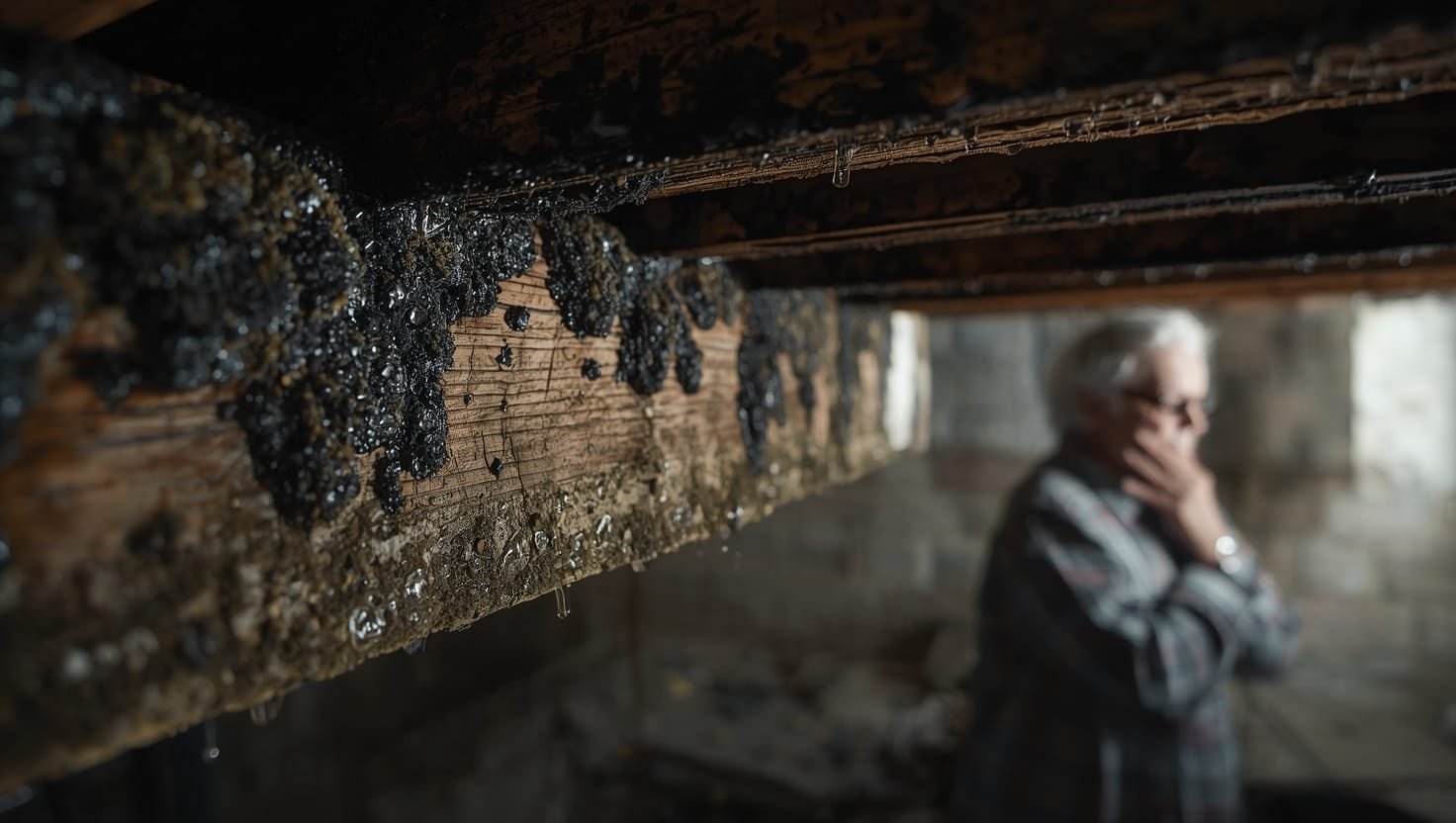
Mold Risks For Seniors: The $47K Problem
- Wolfe McNeel
Mold Risks for Seniors: Why Your Age Changes Everything
Your immune system isn’t what it was at 30.
That’s not meant to scare you—it’s just the truth.
When mold spores get into your lungs, your body’s ability to fight back weakens with age.
For seniors, mold isn’t just an inconvenience or a cosmetic problem in the basement.
It’s a genuine health threat that can trigger respiratory infections, aggravate asthma, and even cause pneumonia.
And here’s what most people miss: mold doesn’t announce itself.
It grows quietly in walls, attics, crawl spaces, and air ducts—places you can’t see.
By the time you notice the smell or spot the discoloration, you’ve already been exposed.
In Rochester, NY, where humidity and seasonal moisture are constant challenges, seniors face elevated mold risks year-round.
If you’re over 65, living alone, or managing a chronic respiratory condition, understanding mold risks for seniors isn’t optional—it’s essential.
This guide breaks down what you need to know, why it matters at your age, and what to do if you suspect mold is already in your space.
Why Seniors Face Higher Mold Risks Than Younger Adults
Your lungs change as you age.
The tiny air sacs that absorb oxygen become less elastic, and your cough reflex weakens—meaning mold spores can settle deeper into your respiratory system without being cleared out effectively.
Add chronic conditions into the mix, and the risk multiplies.
If you have COPD, asthma, heart disease, or diabetes, mold exposure becomes a genuine medical concern.
One senior in Rochester developed a persistent cough she thought was just allergies.
After three weeks of antibiotics that didn’t help, her daughter pushed for testing.
The culprit: mold in the basement that had been spreading through the HVAC system for months.
The cost to remediate the mold and restore her home’s air quality came to over $8,000—not to mention the medical bills and lost quality of life.
Your medications also play a role.
Corticosteroids for asthma or COPD, immunosuppressants for autoimmune conditions, or even blood pressure medications can weaken your immune response to mold exposure.
That means even small amounts of mold can cause bigger problems for you than for a younger person with a stronger immune system.
Bottom line: Aging immune systems can’t fight mold exposure as effectively—making seniors more vulnerable to serious respiratory complications.
The Health Symptoms You Shouldn’t Ignore
Here’s the tricky part: mold symptoms in seniors often get mistaken for normal aging or other conditions.
You cough more, assume it’s just winter.
Your sinuses feel congested, and you chalk it up to seasonal allergies.
Your energy drops, so you blame it on getting older.
But when mold is the real culprit, these symptoms don’t go away on their own.
Watch for:
- A persistent, dry cough that lingers for weeks or months
- Shortness of breath during normal activities like climbing stairs or walking to the mailbox
- Wheezing or chest tightness you don’t normally experience
- Nasal congestion, sinus pressure, or frequent sinus infections
- Eye irritation, watery eyes, or itching that antihistamines don’t help
- Skin rashes or itching with no obvious cause
- Fatigue that feels different from your normal tiredness—almost like your body’s fighting something
- Headaches that are worse in certain rooms of your home
The pattern matters more than any single symptom.
If your cough gets worse when you’re in the basement or a certain bedroom, that’s a red flag.
If your breathing improves when you’re away from home for a few days, mold exposure is likely the issue.
One retired teacher in Rochester noticed she felt better at her daughter’s house but struggled the moment she returned to her own place.
After two weeks of testing and investigation, mold was found in her crawl space.
Once the mold was professionally removed, her symptoms cleared up completely within days.
Don’t wait for symptoms to disappear on their own.
If you suspect mold exposure, contact your doctor and get your home inspected.
Bottom line: Persistent respiratory symptoms tied to specific rooms are your body’s way of saying something’s wrong—don’t ignore them.
Where Mold Hides in Senior-Occupied Homes
Mold doesn’t just grow on visible surfaces.
The most dangerous mold is the kind you can’t see until significant damage has already happened.
In Rochester homes, moisture finds its way into spaces that seniors often overlook—especially if you’ve been in your home for decades and haven’t had major renovations.
Basements and Crawl Spaces
These are mold’s favorite environments: dark, damp, and poorly ventilated.
If your basement floods even once during spring thaw or heavy rain, mold can begin growing within 24 hours.
Many seniors don’t spend much time in basements, so mold can spread unchecked for months.
By the time you notice a musty smell, the problem is already significant.
Basement water restoration should be your priority if you’ve had any flooding or consistent moisture issues.
Attics and Upper-Floor Areas
Roof leaks are incredibly common in older homes—and attics are the last place most people check regularly.
A small leak in your roof can create the perfect conditions for mold to thrive without you ever knowing it’s happening.
By the time you notice water stains on your ceiling or smell something musty, the mold colony is already established.
HVAC Systems and Air Ducts
This is where mold becomes a serious health threat for seniors.
If your air conditioning system runs frequently or your home has high humidity, mold can grow inside your ductwork.
Every time your HVAC system runs, it’s distributing mold spores throughout your entire home—directly into the air you’re breathing.
You won’t see it, but you’ll feel it.
Seniors with existing respiratory conditions are especially vulnerable to contaminated ductwork.
Professional air duct mold removal can be a game-changer if you’re experiencing unexplained respiratory symptoms.
Walls, Ceilings, and Hidden Cavities
Water damage from leaky pipes, condensation, or poor drainage can seep into walls without any obvious signs on the surface.
The mold grows inside the wall cavity, behind the drywall, where you can’t see it.
Water damage in walls is one of the sneakiest threats because it often goes undetected until structural damage is already happening.
Bathrooms and Kitchens
These moisture-rich areas are mold magnets.
If your bathroom exhaust fan isn’t working properly or your kitchen doesn’t have adequate ventilation, humidity builds up—and mold follows.
Seniors who’ve lived in the same home for 20+ years might not realize their ventilation systems have deteriorated or stopped working entirely.
Bottom line: Mold hides in basements, attics, ducts, and inside walls—places you can’t see until damage is severe.
Moisture and Humidity: The Real Problem in Rochester Homes
Rochester’s climate is mold-friendly.
You get significant snowfall in winter, which means snowmelt and spring flooding.
Summers can be humid and wet.
And fall brings rain that can overwhelm drainage systems in older homes.
If your house was built before 1980, your foundation, basement, and crawl space were likely constructed without modern moisture barriers or drainage systems.
That means water finds its way in—especially if gutters are clogged, downspouts aren’t directing water away from your foundation, or your sump pump isn’t working properly.
One senior homeowner in Rochester discovered her sump pump had failed silently months earlier.
By the time she noticed the damp smell in her basement, mold had colonized nearly 40% of the space.
The remediation cost was nearly $12,000, and her homeowner’s insurance wouldn’t cover it because it was classified as a maintenance issue.
Inside your home, humidity is another silent threat.
If you’re running a humidifier during winter (which many seniors do for comfort), humidity above 55% creates an ideal environment for mold.
Cooking, showering, and laundry all release moisture into the air.
If your home doesn’t have adequate ventilation—or if you’re keeping windows closed during cold months—that moisture has nowhere to go.
It builds up on surfaces, in walls, and inside HVAC systems.
Maintaining proper humidity levels is one of the simplest ways to prevent mold growth, but most seniors don’t know the target range should be 30-50%.
Bottom line: Rochester’s wet climate plus aging home infrastructure creates perfect conditions for mold growth in senior-occupied properties.
Why Professional Mold Inspection Matters for Seniors
You might think you can handle mold removal yourself—spray some bleach, open a window, problem solved.
That’s not how it works.
DIY mold cleanup can actually make things worse, especially for seniors.
When you disturb mold, you release spores into the air.
If you’re breathing those spores while you’re trying to clean, you’re exposing yourself to the very thing you’re trying to get rid of.
And if the mold is in walls, ducts, or crawl spaces—places where DIY solutions can’t reach—you’re just treating the symptom while the real problem spreads.
Professional mold inspection uses equipment that can detect moisture and mold in places your eyes can’t see.
Thermal imaging cameras show temperature variations that indicate hidden moisture.
Moisture meters measure moisture levels inside walls and materials.
Air quality testing reveals whether mold spores are actually in your breathing air.
A professional inspector will give you a clear picture of exactly where the mold is, how extensive it is, and what caused it in the first place.
That information is critical because treating mold without fixing the moisture source is like bailing water out of a boat with a hole in it—you’re just delaying the inevitable.
JetDry, serving Rochester, NY for over 20 years, specializes in identifying and removing mold before it becomes a health crisis for seniors and their families.
Walt Latuik and his team have personally responded to countless mold situations where seniors were unknowingly exposed for months—sometimes years.
Professional mold remediation services aren’t a luxury; they’re a necessity when your health is on the line.
Bottom line: Professional inspection catches hidden mold and moisture before DIY cleanup makes things worse.
The Real Cost of Ignoring Mold Risks for Seniors
Let’s talk numbers—because ignoring mold doesn’t just affect your health; it affects your wallet.
Small mold problems are cheap to fix.
A localized mold colony in a bathroom or small basement area might cost $500-$2,000 to professionally remove and treat.
But when mold spreads unchecked for months or years, costs skyrocket.
Extensive mold in crawl spaces, attics, or throughout ductwork can run $5,000-$15,000 or more.
If mold has compromised structural elements like wood framing or drywall, you’re looking at reconstruction costs that can exceed $20,000.
One Rochester senior waited too long to address a roof leak.
Mold spread through her attic and into the walls over two years.
By the time she called for professional help, the remediation and structural repairs cost over $18,000.
Her homeowner’s insurance didn’t cover it because the damage was deemed preventable with proper maintenance.
Beyond the financial cost, there’s the health impact.
Medical bills from mold-related respiratory infections, pneumonia, or asthma exacerbations can add up fast.
Hospital stays, antibiotics, imaging tests, and specialist visits pile on quickly.
Seniors on fixed incomes can’t absorb these costs without serious consequences.
And then there’s the quality-of-life cost.
If you’re constantly coughing, struggling to breathe, or feeling fatigued, you’re not living your best life in retirement.
You’re limiting activities, avoiding social events, and depending on family members for help.
That’s not acceptable when mold risks for seniors are actually preventable with regular maintenance and professional oversight.
Bottom line: Ignoring mold costs thousands in repairs and medical bills—plus months of suffering that could’ve been prevented.
What You Can Do Right Now to Reduce Mold Risks
You don’t have to wait for a crisis to take action.
Here are practical steps you can take today to reduce mold risks in your home:
Check Your Gutters and Downspouts
Clogged gutters are one of the most common causes of water damage and mold in Rochester homes.
If you can safely access them, clean them out every spring and fall.
Make sure downspouts extend at least 4-6 feet away from your foundation—not dumping water right next to your house.
Monitor Your Basement and Crawl Space
Walk down there once a month, even if you don’t spend much time there.
Look for water stains, musty smells, or visible mold.
Check that your sump pump is working (if you have one).
Test it by pouring water into the sump pit and making sure it activates.
Control Indoor Humidity
Keep humidity between 30-50%.
Use a dehumidifier if you live in a damp climate or during humid months.
Run your bathroom exhaust fan for 20-30 minutes after showering.
Make sure your kitchen has a working exhaust fan when cooking.
Inspect for Roof Leaks
If you can safely access your attic, look for water stains, soft spots, or visible daylight coming through the roof.
If you can’t safely get up there, hire a professional to do a roof inspection annually.
Small leaks are cheap to repair; large mold colonies are expensive.
Improve Ventilation
Open windows on dry days to allow air circulation.
Make sure bathroom and kitchen exhaust fans are venting to the outside—not into your attic.
Clear vents and air returns of dust and debris.
Address Water Damage Immediately
If you notice water stains on ceilings or walls, or if you’ve had any flooding, don’t wait.
Emergency water damage restoration within the first 24-48 hours can prevent mold from ever starting.
Bottom line: Regular maintenance and humidity control prevent most mold problems before they start.
When to Call a Professional: Signs You Need Help Now
Some situations are beyond DIY fixes.
If any of these apply to you, it’s time to call a professional:
- You smell a musty odor that won’t go away, even after cleaning
- You see visible mold growth (black, green, or white patches) anywhere in your home
- You’ve had water damage, flooding, or a roof leak in the past year
- You’re experiencing persistent respiratory symptoms that seem tied to your home
- Your basement or crawl space stays damp no matter what you do
- You’ve noticed water stains on ceilings or walls
- Your HVAC system smells musty when it runs
- Family members are complaining of allergy-like symptoms that improve when they leave your home
Walt Latuik and the JetDry team have spent over 20 years helping Rochester residents deal with mold before it becomes a health crisis.
They understand the specific mold challenges in Rochester’s climate and aging homes.
They respond 24/7 to emergencies, which matters when you’re a senior who can’t afford to wait days for help.
Their approach is straightforward: identify the source of moisture, remove the mold professionally, fix the underlying problem so it doesn’t return, and restore your home’s air quality.
One senior homeowner called JetDry after discovering mold in her attic following a roof leak.
Walt’s team assessed the damage the same day, completed the remediation within a week, and repaired the roof to prevent future leaks.
The total cost was less than what she’d have spent on medical bills if the mold exposure had continued.
Bottom line: Professional mold remediation stops health risks, prevents costly damage, and gives you peace of mind.
The Bottom Line on Mold Risks for Seniors
Your age changes how mold affects you.
Your immune system is weaker.
Your lungs are less efficient at clearing spores.
Your medications might be suppressing your ability to fight infection.
And Rochester’s climate—with its snow, rain, and humidity—creates conditions where mold thrives in older homes.
The good news: mold risks for seniors are manageable with awareness, maintenance, and professional help when needed.
You don’t have to live with respiratory symptoms you can’t explain.
You don’t have to hope that smell in your basement goes away on its own.
You don’t have to risk your health or your home’s value by ignoring warning signs.
If you’re in Rochester and you’re concerned about mold—whether you’ve seen it, smelled it, or just want peace of mind—contact JetDry now for a professional inspection.
Walt and his team are available 24/7 and can assess your situation quickly, honestly, and without pressure.
Your health is worth the call.
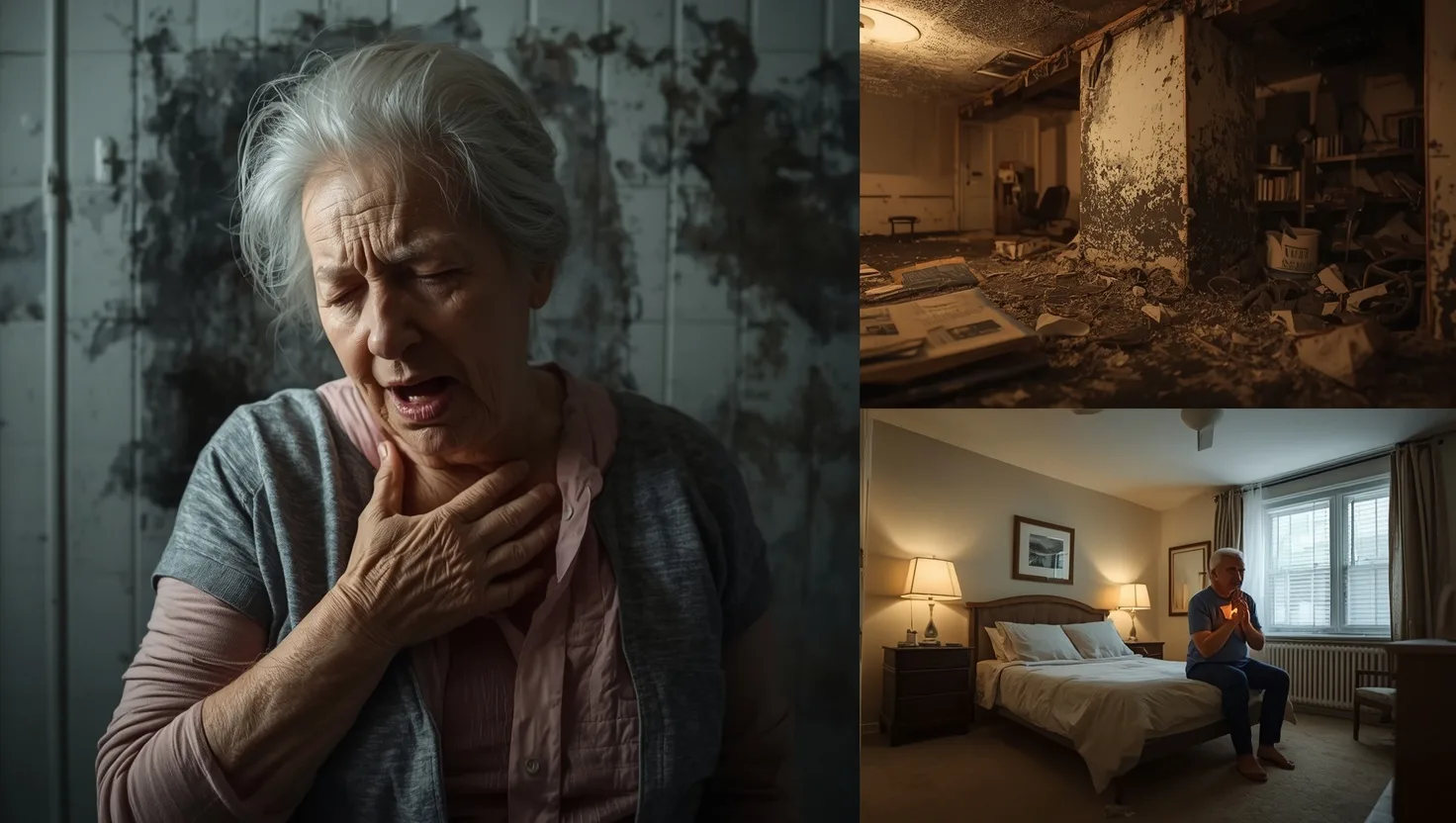
Mold Risks for Seniors Part 2: The Hidden Costs and Long-Term Health Complications You Can’t Ignore
A persistent cough that won’t quit.
Shortness of breath climbing one flight of stairs.
Night sweats that soak your sheets.
These aren’t just annoying senior moments—they’re warning signs that mold exposure has already moved into dangerous territory for your health.
Most seniors focus on the immediate mold risks, but what really matters is understanding the long-term damage that happens when mold exposure goes unchecked.
The health complications stack up quietly, month after month, until you’re dealing with medical crises that could’ve been prevented.
And the costs?
They’re staggering—both financially and in terms of your quality of life.
How Mold Exposure Compounds Over Time in Senior Lungs
Your respiratory system isn’t designed to handle repeated mold spore exposure.
With each breath, if you’re living in a moldy environment, you’re pulling microscopic spores deep into your lungs.
Unlike younger people whose immune systems can mount a strong inflammatory response and clear these invaders, your aging lungs struggle.
The inflammation doesn’t stop after one exposure—it keeps building.
Week after week, your lung tissue becomes increasingly irritated and damaged.
This chronic inflammation is what turns a simple mold problem into a serious health crisis.
One Rochester senior we know about spent six months in a home with mold growing behind the walls of his bedroom.
He attributed his worsening cough to winter allergies, nothing serious.
By the time his daughter pushed him to see a pulmonologist, he’d developed reactive airway dysfunction syndrome (RADS)—a permanent condition where his airways overreact to irritants.
The diagnosis: mold exposure.
The cost: $18,000 in medical testing, specialist visits, and medications he’ll need for the rest of his life.
The heartbreaker: it was preventable.
Cumulative mold exposure also increases your risk of developing aspergillosis—a serious lung infection caused by a specific type of mold called Aspergillus.
For seniors with weakened immune systems, aspergillosis can spread beyond the lungs and affect other organs.
It’s not common, but it’s catastrophic when it happens.
Bottom line: Repeated mold exposure damages lungs permanently—turning manageable symptoms into lifelong health conditions.
The Medication Trap: Why Your Prescriptions Make Mold Worse
Here’s something most doctors don’t explain clearly enough: many medications seniors take actually make mold exposure more dangerous.
If you’re on corticosteroids for COPD or asthma, you’re suppressing your immune response to fight off mold spores.
Immunosuppressants for rheumatoid arthritis or other autoimmune conditions?
Same problem.
Even common blood pressure medications like beta-blockers can slow your body’s inflammatory response—which sounds good until you realize that inflammation is actually your body’s defense mechanism against mold.
Diabetes medications complicate things too.
High blood sugar levels weaken immune function, and mold thrives in that environment.
So if you’re a senior managing multiple chronic conditions with multiple prescriptions, you’re living in a perfect storm.
Your medications are keeping you alive and managing your chronic diseases, but they’re also making you exponentially more vulnerable to mold-related infections.
One senior in Rochester taking an immunosuppressant for lupus contracted a severe respiratory infection from mold in her basement that a younger, healthier person would’ve shaken off in days.
She ended up hospitalized for two weeks with pneumonia.
Her medical bills exceeded $35,000.
The mold remediation cost another $9,000.
All of it could’ve been prevented with a simple professional mold inspection.
Talk to your doctor about your specific medications and how they affect your immune response to mold and other environmental toxins.
If you’re on medications that suppress immunity, mold exposure becomes a genuine medical emergency—not something to ignore.
Bottom line: Immune-suppressing medications turn mold exposure from annoying to dangerous—sometimes life-threatening.
The Psychological Impact: When Your Home Becomes Your Enemy
Nobody talks about this, but the mental health cost of living in a moldy home is real and devastating.
You start feeling sick in your own space.
You begin avoiding certain rooms because you know they make you feel worse.
Your bedroom—the one place you should feel safe and restorative—becomes a source of anxiety.
You lie awake wondering if that musty smell is making you sicker.
You feel trapped between staying in your home and dealing with health problems, or leaving to stay somewhere else and feeling like you’ve abandoned your life.
For seniors on fixed incomes, that’s an impossible choice.
You can’t afford to move.
You can’t afford expensive mold remediation.
So you stay and suffer, watching your health decline while feeling helpless.
This emotional toll isn’t trivial—it compounds depression and anxiety, which are already common in aging populations.
Studies show that seniors living in homes with known environmental hazards experience higher rates of depression, social isolation, and cognitive decline.
Your mental state affects your physical healing.
If you’re stressed and depressed about living in a moldy home, your immune system weakens further.
It’s a vicious cycle.
One retired teacher we know about stopped visiting her grandchildren because she was embarrassed about the smell in her home.
She felt like a burden—worried the mold might spread to their house.
She became isolated, stopped going to social events, and her health spiraled.
When mold was finally discovered and professionally removed, her physical symptoms improved within days.
But the psychological recovery took months.
She had to rebuild her confidence and reconnect with her social circle.
The point: mold doesn’t just affect your lungs—it affects your entire quality of life.
Bottom line: Living with mold triggers depression, isolation, and anxiety that sabotage your overall health recovery.
Secondary Infections: When Mold Opens the Door to Bigger Problems
Here’s what happens when mold damages your respiratory system: it creates an entry point for secondary bacterial and viral infections.
Your lungs are already inflamed and irritated from mold exposure.
Your cough reflex is weakened.
Your mucous membranes are compromised.
Now a simple cold virus or bacterial infection that a healthy person would fight off in days becomes pneumonia in your case.
A minor sinus infection turns into chronic sinusitis requiring surgery.
Bronchitis becomes bronchiectasis—permanent scarring of your airways.
For seniors, these secondary infections are often more dangerous than the original mold exposure.
One Rochester homeowner—a 72-year-old with pre-existing asthma—developed what she thought was a mild chest cold while living in a home with undetected mold in the HVAC system.
The cold progressed to pneumonia, which led to hospitalization, which triggered complications from her underlying asthma.
She spent 18 days in the hospital, required oxygen therapy, and needed three months of recovery.
Total medical cost: $67,000.
The mold in her HVAC system?
Professional air duct mold removal would’ve cost around $3,000 and prevented the entire cascade of medical crises.
That’s a 22-to-1 cost difference between prevention and crisis management.
Your body’s ability to fight secondary infections weakens with age.
If mold has already compromised your respiratory system, you’re not just dealing with the mold—you’re dealing with a weakened immune system that can’t handle the next infection that comes along.
Bottom line: Mold damage opens doors to secondary infections that hospitalize seniors and drain savings fast.
The Insurance Nightmare: Why Your Homeowner’s Policy Won’t Save You
Most seniors assume their homeowner’s insurance will cover mold damage and remediation.
It won’t.
This is one of the cruelest surprises people face when they finally discover mold in their homes.
Standard homeowner’s insurance policies specifically exclude mold damage caused by negligence or lack of maintenance.
If your mold resulted from a slow leak, poor drainage, a failed sump pump, or inadequate ventilation—all things that could’ve been prevented with regular maintenance—your insurance company will deny your claim.
You’re left paying 100% of the remediation costs out of pocket.
For seniors on fixed incomes, that’s devastating.
A Rochester homeowner discovered extensive mold in her basement after a sump pump failure.
The remediation cost was $11,500.
She filed a claim with her insurance company, expecting coverage.
They denied it, claiming the sump pump failure was a maintenance issue she should’ve caught.
She couldn’t afford the remediation and lived with the mold for another eight months while trying to figure out how to pay for it.
During those eight months, her respiratory symptoms worsened, she developed a secondary sinus infection that required antibiotics and a specialist visit, and her quality of life deteriorated significantly.
By the time she finally scraped together the money for professional remediation, the mold had spread to the walls and cost $15,000 to fully address.
The lesson: waiting doesn’t save money—it costs exponentially more.
There are limited scenarios where insurance will cover mold.
If the mold resulted from a sudden, unexpected event like a burst pipe or roof collapse—events specifically covered by your policy—you might have a case.
But chronic moisture problems, slow leaks, and poor ventilation?
Those are on you.
Read your insurance policy carefully.
Call your agent and ask specifically about mold coverage limits.
Most policies cap mold coverage at $1,000-$5,000, which doesn’t even cover the cost of professional inspection, let alone remediation.
Don’t count on insurance to save you from mold costs.
Count on prevention and early detection instead.
Bottom line: Insurance rarely covers mold—seniors pay out-of-pocket, often facing bills they can’t afford.
Living Alone: The Extra Risk Factor Seniors Don’t Consider
If you’re a senior living alone, mold exposure becomes even more dangerous.
Nobody’s there to notice when your symptoms get worse.
Nobody’s checking on you if you develop a fever or can’t get out of bed.
Nobody’s pushing you to see a doctor when your cough lingers longer than it should.
You might be struggling with respiratory symptoms for weeks before anyone realizes something’s seriously wrong.
By that point, infection has set in, and what could’ve been a simple treatment becomes a hospitalization.
There’s also the practical issue of home maintenance.
If you live alone and can’t safely climb a ladder, your gutters might not get cleaned.
If you can’t easily access your basement, you might not notice water pooling or musty smells until significant mold growth has already happened.
One 68-year-old widow in Rochester lived alone for seven years after her husband passed away.
She didn’t notice the slow leak in her roof because she rarely went into her attic.
Mold grew silently above her head for over a year before she finally noticed water stains on her bedroom ceiling.
By then, the structural damage was severe, and remediation required not just mold removal but significant roof and framing repairs—total cost: $22,000.
If she’d had someone checking on her home periodically, or if she’d scheduled regular professional inspections, the problem would’ve been caught early.
If you’re a senior living alone, consider scheduling regular home inspections—especially seasonal inspections before winter and after heavy rain seasons.
Have a trusted family member or friend who can help monitor your home for signs of water damage or mold.
Install water sensors or high-water alarms in your basement and near your water heater.
These simple tools alert you to problems before they become catastrophic.
Bottom line: Living alone means mold grows undetected longer—invest in monitoring tools and regular professional inspections.
Mold in Your Crawl Space: The Silent Killer Seniors Ignore
Most seniors never go into their crawl spaces.
It’s dark, cramped, and uncomfortable.
So when mold starts growing down there, it goes completely unnoticed until serious problems develop.
Here’s the danger: mold in crawl spaces doesn’t just stay in the crawl space.
It releases spores that get pulled up into your living spaces through natural air circulation and your HVAC system.
You’re breathing mold spores from a space you never even enter.
Crawl spaces in Rochester homes are particularly vulnerable because of the region’s moisture.
Spring snowmelt, summer humidity, fall rain—all of it finds its way into crawl spaces.
If your crawl space doesn’t have a vapor barrier (many older homes don’t), moisture seeps directly into the soil and concrete, creating a perfect breeding ground for mold.
One senior in Rochester had mold colonizing nearly 60% of her crawl space before she even realized it was there.
She started experiencing persistent respiratory symptoms—coughing, wheezing, shortness of breath.
She went to three different doctors over six months, each prescribing different treatments that didn’t help.
Nobody thought to check for environmental causes.
Eventually, her daughter suggested a professional home inspection.
That’s when the extensive crawl space mold was discovered.
Professional mold mitigation in the crawl space cost $8,500 and required installing a vapor barrier, improving drainage, and removing the mold colony.
Within two weeks of remediation, her symptoms cleared up completely.
The wasted medical costs from misdiagnosis and unnecessary treatments?
Over $4,000.
If she’d had a professional home inspection earlier, the entire situation would’ve been prevented.
Don’t ignore your crawl space just because you can’t see it.
Schedule a professional inspection to check for moisture, mold, and structural issues.
If you have a crawl space, it should be inspected at least every 2-3 years—more frequently if you live in a high-moisture climate like Rochester.
Bottom line: Crawl space mold spreads toxins through your entire home—professional inspection catches it before it makes you sick.
The Recovery Timeline: How Long Does Your Body Need to Heal After Mold Exposure?
This is a question seniors ask constantly, and the answer depends on how long the exposure lasted and how much damage occurred.
If mold exposure was brief and caught early, respiratory symptoms often improve within days to weeks after the mold is removed.
But if you’ve been breathing mold spores for months or years, recovery takes longer.
Your lungs need time to heal the inflammation and irritation.
Some seniors experience lingering symptoms for months after mold remediation.
A persistent dry cough might linger for 4-6 weeks.
Shortness of breath might take 2-3 months to fully resolve.
If the mold exposure triggered or worsened an underlying condition like asthma, you might never fully recover to your pre-exposure baseline.
One 74-year-old in Rochester lived with mold in her HVAC system for almost a year before it was professionally removed.
Her symptoms improved dramatically within two weeks of remediation.
But even three months later, she still had occasional wheezing and shortness of breath—something she’d never experienced before the mold exposure.
Her pulmonologist explained that the prolonged inflammation had caused some permanent changes to her airways.
She’ll likely manage this for the rest of her life.
The takeaway: the longer mold exposure continues, the longer and less complete your recovery will be.
This is why early detection and professional remediation matter so much.
Every month you wait is another month of inflammation, another month of damage accumulating.
If you suspect mold, don’t wait to see if symptoms resolve on their own.
Get a professional inspection immediately.
The cost of inspection is minimal compared to the cost of prolonged health problems and incomplete recovery.
Bottom line: Months of mold exposure can mean years of health recovery—early action prevents permanent damage.
Frequently Asked Questions About Mold Risks for Seniors
Can mold exposure cause permanent lung damage in seniors?
Yes, prolonged mold exposure can cause permanent scarring of lung tissue (pulmonary fibrosis), reactive airway dysfunction, or chronic bronchitis—conditions that affect your breathing for the rest of your life.
How quickly does mold grow in a Rochester home?
Mold can begin growing within 24-48 hours of water exposure if conditions are right (darkness, moisture, and organic material like drywall or wood).
By one week, a visible colony can establish itself.
By one month, it can spread significantly.
What’s the difference between black mold and other types?
All mold types produce spores that can trigger respiratory issues in seniors—color doesn’t determine toxicity.
Some black molds produce mycotoxins, but so do some green and white molds.
Professional testing determines the actual threat level.
If I remove the mold myself, will it come back?
Almost certainly yes, unless you also fix the moisture source causing the mold to grow in the first place.
DIY removal without addressing the root cause is temporary at best.
How much does professional mold remediation cost in Rochester?
Small, localized mold problems cost $500-$2,000 to professionally remediate.
Extensive mold in crawl spaces, attics, or throughout ductwork runs $5,000-$15,000 or more depending on severity and location.
Should I get a second opinion on mold damage?
Absolutely, especially if the remediation estimate seems high or if you’re unsure about the extent of damage.
A second professional inspection provides clarity and protects you from overcharging.
Walt Latuik and the JetDry team in Rochester have over 20 years of experience assessing mold damage accurately and honestly.
Is mold remediation covered by Medicare or Medicaid?
No—mold remediation is a home repair issue, not a medical service, so it’s not covered by any health insurance.
However, medical treatment for mold-related respiratory infections is covered.
What’s the Best Way to Prevent Mold After Water Damage Occurs?
Fast action is everything.
Professional emergency water damage restoration within 24-48 hours prevents mold from ever starting.
Dehumidification, proper drying, and moisture monitoring stop the conditions mold needs to grow.
Can Air Purifiers Remove Mold Spores From My Home?
Air purifiers with HEPA filters can capture some airborne spores, but they can’t eliminate mold already growing in walls, ducts, or crawl spaces.
They’re a helpful supplement, not a solution.
How Often Should Seniors Schedule Professional Home Inspections?
At least annually, with additional seasonal inspections before winter and after spring snowmelt in Rochester.
If you live alone or have mobility issues that prevent you from checking your home regularly, quarterly inspections are worth the investment.
What Should I Do If I Develop Respiratory Symptoms After Moving Into a New Home?
See your doctor immediately and request environmental testing of your home.
Symptoms appearing after a move often indicate environmental hazards like mold, poor air quality, or water damage that existed before you moved in.
Don’t assume symptoms will resolve on their own.
The Cost of Waiting: Why Acting Fast Saves Thousands
The financial math is brutal if you’re a senior on a fixed income.
A $1,500 professional mold inspection and early remediation costs way less than any of these scenarios:
Scenario one: You ignore the musty smell in your basement for six months.
Mold spreads extensively.
Remediation now costs $12,000 instead of $2,000.
Scenario two: You develop a respiratory infection from prolonged mold exposure.
Hospital stay, antibiotics, specialist visits, imaging tests.
Medical bills hit $25,000-$45,000.
Scenario three: The mold damages structural elements—wood framing, drywall, insulation.
Now you’re looking at reconstruction costs exceeding $20,000.
Scenario four: You develop a permanent lung condition from years of mold exposure.
Lifelong medication costs, specialist visits, potential hospitalization for acute exacerbations.
Over your remaining years, medical costs could exceed $100,000.
The choice is simple: spend money on prevention and early detection, or spend it on crisis management and permanent health damage.
One Rochester senior chose prevention.

Mold Risks for Seniors Part 3: Testing, Treatment, and Taking Back Control of Your Health
You’ve noticed the musty smell.
Your cough won’t quit.
You’re wondering if it’s really mold or just your imagination playing tricks.
The problem: you can’t see it, so you can’t be sure—and that uncertainty is eating at you.
This is where most seniors get stuck.
You know something’s wrong, but you don’t know what to do next or who to trust.
The gap between suspicion and confirmation is where mold risks for seniors become dangerous—because waiting for proof means more exposure, more damage, and more health complications piling up quietly.
Part 3 breaks down exactly what happens after you suspect mold, how testing actually works, what treatment looks like, and how to take control instead of letting uncertainty paralyze you.
Why You Can’t Trust Your Nose (and Why That Matters)
That musty smell you’re detecting?
It’s real—but it’s also a late-stage warning sign.
By the time mold smells strong enough for you to notice it clearly, the colony is already established and spreading.
Think of it like smoke from a fire—you smell it way after the fire’s already burning.
The sneakier problem: your nose adapts.
If you’ve lived with mold for weeks or months, you stop noticing the smell entirely.
Your brain filters it out as normal background noise.
Visitors to your home will walk in and immediately ask, “What’s that smell?”
You won’t smell anything because you’ve become desensitized to it.
One senior in Rochester lived with her daughter for two weeks while her basement was being waterproofed.
When she returned home, the musty smell hit her like a wall.
She’d been breathing it every single day without realizing how bad it was.
Her body had adapted—but her lungs hadn’t stopped reacting to the mold spores.
The smell is just your nose telling you something’s wrong.
What you really need is objective data—testing that tells you whether mold is actually present, where it is, and how much of it you’re dealing with.
Bottom line: Your nose detects mold late; testing catches it early when costs and health risks are still manageable.
The Three Types of Mold Testing Seniors Need to Understand
Not all mold testing is created equal.
There are three main approaches, and knowing the difference keeps you from wasting money or getting misleading results.
Visual Inspection and Moisture Mapping
This is where professionals start.
A trained inspector walks through your home looking for visible mold, water stains, discoloration, and signs of moisture damage.
They use thermal imaging cameras to detect temperature variations that indicate hidden moisture inside walls.
Moisture meters measure moisture levels in materials—wood, drywall, insulation—places where mold grows before you ever see it.
This is the most cost-effective approach and catches 80% of mold problems.
Cost: typically $300-$600 for a full home inspection.
Why it matters for seniors: it’s non-invasive, gives you a clear picture of where moisture is hiding, and doesn’t require expensive lab testing.
Air Quality Testing (Spore Counts)
This test measures how many mold spores are floating in your breathing air.
A professional takes air samples from different rooms in your home and sends them to a lab for analysis.
The lab counts spores and identifies the types of mold present.
If your home has elevated spore levels—especially compared to outdoor air—you know mold exposure is happening.
Cost: $150-$300 per sample (you typically need 3-5 samples for a thorough assessment).
Why it matters for seniors: if you’re experiencing respiratory symptoms, air testing proves whether mold is actually the cause or if something else is going on.
It also gives you objective data to show your doctor.
Surface and Material Testing
This is when professionals collect actual samples from suspicious areas—swabs from walls, tape lifts from surfaces, or material samples from inside walls.
These go to a lab for identification and toxicity analysis.
This is the most expensive option and usually only necessary when you need definitive proof of what type of mold you’re dealing with.
Cost: $200-$500 per sample depending on the lab and what they’re testing.
Why it matters for seniors: sometimes knowing exactly what you’re dealing with helps you understand the health risk and makes treatment decisions clearer.
For most situations, visual inspection plus air quality testing gives you all the information you need to move forward.
Don’t let anyone pressure you into expensive testing you don’t actually need.
Bottom line: Start with visual inspection; add air testing only if you need to confirm respiratory exposure.
What Happens During a Professional Mold Inspection
Let’s walk through exactly what a professional inspection looks like—because knowing what to expect removes the anxiety and helps you ask the right questions.
A qualified inspector arrives at your home and starts in the basement or crawl space—mold’s favorite real estate.
They’re looking for water stains, soft spots in wood, visible mold colonies, and moisture accumulation.
They check your sump pump, drainage systems, and foundation for cracks or seepage.
They move to the attic next, checking for roof leaks, ventilation issues, and condensation problems.
Then they examine bathrooms, kitchens, and any areas where water damage has occurred in the past.
Throughout the inspection, they’re using moisture meters to measure moisture levels in walls, ceilings, and materials.
If moisture levels are elevated—anything above 16% in wood is a red flag—that’s where mold is likely growing or will grow soon.
They’ll check your HVAC system, looking inside ducts for visible mold or musty smells.
They examine windows and doors for condensation or water damage.
They ask you specific questions: Have you had any water damage? Do certain rooms smell worse than others? When do your symptoms get worse—mornings, evenings, specific rooms?
These questions aren’t random—they’re building a picture of where moisture is coming from and where mold is likely hiding.
At the end, they’ll give you a written report with photos, moisture readings, and recommendations.
A good inspector will explain findings in plain language, not industry jargon.
You should understand exactly what they found, where it is, and what caused it.
If an inspector uses confusing terminology or pushes you toward expensive treatment without explaining why—that’s a red flag.
Walt Latuik and the team at JetDry have been conducting these inspections in Rochester for over 20 years.
They show homeowners exactly what they’re looking at, explain the moisture source, and recommend only what’s actually necessary—not upsells.
Bottom line: A professional inspection should take 1-2 hours, give you clear findings, and explain the moisture source causing mold.
Understanding Your Test Results (Without the Confusion)
You get the lab results back and suddenly you’re reading terminology you’ve never heard before.
What does it all mean?
Let’s decode the most common findings you’ll see.
Spore Counts and Baseline Comparisons
Air quality tests report spore counts in “spores per cubic meter” or similar units.
The key number isn’t just what’s in your home—it’s how your home compares to outside air.
If outdoor air has 500 spores and your home has 2,000 spores, you’ve got a problem.
Your home is producing mold, not just bringing in outdoor spores.
If indoor and outdoor counts are similar, you might not have an indoor mold problem—you might just be dealing with seasonal outdoor mold exposure.
This distinction matters because it changes your treatment approach.
Mold Types Identified
The lab will identify specific mold types: Aspergillus, Penicillium, Cladosporium, Stachybotrys (black mold), etc.
Different molds have different health implications.
Aspergillus is particularly dangerous for seniors with weakened immune systems.
Stachybotrys produces mycotoxins and requires more aggressive treatment.
But here’s the truth—all mold types should be treated seriously.
The specific type matters less than the fact that mold is present and needs to be removed.
Moisture Readings
Moisture meters measure moisture content in materials as a percentage.
Wood should be 12-15% moisture content.
If it’s 16-20%, mold can grow.
Above 20%, you’ve definitely got mold or will very soon.
These readings tell you exactly where to focus treatment efforts.
If your basement wall is reading 25% moisture, that wall needs immediate attention.
What You Should Ask Your Inspector
Don’t just accept the report—ask questions.
“What caused this moisture?”
“Is this an active problem or old damage?”
“What happens if we don’t treat it?”
“What’s the first step in fixing this?”
“How much will this cost?”
A good inspector can answer these clearly without pressure or sales tactics.
Bottom line: Test results matter only if you understand what they mean and what caused the problem in the first place.
The Treatment Decision: Professional Remediation vs. DIY Cleanup
Here’s where seniors often make costly mistakes.
You find mold and think, “I can handle this with some bleach and elbow grease.”
That approach works for small, visible surface mold in bathrooms—maybe 5% of actual mold problems.
For everything else, it’s a disaster waiting to happen.
When you spray bleach on mold, you release spores into the air.
If you’re the one doing the spraying, you’re breathing those spores directly into your lungs while trying to clean.
You’re getting the worst possible exposure at the exact moment you’re most vulnerable.
For seniors with respiratory conditions, this can trigger acute symptoms or even hospitalization.
DIY cleanup also doesn’t address the moisture source.
You clean the mold, feel satisfied for a few weeks, and then it comes back because you never fixed what caused it.
You’re trapped in a cycle of temporary fixes and recurring problems.
Professional remediation is different.
It follows specific protocols: containment of the affected area, HEPA filtration to capture spores, removal of contaminated materials, treatment of the moisture source, and verification testing to confirm the mold is gone.
Professionals use equipment and techniques that you can’t replicate at home.
They also identify and fix the root cause—the leak, the poor drainage, the ventilation problem—so mold doesn’t come back.
One senior tried DIY mold removal in her basement after discovering a small colony.
She scrubbed it with bleach, opened windows, and called it done.
Three weeks later, the mold came back worse.
She’d never fixed the water seepage that was feeding the mold.
When she finally called JetDry for professional remediation, they found extensive mold throughout the basement and behind the walls.
The cost jumped from what would’ve been $2,500 for early professional treatment to $8,000 because she’d waited and the problem spread.
Bottom line: Professional remediation fixes the moisture source; DIY cleanup just masks the problem temporarily.
The Remediation Process: What Actually Happens
You’ve decided to go professional—smart choice.
Now what?
Understanding the actual process removes mystery and helps you know what to expect.
Day One: Containment and Assessment
The remediation team arrives and sets up containment—plastic barriers around the affected area to prevent spores from spreading to other parts of your home.
They seal off HVAC vents in that area and set up negative air pressure.
This means air flows into the contaminated space but not out, keeping spores contained.
They verify the exact extent of mold and plan the removal strategy.
Days Two-Three: Removal and Treatment
Contaminated materials—drywall, insulation, wood that’s heavily colonized—are carefully removed and disposed of.
Surfaces are treated with antimicrobial solutions to kill remaining spores.
HEPA vacuums capture dust and debris.
The team focuses on the moisture source: sealing foundation cracks, repairing leaks, installing vapor barriers, improving drainage, fixing HVAC issues.
This is the critical part—if they don’t fix the moisture source, you’re paying for temporary relief.
Days Four-Five: Drying and Verification
Industrial dehumidifiers and air movers run to dry everything completely.
Moisture levels are monitored until they’re back to normal.
Once everything’s dry, final verification testing happens—air quality tests to confirm spore levels are normal, moisture readings to confirm materials are dry.
You get documentation proving the remediation was successful.
Total timeline: typically 5-7 days for moderate mold problems, longer for extensive contamination.
Cost: $5,000-$15,000 depending on the severity and scope, but this includes fixing the moisture source—not just removing mold.
During remediation, you might need to stay elsewhere if the affected area is large or if you have respiratory conditions that make being near the work problematic.
A good remediation company will advise you on this.
Bottom line: Professional remediation takes days, costs thousands, but fixes the problem permanently—not temporarily.
Post-Remediation: Staying Mold-Free Long-Term
The mold is gone.
The remediation company has packed up.
Your home smells normal again.
Now comes the part most seniors skip: preventing mold from coming back.
This isn’t complicated, but it’s essential.
Monitor Moisture Levels Continuously
Buy a simple hygrometer—a device that measures humidity.
They cost $20-$30 and are one of the best investments you can make.
Keep humidity between 30-50%.
If it creeps above 55%, use a dehumidifier.
Check it weekly, especially during humid months.
Maintain Your Drainage Systems
Clean gutters twice a year—spring and fall.
Make sure downspouts extend 4-6 feet away from your foundation.
Check your sump pump monthly by pouring water into the pit and confirming it activates.
Test the backup battery if you have one.
Ventilate Properly
Run bathroom exhaust fans for 20-30 minutes after showering.
Make sure kitchen exhaust vents to the outside, not into your attic.
Open windows on dry days to allow air circulation.
Don’t block vents with furniture or coverings.
Address Water Issues Immediately
If you notice a leak, stain, or moisture accumulation—don’t wait.
Call a professional within 24 hours for emergency water damage restoration.
The first 48 hours are critical—that’s when you can prevent mold from ever starting.
Schedule Seasonal Inspections
After professional remediation, schedule inspections before winter and after spring snowmelt.
A professional eye catches small moisture problems before they become big mold problems.
Cost: $300-$600 per inspection.
Prevention cost: far less than remediation cost.
One Rochester senior had extensive mold remediation, then implemented these prevention steps religiously.
Five years later, her home is still mold-free and her respiratory symptoms haven’t returned.
She invests $600 annually in preventive inspections.
That’s the cost of staying healthy and keeping her home protected.
Bottom line: Prevention costs hundreds; ignoring moisture warning signs costs tens of thousands and your health.
Working With Your Doctor: Proving the Connection
You’ve had mold remediation done, but your symptoms aren’t improving as fast as you expected.
Your doctor is skeptical that mold was the cause.
This frustrates seniors constantly—they know their home had mold, they know they’re sick, but proving the connection feels impossible.
Here’s how to help your doctor understand the link.
Bring documentation: the inspection report showing mold was present, air quality test results showing elevated spore counts, moisture readings showing the moisture source.
This isn’t anecdotal—it’s objective data.
Document your symptoms: when they started, how they’ve changed, which rooms made them worse, how they improved after remediation.
A timeline showing symptoms correlating with mold exposure and improving after remediation is powerful evidence.
Ask your doctor about pulmonary function testing—spirometry—to measure if your lung capacity has been affected by mold exposure.
This gives you baseline measurements and helps track improvement over time.
If your doctor dismisses environmental causes without investigating, consider getting a second opinion from a pulmonologist or environmental medicine specialist.
Not all doctors are trained to recognize environmental health connections.
Some are, and they can help you understand what mold exposure did to your body and what recovery looks like.
Bottom line: Objective testing data plus symptom timeline proves mold caused your health problems—show your doctor the evidence.
FAQ: Mold Testing and Treatment Questions Seniors Ask
How long does mold remediation take?
Small, localized problems take 2-3 days. Moderate problems take 5-7 days. Extensive mold throughout crawl spaces or attics can take 1-2 weeks. The timeline depends on the scope and how quickly materials dry.
Can I stay in my home during remediation?
For small basement or crawl space work, yes—with containment in place. For large-scale remediation, your remediation company will advise you to stay elsewhere. Don’t compromise your health by staying in a home undergoing active mold treatment.
What if I can’t afford professional remediation right now?
Address the moisture source immediately—that’s free or cheap. Stop the leak, improve drainage, run a dehumidifier. Then save for professional remediation. Stopping new mold growth is more important than removing existing mold slowly.
Will homeowner’s insurance cover remediation?
Rarely. Most policies exclude mold from maintenance-related moisture problems. If the mold resulted from a sudden, covered event like a burst pipe, you might have a case. Read your policy and call your agent before assuming coverage.
How do I know if the remediation actually worked?
Verification testing—post-remediation air quality testing and moisture readings. A good remediation company includes this. You should get documentation showing spore levels are normal and moisture is back to baseline. Don’t pay for remediation without verification.
What if mold comes back after professional remediation?
It shouldn’t if the moisture source was actually fixed. If it does, that means the underlying problem wasn’t addressed. Contact the remediation company immediately—reputable companies guarantee their work and will return at no charge to fix the issue.
Should I get a second opinion on remediation costs?
Absolutely. Get at least two estimates. Costs vary based on scope, but they shouldn’t vary wildly. If one company quotes double what others do, ask why. Sometimes higher costs mean more thorough work, but sometimes it means upselling.
Can I use air purifiers instead of professional remediation?
Air purifiers help with airborne spores but don’t remove mold growing in walls, ducts, or crawl spaces. They’re a supplement, not a replacement for professional remediation. Use them after remediation to help maintain air quality.
How often should I test for mold after remediation?
Not constantly—that’s unnecessary and expensive. Have seasonal inspections before winter and after spring snowmelt. If you notice musty smells or moisture accumulation, test then. Otherwise, preventive maintenance is more cost-effective than constant testing.
What’s the difference between mold remediation and mold abatement?
Remediation removes mold and fixes the moisture source. Abatement just removes mold. Always choose remediation—abatement is temporary and mold will return.
Can mold come back after successful remediation if I don’t maintain prevention?
Yes. If you ignore drainage, skip gutter cleaning, or let humidity climb above 55%, conditions for mold return. Prevention isn’t optional—it’s the price of staying mold-free long-term.
Taking Back Control: Your Next Step
You don’t have to live with uncertainty about mold anymore.
You don’t have to guess whether that smell is real or just your imagination.
You don’t have to suffer through respiratory symptoms hoping they’ll resolve on their own.
Testing, professional remediation, and prevention are straightforward—and they work.
The cost of knowing is far less than the cost of not knowing.