Pets And Mold Exposure: The Hidden Killer
- Wolfe McNeel
Your Pet’s Health is at Risk—Here’s What You Need to Know About Pets and Mold Exposure
Your dog’s been coughing more than usual. Your cat won’t eat. You chalk it up to seasonal allergies, but what if it’s something worse living in your walls?
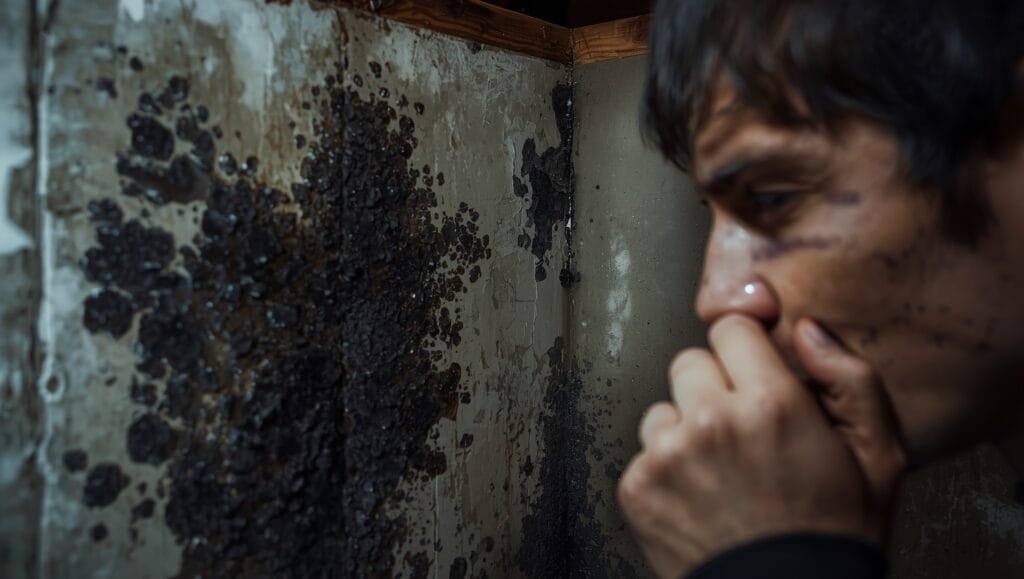
Mold doesn’t announce itself. It grows quietly in damp crawlspaces, behind walls, and under carpets—places your pets spend time without you knowing. And here’s the thing: your furry family members are often the first to show signs of mold exposure because they’re closer to the ground, they breathe more heavily during play, and they lack the ability to tell you what’s wrong.
Pets and mold exposure is a real threat that most homeowners don’t see coming. Unlike water damage or a visible leak, mold creeps up on you. By the time you notice your pet’s symptoms, the problem may have already spread throughout your home.
This guide breaks down exactly what happens when pets encounter mold, how to spot the warning signs, and what you can do right now to protect your family—both human and furry.
Why Pets Are More Vulnerable to Mold Than You Are
Your pet isn’t just a smaller version of you—they’re actually more susceptible to mold’s toxic effects. Here’s why.
Pets spend most of their time at ground level. That’s where moisture collects, where mold spores settle, and where they’re breathing them in repeatedly throughout the day. If you’ve got a damp basement, a leaky crawlspace, or a water-damaged carpet, your pet is essentially living in a mold hotspot.
Their respiratory systems are also different from ours. Dogs and cats have faster breathing rates, especially when they’re playing or excited. This means they’re pulling more air—and more mold spores—into their lungs with each breath. A dog might take 30 breaths per minute at rest, but that jumps to 200+ during activity. That’s a lot of exposure in a short time.
And here’s what most people don’t realize: pets can’t communicate their symptoms clearly. A dog with a respiratory infection from mold exposure might just seem “off.” Your cat might hide more than usual. You might think it’s normal behavior when it’s actually a cry for help.
Pets also have weaker immune systems when it comes to fighting off mold-related infections. Young animals and senior pets are especially vulnerable, just like children and elderly people are in humans. If your pet is already dealing with allergies or a chronic condition, mold exposure can push them over the edge.
Bottom line: Pets breathe more air, live closer to mold, and can’t tell you they’re sick—making them early warning systems for your home.
The Real Signs Your Pet Is Experiencing Mold Exposure
So what does mold exposure actually look like in your pet? The symptoms can be subtle at first, then escalate quickly.
Respiratory issues are the most common sign. You might notice your pet coughing—especially at night or after exercise. It’s not a quick cough either; it’s often a persistent, dry cough that doesn’t seem to go away with rest. Some pets develop wheezing or labored breathing. Others seem fine one minute and then suddenly gasping the next.
Skin problems pop up too. Mold produces mycotoxins (toxic compounds) that can irritate your pet’s skin. You might see excessive scratching, red patches, or even hair loss in certain areas. Some pets develop fungal infections on their paws or between their toes—especially if they’ve been walking through contaminated areas.
Lethargy and loss of appetite are red flags. Your normally energetic dog suddenly doesn’t want to play. Your cat won’t eat her favorite treat. They seem depressed or withdrawn. This isn’t normal pet behavior, and it’s often one of the first signs that something systemic is wrong.
Ear infections are another telltale symptom. Mold can grow in your pet’s ears, causing itching, discharge, and a foul smell. If your pet is shaking their head constantly or pawing at their ears, get them checked. A vet can tell you whether it’s a standard ear infection or something mold-related.
Some pets develop neurological symptoms in severe cases. We’re talking disorientation, tremors, or even seizures. This happens when mycotoxins enter the bloodstream and affect the nervous system. It’s rare but terrifying when it happens.
Digestive issues can occur too. Vomiting, diarrhea, or general stomach upset might seem unrelated to mold, but if your pet is ingesting mold spores (by licking contaminated surfaces or eating food that’s been exposed), their gut takes the hit.
Bottom line: Persistent coughing, skin problems, lethargy, and ear infections are your pet’s way of telling you mold is a problem.
Where Mold Hides—And Why Your Pet Finds It First
Mold doesn’t grow in obvious places. It thrives in damp, dark corners that most homeowners never think about.
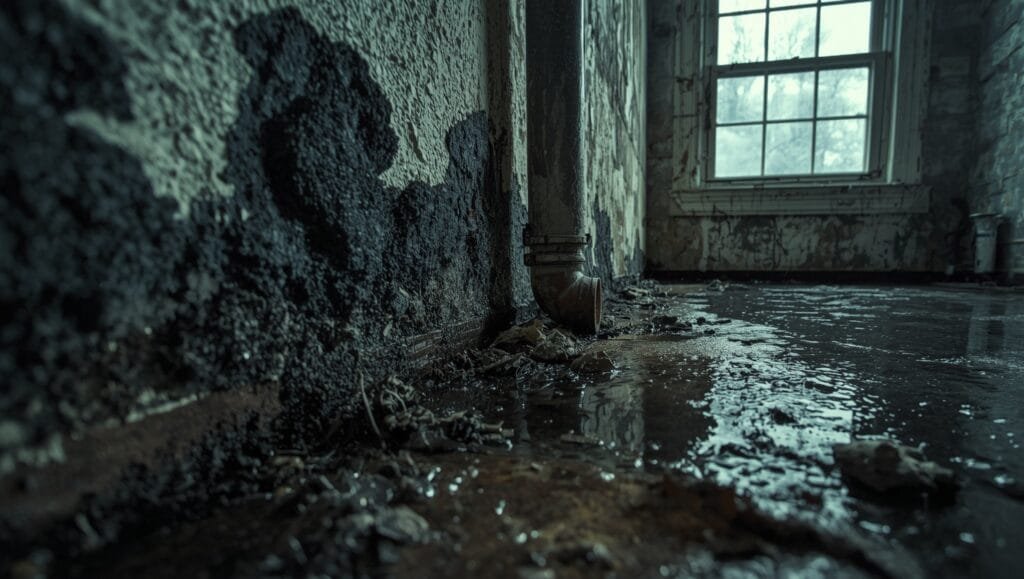
Basements are the obvious culprit. If you’ve got water seeping in or standing water, mold is already colonizing. Your pet might spend time down there playing or sleeping, which means constant exposure. Even if you don’t see water, high humidity in a basement creates the perfect mold environment.
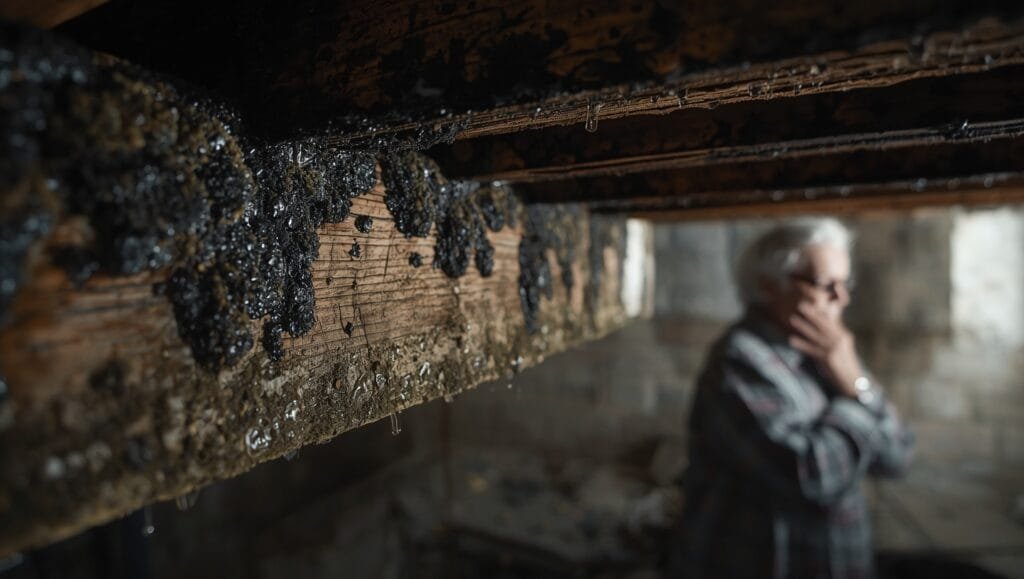
Crawlspaces are breeding grounds. These are literally designed to trap moisture. Mold grows on the wood, insulation, and soil. If your pet gets into the crawlspace (and curious dogs love to do this), they’re breathing in concentrated mold spores.
Under carpets and rugs is where things get sneaky. A small leak under a carpet, a spill that didn’t dry completely, or high humidity can cause mold to grow underneath where you can’t see it. Your pet walks on that carpet every day, disturbing spores with each step, then breathing them in.
HVAC systems and air ducts are silent killers. Mold in your ductwork spreads spores throughout your entire home every time the system runs. Your pet (and you) are breathing contaminated air constantly. This is especially dangerous because you can’t see it happening.
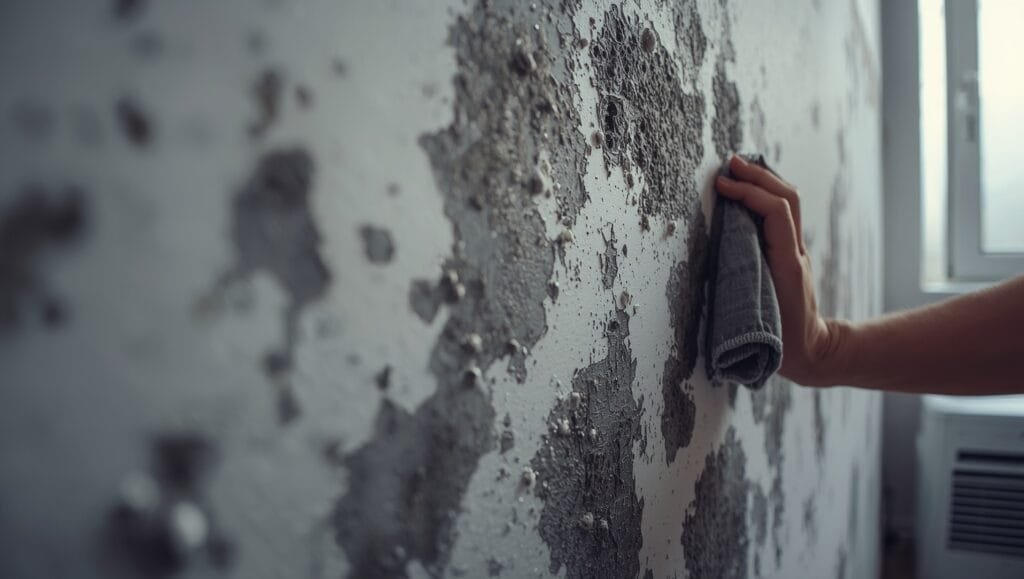
Walls and drywall hide mold behind the scenes. A water leak from a burst pipe, a roof leak, or a failed seal can cause mold to grow inside your walls. Your pet might scratch at the wall or spend time near it, inhaling spores that are seeping out.
Pet bedding and toys can become mold farms if they’re stored in damp areas or if they’ve been in contact with contaminated surfaces. Your pet sleeps on that bed, carries that toy around—it’s direct exposure.
Windowsills and areas around air conditioning units collect moisture. Mold grows here and releases spores into the air. If your pet’s favorite napping spot is near a window or AC unit, they’re getting a steady dose of mold all day long.
Bottom line: Mold hides in basements, crawlspaces, under carpets, and in air ducts—everywhere your pet likes to explore.
How Mold Exposure Affects Your Pet’s Long-Term Health
Short-term symptoms are one thing. Chronic mold exposure is another beast entirely.
Repeated exposure to mold spores weakens your pet’s immune system over time. Their body is constantly fighting off toxins, which means it can’t focus on other threats. A pet that’s been exposed to mold for months might catch every cold going around, develop recurring infections, or struggle to recover from minor illnesses.
Mycotoxins—especially from toxic mold varieties like black mold—can cause organ damage. We’re talking liver damage, kidney problems, and neurological issues. These don’t show up overnight. They develop quietly, and by the time you notice something’s wrong, the damage might already be done.
Some pets develop chronic respiratory conditions after prolonged mold exposure. Their lungs become inflamed, and they never fully recover. They might cough for the rest of their lives, even after the mold is gone.
There’s also the psychological toll. A pet that’s sick or uncomfortable changes behavior. They become anxious, aggressive, or withdrawn. The stress of feeling bad affects their quality of life in ways that go beyond the physical symptoms.
And here’s something most people don’t consider: mold exposure can trigger or worsen existing conditions. If your pet has asthma, allergies, or a heart condition, mold exposure can make everything worse. It’s not just an added problem—it’s a multiplier.
Bottom line: Chronic mold exposure leads to immune damage, organ problems, and long-term health issues that can shorten your pet’s lifespan.
The Connection Between Pets, Mold Exposure, and Your Home’s Structural Health
Here’s a reality check: if your pet is showing signs of mold exposure, your home is already compromised.
Mold doesn’t exist in isolation. It grows because there’s moisture present. And where there’s moisture, there’s often water damage. Maybe it started with a small leak you didn’t notice. Maybe it’s from poor ventilation or high humidity. Either way, if mold is thriving, something in your home’s structure is failing.
The damage spreads fast. Mold colonizes wood, drywall, and insulation. It weakens structural integrity. A homeowner in Rochester discovered mold in their attic after their dog started coughing constantly. By the time they called for help, the wood beams were compromised, and the repair bill hit $18,000. The dog recovered, but the home damage was serious.
Water damage and mold go hand in hand. Common causes of water damage like burst pipes, roof leaks, and foundation cracks create the perfect conditions for mold. Your pet experiences the mold exposure, but your home is suffering structural damage simultaneously.
The cost of ignoring this is brutal. A small mold problem that costs $2,000 to remediate today becomes a $25,000 problem in six months if left untreated. The longer you wait, the more it spreads—into walls, into insulation, into your foundation.
And the health costs keep climbing. Vet bills for treating mold-related infections, respiratory issues, and complications add up fast. One pet owner spent $3,200 on vet visits trying to figure out why their dog was sick before discovering mold in the basement.
Bottom line: Your pet’s mold exposure signals deeper water damage and structural problems in your home that won’t fix themselves.
What to Do Right Now if You Suspect Pets and Mold Exposure
Don’t panic, but don’t wait either.
First, get your pet to a vet. Describe the symptoms—the coughing, the skin issues, whatever you’ve noticed. Tell the vet you suspect mold exposure and that you’ve seen signs of moisture or water damage in your home. The vet can run tests, rule out other conditions, and recommend treatment.
Second, inspect your home. Look for visible mold (it’s usually black, green, or white and has a musty smell). Check your basement, crawlspaces, around windows, and under sinks. Look for water stains, soft drywall, or discolored areas. If you find mold, don’t touch it or try to clean it yourself—mold spores spread when disturbed.
Third, identify the moisture source. Is there a leak? Is humidity too high? Is there standing water? You can’t fix the mold problem if you don’t stop the water problem first. This might mean fixing a pipe, sealing a roof, improving ventilation, or running a dehumidifier.
Fourth, remove your pet from the affected area temporarily. If mold is in your basement and your pet hangs out there, keep them upstairs while you deal with the problem. Reduce their exposure as much as possible.
Fifth, call a professional. Mold remediation isn’t a DIY project. Professional mold remediation teams have the tools, training, and protective equipment to handle this safely. They’ll contain the mold, remove it properly, and ensure it doesn’t come back.
Bottom line: Get your pet to a vet, find the moisture source, and call professionals—don’t try to fix this alone.
Prevention: Protecting Your Pet From Mold Before It Becomes a Problem
The best medicine is prevention.
Keep your home dry. Fix leaks immediately—don’t wait. A small drip today is a mold colony tomorrow. Check your roof, your plumbing, your windows, and your foundation regularly. If you see water stains or soft spots, address them now.
Control humidity. Mold loves moisture. Keep humidity levels between 30% and 50% in your home. Run a dehumidifier in damp areas like basements and crawlspaces. Use exhaust fans in bathrooms and kitchens. Make sure your HVAC system is draining properly.
Improve ventilation. Stagnant air is mold’s friend. Open windows when weather permits. Use ceiling fans. Make sure your dryer vent and bathroom exhaust fans are working. Good airflow keeps moisture from accumulating.
Clean and dry wet areas immediately. Spilled water, wet carpets, flooded basements—these need attention fast. Mold can start growing in as little as 24 to 48 hours. Don’t give it a chance.
Keep pet areas clean and dry. Wash your pet’s bedding regularly. Don’t leave food or water bowls sitting out. Keep their sleeping area in a dry, well-ventilated space. If they spend time in the basement, make sure that area is dry and clean.
Have your air ducts cleaned regularly. Mold can grow in your HVAC system without you knowing. Professional duct cleaning removes mold spores and keeps the air your pet breathes clean.
Bottom line: Fix leaks fast, control humidity, improve airflow, and keep your pet’s spaces clean and dry.
Understanding the Real Cost of Ignoring Pets and Mold Exposure
Let’s talk numbers because this matters.
Average mold remediation in a residential home runs between $2,000 and $6,000. That’s for a contained problem caught early. If mold spreads to multiple rooms or into your HVAC system, you’re looking at $10,000 to $25,000+. One homeowner in the Rochester area ignored mold in their crawlspace for eight months while their dog suffered from chronic respiratory issues. The remediation bill came to $32,000, and the dog required ongoing medication for the rest of her life.
Vet bills add up fast. Diagnostic tests run $500 to $1,500. Treatment for mold-related infections or respiratory issues can cost $200 to $500 per visit. If your pet needs multiple visits and long-term medication, you’re easily spending $2,000 to $5,000 annually.
Property damage compounds the problem. Mold weakens wood, drywall, and insulation. Structural repairs can cost thousands. Insurance often doesn’t cover mold damage if it results from poor maintenance or neglect, so you’re paying out of pocket.
There’s also the intangible cost: your pet’s quality of life and your peace of mind. A sick pet is a stressed pet. Vet visits, medications, and worry take an emotional toll on your family.
Compare that to the cost of prevention and early action. Regular inspections cost nothing. Fixing a small leak costs $200 to $500. Running a dehumidifier costs pennies per day. Early mold remediation (if caught quickly) costs $2,000 to $4,000. The math is obvious.
Bottom line: Ignoring mold costs tens of thousands in remediation, vet bills, and property damage—prevention is the real bargain.
When to Call a Professional—And Why DIY Isn’t Worth the Risk
Some people try to handle mold themselves. This is a mistake.
When you disturb mold, you release spores into the air. These spores spread to other areas of your home, making the problem worse. If you’re cleaning mold without proper equipment, you’re essentially aerosolizing it and breathing it in—which is dangerous for you and your pet.
Professional mold remediation teams use containment protocols. They seal off the affected area, use negative pressure systems to prevent spores from spreading, wear protective equipment, and remove mold safely. They also treat the source—the moisture problem—so it doesn’t come back.
They have equipment you don’t. Industrial-grade dehumidifiers, HEPA filters, moisture meters, and thermal imaging cameras help identify hidden mold and moisture. They can find problems you’d never spot with a flashlight.
They also have the expertise to know what’s mold and what’s not. Some stains look like mold but aren’t. Some problems need different solutions. Professionals know the difference.
In Rochester and the surrounding area, JetDry Cleaning & Restoration has been handling mold and water damage for over 20 years. They respond 24/7 to emergencies, which means if you discover a major mold problem at 2 AM, they’re available to help. Walt Latuik, the owner, is known for showing up personally to assess situations and ensure the job gets done right.
Bottom line: Professional mold remediation prevents spread, handles the moisture source, and protects your family—DIY spreads spores and misses the root cause.
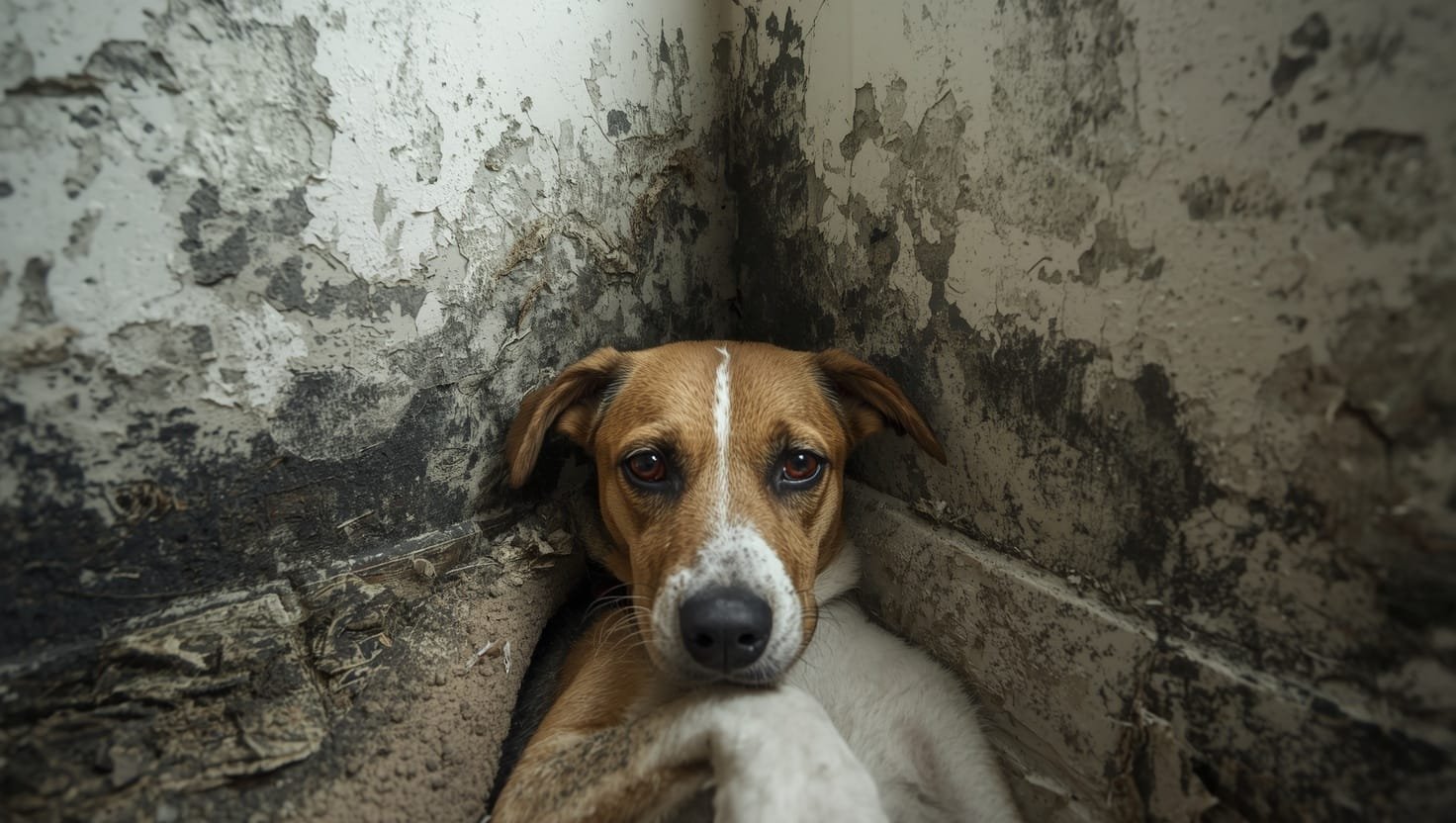
Your Pet’s Mold Exposure Isn’t Just a Health Problem—It’s a Home Emergency
Your dog seems fine on Monday. By Friday, they’re struggling to breathe during walks.
You take them to the vet. Tests come back normal. The vet shrugs. You go home confused, your pet still sick, and the real culprit—mold growing silently in your walls—keeps spreading.
This scenario plays out more often than you’d think. The thing about pets and mold exposure is that your furry family member becomes the early warning system for a much bigger problem lurking in your home’s structure. While they’re showing symptoms, mold is colonizing wood, drywall, and insulation. By the time you realize what’s happening, you’re looking at thousands in damage and a pet that might never fully recover.
The worst part? Most pet owners don’t connect the dots until it’s too late.
How Your Pet’s Symptoms Are Actually a Red Flag for Your Home
Here’s what most people miss: your pet’s cough isn’t just their problem—it’s your home’s problem too.
Mold grows where moisture lives. And moisture doesn’t appear out of nowhere. It comes from leaks, poor ventilation, high humidity, or water damage that started weeks or months ago. Your pet breathes in the spores first because they’re lower to the ground and their lungs are smaller. But that same mold is spreading through your entire house while you’re trying to figure out why your dog won’t eat.
One Rochester homeowner called JetDry after their Golden Retriever developed a persistent cough that no vet could explain. The dog had been sleeping in the basement. When the team arrived and inspected the space, they found mold colonizing the rim joist and blocking the foundation—the cough was just the symptom, not the disease. The real issue was structural water intrusion that had been happening for months. The remediation took three weeks and cost $16,500. The dog recovered within weeks of being moved away from the contaminated area. The house? That took longer.
Your pet’s body is telling you something’s wrong with your home’s body.
Bottom line: Pet symptoms are early warnings of hidden mold and water damage in your home’s structure.
The Hidden Timeline: When Your Pet Gets Sick Before You See Mold
Mold doesn’t work on your schedule. It works on moisture’s schedule.
A small roof leak that started in March might not show visible mold until July. But your pet? They’re reacting to it in April. Their immune system is more sensitive to mycotoxins than yours, so they’re your canary in the coal mine—except the coal mine is your living room.
This is why timing matters so much. If you notice your pet getting sick and you ignore it, you’re giving mold a 2-3 month head start on colonizing your home. That small leak becomes a big problem. That basement dampness becomes structural damage. That musty smell your pet seems sensitive to becomes a $20,000+ remediation project.
The math is brutal: catch mold at month one when your pet first shows symptoms, and you might spend $3,000 to $5,000 on remediation. Wait until month four when your pet’s been sick for months and you finally get serious? Now you’re looking at $10,000 to $15,000.
And your pet pays the price too. Prolonged exposure to mycotoxins can cause permanent lung damage, organ dysfunction, and chronic infections that don’t go away even after the mold is gone.
Bottom line: Your pet’s first symptom is your home’s last warning—act fast or costs explode.
Why Vets Often Miss the Mold Connection
You’re sitting in the vet’s office describing your pet’s symptoms. The vet runs tests. Bloodwork looks okay. X-rays are clear. They recommend allergy medication or antibiotics.
Nothing works. Your pet’s still sick.
Here’s the thing: most vets aren’t trained to ask about mold. They’re trained to treat symptoms, not investigate your home environment. They see a cough and think respiratory infection. They see lethargy and think infection or age. They don’t ask, “Has there been water damage recently?” or “Do you smell anything musty in your basement?”
This isn’t a knock on vets—it’s just how the system works. A vet’s job is to treat the animal, not inspect your house. But this gap in communication means pets stay sick longer while their owners spend money on treatments that don’t address the root cause.
If you suspect mold, tell your vet directly. Say it out loud: “I think there’s mold in my home. Could that be causing these symptoms?” A good vet will take that seriously and might recommend additional testing or suggest you get your home inspected before spending more on treatments.
Better yet, get your home inspected for mold and water damage at the same time you’re taking your pet to the vet. That way you’re working on both fronts simultaneously—treating the pet and fixing the home.
Bottom line: Vets treat symptoms, not homes—tell them about mold so they can help connect the dots.
The Specific Types of Mold That Affect Pets Most Severely
Not all mold is created equal. Some types are annoying. Others are genuinely dangerous.
Black mold (Stachybotrys chartarum) is the heavyweight champion of dangerous molds. It produces powerful mycotoxins that affect the nervous system, liver, and lungs. Pets exposed to black mold often develop neurological symptoms first—tremors, disorientation, or seizures—before respiratory problems show up. These symptoms are terrifying and often get misdiagnosed as seizure disorders or neurological diseases.
Aspergillus is sneaky because it’s everywhere. It grows in soil, decaying plant matter, and moldy grain. If your pet eats contaminated food or spends time in a damp area with decomposing material, they’re getting exposed. Aspergillus infections are notoriously hard to treat and can become systemic (affecting multiple organs).
Penicillium is common in homes with water damage. It grows on damp drywall, wood, and insulation. It’s less acutely toxic than black mold, but chronic exposure weakens the immune system over time. Pets exposed to Penicillium often develop recurring infections—ear infections that won’t go away, respiratory infections that keep coming back, skin infections that seem to never heal.
Fusarium grows on water-damaged materials and can cause allergic reactions and respiratory issues. Some species produce mycotoxins that affect the immune system.
The problem is that you can’t tell what type of mold you have just by looking at it. A professional mold inspection with testing is the only way to know what you’re dealing with and how aggressive the remediation needs to be. If your pet is showing severe symptoms—neurological issues, organ problems, or severe respiratory distress—you might be dealing with black mold or another highly toxic species.
Bottom line: Black mold and Aspergillus are the most dangerous for pets—professional testing identifies the threat level.
The Financial Reality: Pet Medical Bills vs. Home Remediation Costs
Let’s break down what this actually costs you in real dollars.
Your pet gets sick from mold exposure. First vet visit: $150 to $300. They run bloodwork and a respiratory panel. That’s another $400 to $800. Nothing shows up, so they recommend allergy testing. That’s $300 to $600. Still nothing. Now they’re suggesting specialist referral to a veterinary dermatologist or pulmonologist. That’s $500 to $1,500 per visit, and you’ll probably need multiple visits.
You’ve now spent $2,000 to $4,000 on vet visits and tests, and your pet is still sick.
Meanwhile, the mold in your home is still growing. A professional home inspection to identify mold runs $300 to $700. If mold is found, a small remediation (one room or basement) costs $2,000 to $5,000. A larger remediation (multiple rooms, HVAC system contamination) costs $8,000 to $15,000. In severe cases with structural damage, you’re looking at $20,000 to $50,000.
One Rochester family’s story: their cat developed chronic respiratory issues. Vet bills over 18 months totaled $4,200. They never found the cause. When they finally called JetDry for a mold inspection, mold was found in the attic, crawlspace, and HVAC system. Remediation cost $14,800. Within three months of the mold being removed, the cat’s symptoms completely resolved. They spent $19,000 total when they could’ve caught it at month three for $4,000.
The lesson: don’t treat the pet in isolation. Treat the pet AND the home simultaneously. It costs less overall and actually fixes the problem instead of just managing symptoms.
Bottom line: Vet bills pile up fast—home remediation catches the real problem and saves money long-term.
Testing Your Home for Mold When Your Pet Shows Symptoms
So your pet’s sick, and you think mold might be involved. What’s the actual testing process?
Visual inspection comes first. A professional walks through your home looking for visible mold, water stains, soft spots in drywall, musty smells, and areas of high moisture. This is where they find obvious problems in basements, crawlspaces, attics, and around windows.
Moisture mapping comes next. Professionals use moisture meters to check humidity levels and moisture content in walls, crawlspaces, and other areas. High moisture in areas that should be dry is a red flag that mold is either present or will be soon.
Air quality testing involves collecting air samples to count mold spores and identify species. This shows whether mold spores are being distributed through your HVAC system and circulated throughout your home—which directly affects your pet’s exposure.
Surface testing (tape lifts or swabs) identifies mold on specific surfaces. If you’ve found visible mold, testing confirms what type it is and how aggressive the remediation needs to be.
Thermal imaging uses infrared cameras to detect temperature differences that indicate hidden moisture and mold behind walls and in cavities you can’t see with your eyes.
Not all of these tests are necessary for every home. A professional will recommend which tests make sense based on what they find during visual inspection. If mold is already visible, you probably don’t need air testing—you need remediation. If there’s no visible mold but your pet is sick and the home smells musty, air testing and moisture mapping make sense.
Air mold testing accuracy depends on proper methodology, so make sure whoever’s doing the testing knows what they’re doing. In Rochester, JetDry’s team has been identifying hidden mold for over 20 years using the latest equipment and methods.
Bottom line: Professional testing identifies hidden mold your eyes can’t see—critical when your pet’s health is on the line.
What Happens During Professional Mold Remediation (And Why Your Pet Needs to Leave)
Once mold is confirmed, remediation happens. And here’s something important: your pet needs to be somewhere else during this process.
Professional remediation isn’t a quick spray-and-leave job. It’s invasive, messy, and involves disturbing mold spores (which gets them airborne). If your pet is in the house while this is happening, they’re being exposed to massive amounts of spores—way more than they’d encounter if the mold was just sitting there undisturbed.
The remediation process typically involves containment (sealing off the affected area with plastic sheeting), negative air pressure (using fans to pull air out of the contaminated space and prevent spores from spreading), removal of contaminated materials (drywall, insulation, flooring), cleaning and disinfection, and moisture control (fixing the leak or water source so mold doesn’t come back).
The whole process takes anywhere from a few days to several weeks depending on the scope. Your pet should be boarded, staying with family, or housed in an uncontaminated area of the home (usually upstairs, away from basements or crawlspaces where work is happening).
After remediation is done, the area needs to dry completely and be tested again to confirm mold is gone. Only then should your pet return to their normal spaces.
This isn’t just being cautious—it’s necessary. You’re paying money to remove mold. You don’t want your pet re-contaminated during the process.
Professional mold remediation teams handle containment and removal safely, protecting both your home and your pet’s health during the process.
Bottom line: Your pet leaves during remediation—they return once the home is clean and tested.
Recovery: What to Expect From Your Pet After Mold Is Removed
Here’s the good news: if you catch mold exposure early and remove it, most pets recover completely.
But recovery isn’t instant. It takes time.
Respiratory symptoms (coughing, wheezing, labored breathing) usually improve within 2-4 weeks of mold removal. The lungs are resilient, and once the irritant is gone, inflammation starts to decrease pretty quickly.
Skin issues (excessive scratching, rashes, fungal infections) take longer—usually 4-8 weeks. The skin barrier needs to heal, and if there’s a secondary fungal infection, that needs treatment too.
Energy and appetite typically return within 2-3 weeks. Once your pet stops feeling toxic, they want to eat and play again. This is often the first sign that recovery is working.
Ear infections related to mold exposure need treatment and can take 3-6 weeks to fully resolve, especially if they’ve become chronic or secondary bacterial infections have developed.
Neurological symptoms (tremors, disorientation) from severe mold exposure might improve but could be permanent if nerve damage occurred. This is why catching mold early matters—before it causes lasting damage.
The key is patience and follow-up vet visits. Get your pet checked 2-4 weeks after mold remediation to confirm they’re recovering. If symptoms aren’t improving after a month, there might be other issues or the mold wasn’t completely removed.
One thing to watch for: make sure the moisture source was actually fixed. If the leak is still there or humidity is still high, mold will come back. And when it comes back, your pet will get sick again.
Bottom line: Most pets recover fully within weeks—but only if the mold is gone and moisture is controlled.
Frequently Asked Questions About Pets and Mold Exposure
Can a pet’s immune system fight off mold exposure on its own?
Not really. While a healthy pet’s immune system can handle brief, low-level exposure, chronic mold exposure overwhelms it. The longer they’re exposed, the more their immune system weakens, making them susceptible to secondary infections and other health problems.
Is black mold more dangerous to pets than other types of mold?
Yes. Black mold (Stachybotrys) produces mycotoxins that affect the nervous system and organs, making it the most dangerous type for pets. Other molds can cause respiratory issues and allergies, but black mold can cause neurological symptoms and organ damage.
How quickly does mold start affecting a pet’s health?
Symptoms can appear within days to weeks of exposure, depending on mold concentration and the pet’s immune health. Some pets show signs within 3-5 days of heavy exposure; others take weeks. This is why early action matters—the longer exposure continues, the worse the damage.
Can mold exposure cause permanent damage to a pet’s lungs?
Yes. Chronic mold exposure can cause permanent inflammation and scarring of lung tissue, leading to lifelong respiratory issues even after mold is removed. Early intervention prevents this.
Should I get my pet tested for mold toxicity?
There’s no standard “mold toxicity test” for pets. Vets diagnose based on symptoms and ruling out other conditions. The real test is environmental—getting your home tested for mold. If mold is present and your pet has symptoms, the connection is usually clear.
How do I know if my pet recovered from mold exposure?
When symptoms resolve (coughing stops, appetite returns, energy increases) and they stay resolved for several weeks, recovery is happening. A follow-up vet visit confirms there’s no lingering infection. The key is making sure the mold in your home is actually gone.
Can my pet get reinfected with mold after remediation?
Only if mold comes back. If the moisture source isn’t fixed, mold will return. That’s why professional remediation includes fixing the leak or water damage—not just removing the mold.
Your Next Steps: Act Before Your Pet Gets Worse
If your pet is showing symptoms and you suspect mold, here’s what to do right now.
First, call your vet and mention mold exposure. Ask them to look for signs of mycotoxin exposure or mold-related infection. Get their take on whether mold could be the culprit.
Second, inspect your home yourself. Look for visible mold, water stains, soft drywall, musty smells, and areas of high humidity. Check basements, crawlspaces, attics, around windows, and under sinks. Take photos if you find anything suspicious.
Third, call a professional for a home inspection. Don’t wait and hope it goes away. Contact JetDry for a professional mold and water damage inspection in Rochester, NY. Walt Latuik and his team have been handling these situations for over 20 years. They respond to emergencies 24/7, which means if you discover something serious on a Saturday night, they can be at your door within hours.
Fourth, if mold is found, get a remediation quote and timeline. Don’t delay. The longer mold sits, the more it spreads and the more expensive it becomes.
Fifth, arrange for your pet to stay elsewhere during remediation. Board them, have family watch them, or keep them in a clean part of the house while work happens.
Sixth, follow up. Get your home tested again after remediation to confirm mold is gone. Get your pet checked by a vet 2-4 weeks after mold removal to confirm recovery is on track.
Walt and his team have saved homes like yours for over 20 years. They’ve also helped countless pets recover by identifying and removing the mold that was making them sick. If you’re dealing with a sick pet and suspect mold—or if you’ve found water damage in your home—contact JetDry now and get help fast.
Your pet’s health depends on it. Your home’s structural integrity does too.
Bottom line: Don’t wait—inspect your home, get professional testing, and remove mold before it damages your pet or your house.

Your Pet’s Behavior Changes Are Screaming “Mold”—But You’re Not Listening
Your cat used to greet you at the door. Now she hides in the bedroom all day.
Your dog’s always been playful. Last week, he refused to go outside. He just lies there, staring at nothing.
You think it’s stress or age or just a bad week. But what if it’s mold?
Behavioral shifts in pets are one of the earliest and most overlooked signs of mold exposure. While respiratory coughing gets attention, behavioral changes slip under the radar. Your pet can’t say “I feel sick,” so they show you instead—through withdrawal, anxiety, aggression, or complete personality changes. And by the time you realize something’s wrong, the mold’s already colonized your walls.
This is the part nobody talks about. The behavioral red flags that come before the physical symptoms hit.
Why Mold Changes Your Pet’s Behavior Before It Changes Their Body
Mycotoxins—the toxic compounds mold produces—don’t just attack the lungs and skin.
They cross the blood-brain barrier.
That means they’re affecting your pet’s neurological system, their mood regulation, their stress response. A pet exposed to mycotoxins experiences something closer to toxicity than infection. It’s like their whole body is sending distress signals, and the brain gets the worst of it.
Dogs and cats are also incredibly sensitive to their environment—way more than we are. They pick up on chemical changes in the air, on subtle shifts in air quality. When mold spores are circulating through your home, your pet’s nervous system registers it as a threat. Their body goes into low-level survival mode, and that changes behavior.
A dog that was once confident becomes anxious. A cat that was social becomes reclusive. They’re not being moody or stubborn. Their nervous system is literally reacting to toxins in the air.
Here’s what gets missed: these behavioral changes happen gradually. You notice them day by day but don’t connect the dots. Your pet’s been “off” for three weeks before you think to take them to the vet. By then, they’ve been breathing in mold spores for months.
Bottom line: Mycotoxins affect the brain first—behavioral changes come before you see physical symptoms.
The Behavioral Red Flags That Scream Mold Exposure
Withdrawal and hiding are classic signs.
Your pet spends more time alone in one room. They avoid family interactions. They don’t want to play or cuddle. This isn’t normal introversion—it’s avoidance of stimulation because they feel terrible. A pet experiencing mold toxicity often feels foggy, uncomfortable, and overstimulated. So they retreat.
Anxiety spikes without obvious reason. Your calm dog suddenly gets nervous around normal sounds. They pace. They whine. They seem agitated. Some pets develop separation anxiety they never had before. Others become clingy, refusing to leave their owner’s side. This is the nervous system overreacting to toxin exposure.
Aggression—especially out of character aggression—is a serious flag. A normally gentle pet snaps, growls, or bites. They might lunge at other pets or people. This is often neurological irritation from mycotoxins. The pet’s not angry; they’re uncomfortable and their impulse control is compromised.
Confusion and disorientation show up too. Your pet seems lost in familiar spaces. They forget where their food bowl is. They stare at walls. They seem confused by commands they’ve known for years. This is mycotoxins affecting cognition directly.
Loss of interest in things they love is heartbreaking to watch. Their favorite toy? Ignored. Walks they used to beg for? They drag their feet. Treats they’d do anything for? No interest. This signals systemic illness—their body’s shutting down pleasure responses because it’s in distress mode.
Excessive grooming or self-directed behaviors become obsessive. Your cat licks her paws raw. Your dog chews his legs until they bleed. These compulsive behaviors are often neurological responses to discomfort and toxin exposure.
Sleep disruption—either sleeping way too much or not at all—signals something’s off. Mold exposure messes with sleep cycles. Your pet might sleep 18 hours a day (unusual lethargy) or pace all night unable to rest.
Bottom line: Withdrawal, anxiety, aggression, and confusion are behavioral red flags of mold—not personality quirks.
Why Vets Misdiagnose Behavioral Changes as Behavioral Problems
You take your aggressive dog to the vet.
The vet rules out pain, infection, and thyroid issues. Bloodwork’s normal. They conclude it’s a behavioral issue and recommend a trainer or anxiety medication.
You spend $2,000 on a professional dog trainer. Your dog’s aggression gets slightly better—maybe 20%. You feel like you’re failing as a pet owner. The trainer keeps saying “consistency is key,” but nothing changes fundamentally.
The real problem? Mold in your basement that nobody thought to investigate.
This happens constantly. Vets are trained to look for medical causes—pain, infection, hormonal imbalance. They’re not trained to ask about your home environment. They don’t ask, “Do you smell anything musty?” or “Have you had any water damage?” because behavioral medicine and environmental toxicology aren’t their specialty.
The result is that behavioral changes get attributed to the pet’s personality rather than their environment. Your pet gets labeled as “anxious” or “aggressive” when they’re actually reacting to toxins in your home.
A Rochester family brought their German Shepherd to a behavioral specialist after six months of escalating aggression. The specialist recommended medication and intensive training—total cost $3,500. Three weeks into training, the dog was slightly better but still aggressive. When the family finally called JetDry for a home inspection, mold was discovered in the crawlspace beneath where the dog spent most of his time. After remediation, the aggression completely resolved within four weeks. No more medication needed. No more training. Just a clean home.
The dog wasn’t broken. The home was.
Bottom line: Vets treat behavior as psychology—they miss environmental toxins causing neurological changes.
The Connection Between Mold Exposure and Pet Anxiety Disorders
Anxiety in pets exposed to mold isn’t just nervousness.
It’s actual neurological dysfunction. Mycotoxins trigger the amygdala—the part of the brain that processes fear and threat. Chronic exposure keeps this system activated. Your pet’s brain is essentially stuck in “threat mode,” interpreting normal situations as dangerous.
This creates a vicious cycle. The anxiety causes stress, which weakens the immune system further, which makes the pet more vulnerable to the mold’s effects. The pet gets more anxious. Symptoms worsen. You increase anxiety medication. But the root cause—mold—is still there.
Some pets develop what looks like generalized anxiety disorder. They’re anxious about everything: sounds, movement, new people, leaving home, being alone. In severe cases, the pet becomes essentially housebound—too anxious to function normally.
Panic attacks are also common. Your pet suddenly bolts, trembles, whines, or freezes in response to nothing obvious. These panic episodes happen because the nervous system is hyperactive from toxin exposure.
The scary part? If you don’t address the mold, these anxiety issues can become permanent. The brain gets rewired. Even after mold is removed, some pets need months of recovery—and some never fully reset their nervous system.
This is why early detection matters. Catch mold when your pet shows first behavioral signs, and you prevent long-term neurological damage. Wait six months while anxiety “gets worse,” and you might be dealing with permanent changes to your pet’s temperament.
Bottom line: Mold-induced anxiety can become permanent—early removal prevents lifelong neurological damage.
Physical Symptoms That Follow Behavioral Changes
Here’s the timeline most pet owners miss.
Week 1-2: Behavioral changes start. Your pet’s mood shifts, they seem off. You chalk it up to a bad week.
Week 3-4: Behavioral changes intensify. Your pet’s definitely different. You might mention it to the vet, but there are no physical symptoms yet, so the vet says “monitor and see.”
Week 5-6: Physical symptoms start appearing. Now there’s coughing, or skin issues, or lethargy. You take your pet to the vet. They treat the symptoms—antibiotics for a respiratory infection, medication for allergies—but the behavioral changes persist because the root cause is still there.
Week 8+: Your pet’s now got both behavioral and physical issues. They’re on medication. Nothing’s really working. You’re spending money on vet visits, medication, possibly a trainer. Your pet’s quality of life is declining.
The mold’s been growing the whole time.
By the time physical symptoms show up, mold has usually been colonizing your home for weeks or months. Behavioral changes are the early warning system—they come first because the nervous system is sensitive to toxins at lower concentrations than the respiratory system.
If you’d acted during week 2 when behavior changed—gotten a home inspection, found the mold, started remediation—you’d have prevented all the physical symptoms and medical costs that follow.
But most people wait for the “real” symptoms (coughing, skin problems) before taking action. By then, you’re months into exposure and playing catch-up.
Bottom line: Behavioral changes come first—physical symptoms follow weeks later, but mold’s already entrenched.
Testing for Mold When Your Pet Shows Behavioral Changes Alone
This is tricky because behavioral changes alone aren’t enough for most vets to recommend mold testing.
You need to take the initiative yourself. Start with a professional water damage inspection and mold assessment of your home. Tell the inspector about your pet’s behavioral changes. Describe when they started, what changed, how severe. This context helps the inspector know where to focus.
A good inspection includes visual assessment, moisture mapping, and sometimes air quality testing. The goal is to identify mold before it becomes a full infestation or before your pet develops serious physical symptoms.
If mold is found, get it tested to identify the species. Black mold, Aspergillus, and Penicillium all produce different toxins with different neurological effects. Knowing what you’re dealing with helps you understand your pet’s specific symptoms.
If no mold is found but your pet’s behavioral changes are severe, consider other environmental factors: recent water damage, high humidity, poor ventilation, or contaminated air ducts. These create conditions for mold growth even if visible mold isn’t present yet.
The key is not to assume behavioral changes are purely psychological. Get your home checked. If mold is there, removing it might solve behavioral issues that medication never could.
Bottom line: Get a professional home inspection when behavior changes—find mold before symptoms escalate.
Recovery From Mold-Related Behavioral Issues
Once mold’s removed, how long until your pet’s behavior normalizes?
It depends on how long they were exposed and how severe the damage is.
Mild behavioral changes (slight withdrawal, minor anxiety) usually improve within 2-4 weeks of mold removal. As the toxins clear your pet’s system, their nervous system starts to calm down. They become more interactive, less anxious.
Moderate behavioral issues (significant anxiety, aggression, obsessive behaviors) take 4-8 weeks to recover. The brain needs time to reset. Some pets benefit from a calm environment and reduced stimulation during recovery—think of it like they’re healing from an injury.
Severe behavioral changes (extreme aggression, complete withdrawal, panic attacks) can take 8-12 weeks or longer. In some cases, especially if the pet was exposed for a long time, behavioral changes might not fully resolve. The nervous system can become “stuck” in anxious patterns.
This is why you don’t wait. Early intervention means faster recovery and better outcomes.
During recovery, work with your vet. They might recommend calming supplements, anti-anxiety medication temporarily, or behavioral support. The goal is to help your pet’s nervous system reset while the toxins leave their body.
Don’t expect instant change. Your pet’s been in distress mode for weeks or months. Their brain needs time to recognize that the threat (mold) is gone and that they’re safe again.
Bottom line: Behavioral recovery takes weeks to months—early mold removal speeds the process dramatically.
Common Questions About Pets, Mold, and Behavioral Changes
Can anxiety medication help a pet with mold-related behavioral issues?
It might reduce symptoms temporarily, but it won’t fix the root cause. You’re masking the problem while mold keeps affecting their nervous system. Medication plus mold removal works better than medication alone.
How do I know if my pet’s behavioral change is mold-related or just personality?
Personality changes happen gradually over months or years. Sudden behavioral shifts—especially within weeks—signal something environmental or medical. If it’s sudden, get your home and your pet checked.
Will my pet’s personality go back to normal after mold removal?
Usually yes, if caught early. The longer exposure continues, the less likely full recovery. Some pets show permanent personality changes if neurological damage occurred. Early action prevents this.
Can I give my pet supplements to help with mold-related anxiety?
Calming supplements (omega-3s, CBD, L-theanine) might help while you’re removing mold, but they’re not a treatment. Get the mold out first, then use supplements to support recovery if needed.
How quickly do behavioral changes appear after mold exposure starts?
Some pets show changes within days of heavy exposure. Others take weeks. It depends on the mold concentration, the pet’s immune health, and their individual sensitivity. This is why monitoring your pet’s behavior matters—changes are often the first sign.
Should I keep my pet away from certain areas of my home if I suspect mold?
Yes. If you suspect mold in a basement or crawlspace, keep your pet upstairs. Reduce their exposure while you arrange for professional inspection and remediation. Every day counts when mold’s involved.
Act Now—Your Pet’s Behavior Is Telling You Something
Your pet can’t book their own vet appointment or call a mold inspector. They can only show you through behavior that something’s wrong.
If your pet’s personality has shifted—they’re withdrawn, anxious, aggressive, or confused—don’t assume it’s just how they are now. Get your home inspected for mold and water damage. Talk to your vet about environmental factors, not just behavioral training.
Walt Latuik and the team at JetDry have been helping Rochester families connect these dots for over 20 years. They’ve seen countless pets recover completely once mold was removed from the home. They respond 24/7 to emergencies, which means if you discover mold on a Sunday afternoon, they’re available to help.
Contact JetDry now for a professional mold remediation and home inspection. Don’t wait for physical symptoms to show up. Behavioral changes are your pet’s way of telling you the house isn’t safe.
Get help fast. Your pet’s recovery depends on it.
Bottom line: Pet behavior changes mean mold—inspect now, remediate fast, watch recovery happen.