Mold Risks For Immunocompromised People: The Silent Killer In Your Home
- Wolfe McNeel
Your Immune System Can’t Fight Mold the Way Most People’s Can—Here’s What You Need to Know About Mold Risks for Immunocompromised People
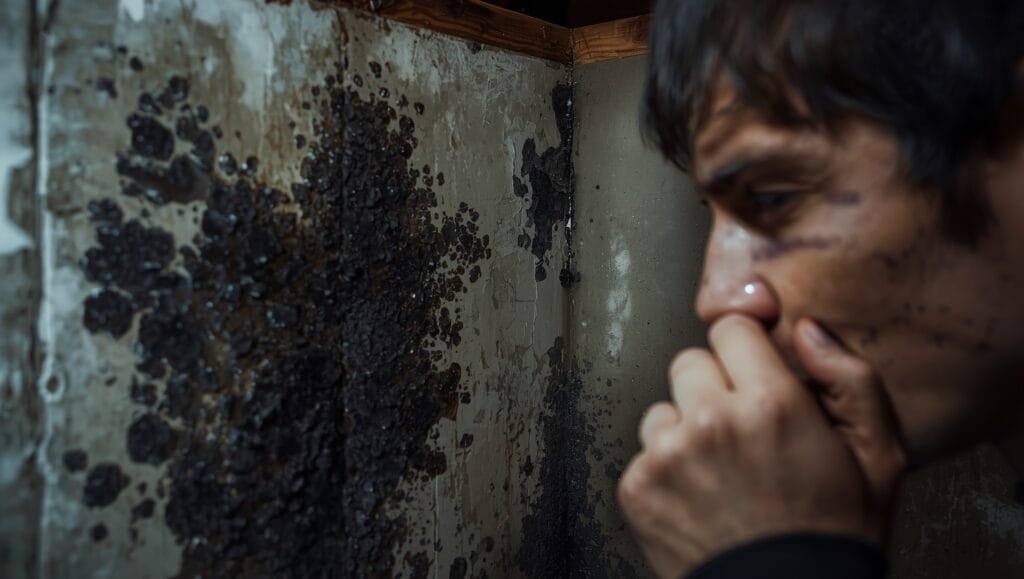
If you’re immunocompromised—whether from HIV, cancer treatment, organ transplant, autoimmune disease, or another condition—mold isn’t just an aesthetic problem or a bad smell.
It’s a real threat to your health.
Most people’s immune systems brush off mold exposure like it’s nothing. Your body? It doesn’t have that same backup plan. A small mold patch in a basement, a few spores in the air duct, or moisture creeping behind drywall can trigger serious infections and respiratory complications that healthy people would never experience.
The scary part: you might not even realize mold is growing in your space until symptoms hit hard.
In Rochester, NY and the surrounding areas, humidity and seasonal moisture create the perfect breeding ground for mold year-round. One homeowner discovered black mold spreading through their attic after weeks of undetected water seepage—by the time they noticed, the colony had expanded significantly, and their immunocompromised family member was already experiencing breathing problems. A single call to JetDry’s mold remediation team stopped the spread and prevented what could’ve been a hospital visit.
This isn’t about panic. It’s about being informed and taking action before mold becomes a medical crisis.
Why Your Immune System Struggles With Mold
Your immune system is built to fight invaders—bacteria, viruses, fungi.
When you’re immunocompromised, that defense team is either understaffed, exhausted, or not working at full capacity.
Mold produces spores—tiny particles that float through the air and settle in your lungs. For most people, the immune system catches these spores and neutralizes them before they cause problems. But when your immune function is compromised, those spores can take root and grow inside your respiratory tract. This isn’t just an infection risk—it’s a serious one.
The types of mold that cause minor issues for healthy people can trigger dangerous infections in immunocompromised individuals.
Aspergillus, one of the most common household molds, can cause invasive aspergillosis in people with weakened immunity—a condition that requires aggressive medical treatment and can be life-threatening if left untreated. Candida species, another common indoor mold, can spread beyond your lungs and affect other organs. Even “less dangerous” molds like Penicillium and Alternaria can cause chronic infections and worsen respiratory conditions like asthma or COPD.
The timing matters too. If you’re in the middle of chemotherapy, recovering from transplant surgery, or managing a condition that requires immunosuppressive medications, your vulnerability window is even wider. That’s when mold exposure becomes genuinely dangerous.
Bottom line: Immunocompromised systems can’t clear mold spores before they colonize—turning minor exposure into serious infection risk.
Common Signs Mold Is Growing (And You’re Being Exposed)
Here’s the tricky part: mold doesn’t always announce itself.
You might smell something musty and assume it’s just old air. You might see a small dark spot on a corner and think it’ll clean up with bleach. But mold can be hiding in places you never think to look—inside walls, under flooring, behind appliances, in HVAC ducts.
These are the red flags to watch for:
- Visible discoloration on walls, ceilings, or corners — Black, green, white, or orange spots that don’t wipe away easily.
- Musty odors you can’t locate — That earthy, damp smell that lingers even when you’ve cleaned.
- Water stains or persistent dampness — Discoloration that keeps reappearing in the same spot means moisture is feeding mold growth.
- Condensation on windows or pipes — High humidity creates the perfect environment for spores to germinate.
- Recent water damage that wasn’t fully dried — Leaks, floods, burst pipes, or roof damage that wasn’t addressed within 48 hours almost always lead to mold.
- Soft or crumbling drywall and wood — Mold feeds on these materials and causes structural breakdown.
- Increase in allergy or asthma symptoms — If you’re noticing more coughing, sneezing, or breathing difficulty indoors, mold could be the culprit.
If you spot any of these signs—especially if there’s been recent moisture or water damage—don’t wait to investigate.
For immunocompromised individuals, a professional inspection isn’t optional. It’s preventative medicine. One resident in Rochester noticed a small leak under the kitchen sink and thought it was handled after wiping it dry. Two weeks later, mold was colonizing the wall cavity behind the cabinets. They called JetDry’s water damage team to address the moisture source and prevent the spread—catching it before it became a respiratory emergency.
Bottom line: Mold hides in plain sight; immunocompromised people need professional detection and removal, not DIY cleanup.
Why Immunocompromised People Can’t Just “Clean It Up”
This is critical: if you’re immunocompromised, you should never attempt to clean or remove mold yourself.
Here’s why.
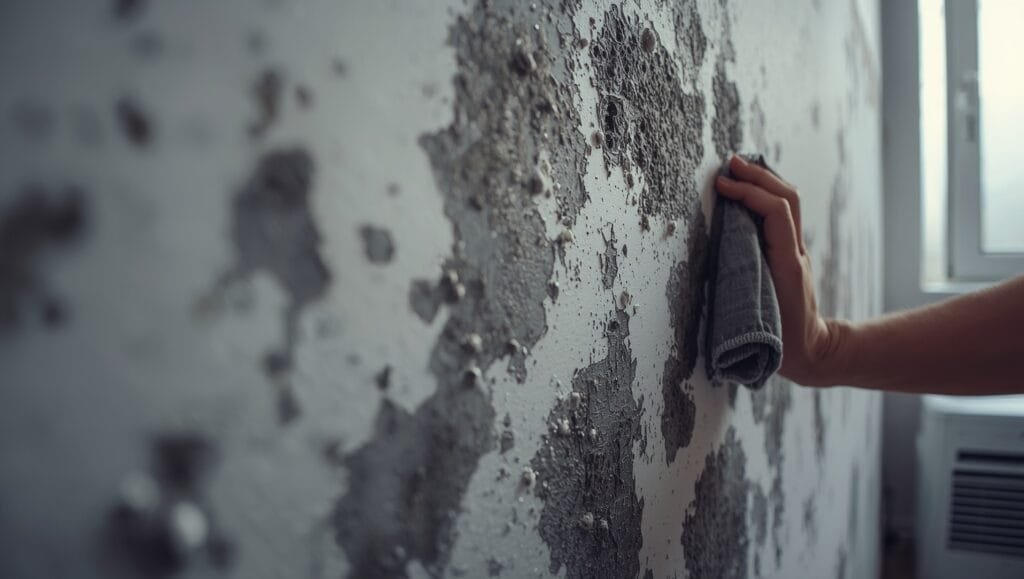
When you disturb mold—even with a cloth, bleach, or a brush—you’re releasing spores into the air. Those spores are now airborne and heading straight into your lungs. For a healthy person, this is annoying but usually harmless. For you, it’s a direct exposure to the exact thing you need to avoid.
Many people think bleach kills mold and solves the problem. It doesn’t. Bleach kills the surface mold you can see, but the roots (called mycelium) go deep into porous materials like drywall, insulation, and wood. The mold comes back—often faster and more aggressive. You’ve just made yourself sick for nothing.
There’s also the question of what you’re actually dealing with. You can’t tell what type of mold is growing just by looking at it. Some molds are more dangerous than others, and some require specific remediation techniques. Misidentifying the problem means using the wrong approach, which wastes time and leaves you exposed.
Professional mold remediation teams have:
- Proper containment equipment — They isolate the affected area so spores don’t spread to the rest of your space.
- HEPA filtration and air scrubbers — These capture airborne spores and prevent inhalation exposure.
- Personal protective equipment (PPE) — Respirators, suits, and gloves designed to keep them safe during removal.
- Moisture detection tools — They find hidden mold and water sources you can’t see.
- Knowledge of remediation standards — They follow industry guidelines to ensure complete removal and prevention of regrowth.
For immunocompromised individuals, this isn’t about being overly cautious. It’s about avoiding preventable hospitalization.
At JetDry in Rochester, NY, Walt Latuik and his team have spent over 20 years responding to mold situations—including cases where immunocompromised residents were at risk. They understand the stakes and approach every job with the urgency it deserves. They’ve seen what happens when people try to handle mold on their own, and the medical bills that follow aren’t worth the savings from skipping professional help.
Bottom line: DIY mold removal exposes immunocompromised people to dangerous spore clouds; professionals contain and eliminate the threat safely.
The Real Health Risks: What Can Actually Happen
Let’s be direct about what mold exposure can do to an immunocompromised person.
It’s not just “feeling sick for a few days.”
Invasive aspergillosis is the big one. This fungal infection starts in the lungs and can spread to the brain, heart, and kidneys. Early symptoms look like a regular respiratory infection—cough, fever, chest pain. But without treatment, it becomes life-threatening. Hospitalization is likely. ICU admission is possible. Mortality rates for invasive aspergillosis in severely immunocompromised patients range from 30% to 90% depending on how advanced the infection is before treatment starts.
Then there’s chronic pulmonary aspergillosis (CPA), where mold colonizes your lungs long-term. You develop persistent cough, fatigue, and breathing problems that don’t go away. Some patients cough up blood. Treatment requires long-term antifungal therapy and can last months or years.
Allergic bronchopulmonary aspergillosis (ABPA) happens when your immune system overreacts to mold spores, causing inflammation in the airways. You get wheezing, shortness of breath, and mucus plugging that can lead to bronchial damage and bronchiectasis (permanent damage to your airways).
Beyond aspergillus, immunocompromised people are at risk for infections from Candida, Cryptococcus, Pneumocystis, and other fungi that thrive in moldy environments. Some of these can cause meningitis. Some cause sepsis. Some cause organ failure.
The timeline is unpredictable too. You might be exposed to mold today and not show symptoms for weeks. By the time you realize something’s wrong, the infection has had time to establish itself. That’s why prevention isn’t paranoid—it’s smart.
One Rochester family with a member undergoing cancer treatment discovered mold in their basement after heavy spring rains. The patient was in a vulnerable phase of chemotherapy. Waiting for a professional team felt like it might take too long, but they called JetDry immediately. The team arrived within hours, contained the area, and removed the source of moisture and mold before any serious exposure occurred. The patient recovered from their treatment without fungal complications. The peace of mind? Priceless.
Bottom line: Mold infections in immunocompromised people escalate fast—from respiratory symptoms to organ failure—making prevention critical.
Where Mold Hides: The Places You’re Missing
Most people think of mold as something visible—a patch on the bathroom ceiling or a spot in the basement corner.
That’s only part of the story.
The dangerous mold is the stuff you can’t see. It’s growing inside your walls, underneath your flooring, in your HVAC system, and behind your appliances. By the time it becomes visible, it’s already been releasing spores into your air for weeks or months.
Inside HVAC ducts and air handlers: Your heating and cooling system moves air throughout your entire space. If mold is growing in the ducts or on the coils, every breath you take is pulling contaminated air. This is especially risky for immunocompromised people because you’re getting continuous, low-level exposure. Mold in air ducts is nearly impossible to detect without professional equipment, but it’s one of the most common sources of indoor fungal exposure.
Inside walls and cavities: Water leaks from pipes, roof damage, or foundation cracks create moisture pockets inside your walls. Mold colonizes the insulation, drywall, and framing. You can’t see it, but you’re breathing the spores that escape through cracks and gaps. Water damage in walls often leads to hidden mold growth that spreads for months before discovery.
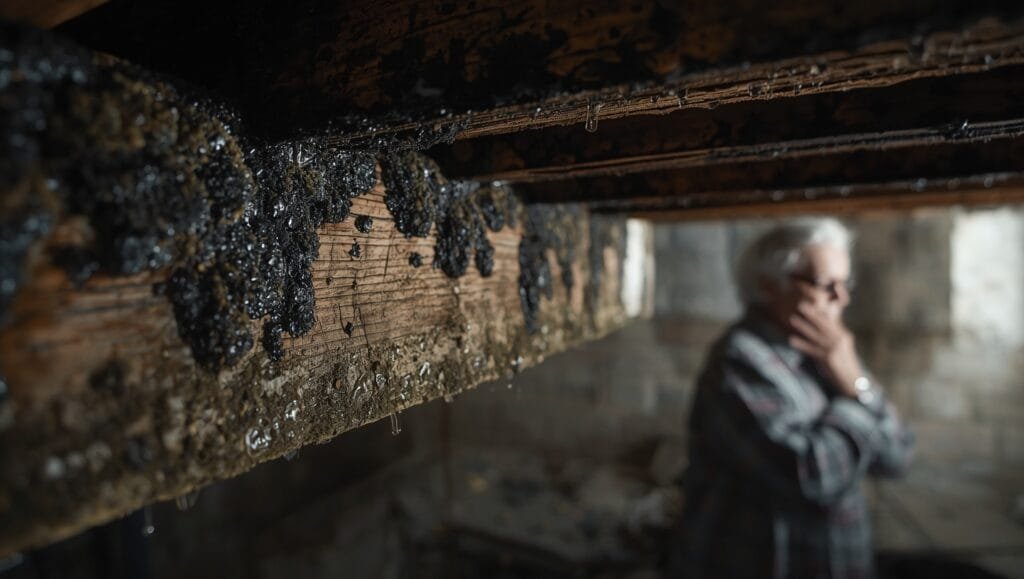
Under flooring and in crawl spaces: Basements, crawl spaces, and areas under hardwood or carpet are moisture magnets. Mold grows in the subfloor, on joists, and in insulation. Every footstep you take sends spores into the air. Basement water damage and mold are so common in Rochester that many homeowners don’t realize how serious the spore exposure is.
Around and behind appliances: Dishwashers, washing machines, refrigerators, and water heaters all create moisture. Mold thrives in the spaces around and behind them. It’s dark, damp, and nobody’s checking on it regularly.
In attics and roof spaces: Roof leaks, condensation from poor ventilation, and moisture from ice dams create ideal mold conditions in attics. For immunocompromised people living in homes with attic mold, spores can seep down into living areas through ceiling gaps and light fixtures.
The common thread: all of these spots involve moisture that wasn’t addressed quickly enough. Water damage that sits for more than 48 hours almost always leads to mold. That’s why fast water damage drying is so critical—it’s not just about preventing structural damage, it’s about preventing fungal colonization.
Bottom line: Hidden mold in ducts, walls, and crawl spaces poses the biggest risk to immunocompromised people—professional inspection catches what you can’t see.
Moisture Control: Your First Line of Defense
You can’t eliminate mold without eliminating moisture.
Mold needs three things: darkness, warmth, and moisture. You can’t control darkness or warmth in most spaces, but you absolutely can manage moisture. This is the foundation of mold prevention for immunocompromised households.
Keep humidity below 50%. Mold thrives when indoor humidity is above 60%. A good target is 30-50%. You can monitor this with an inexpensive humidity meter from any hardware store. If you’re consistently above 50%, you need dehumidification. Portable dehumidifiers work in smaller spaces; whole-house dehumidification systems are better for larger areas.
Fix water leaks immediately. That dripping faucet, the slow leak under the sink, the water stain on the ceiling—don’t wait. Every day it leaks is another day moisture is feeding mold growth. Same goes for burst pipes, roof leaks, or foundation cracks. Address them within 24 hours if possible.
Ensure proper drainage around your foundation. Water pooling near your foundation will eventually find its way inside. Make sure gutters are clean and directing water at least 6 feet away from the house. Grade the soil so water slopes away from the foundation.
Ventilate bathrooms and kitchens. These are the wettest rooms in your house. Exhaust fans should run during and for 20-30 minutes after showers and cooking. Make sure they’re venting outside, not into your attic.
Use air conditioning in warm months. AC removes moisture from the air as it cools. If you’re running AC, you’re dehumidifying. Even if you prefer cooler temperatures, running AC at a higher setting just for dehumidification is worth it for immunocompromised household members.
Insulate cold water pipes. When cold pipes get warm, humid air condenses on them. Insulation prevents this moisture buildup, which prevents mold growth.
Check and clean gutters regularly. Clogged gutters overflow and dump water against your foundation and fascia. This moisture seeps into walls and attics. Clean gutters are a simple, free mold prevention tool.
For Rochester homeowners, seasonal moisture is a real battle. Spring snowmelt, summer humidity, fall rains, and winter ice dams all create moisture problems if you’re not proactive. The best defense is staying ahead of it—monitoring humidity, addressing leaks immediately, and maintaining proper drainage year-round.
Bottom line: Controlling moisture through dehumidification, leak repair, and ventilation is your strongest mold prevention strategy for immunocompromised households.
Testing for Mold When You’re Immunocompromised—What the Labs Actually Tell You (And What They Don’t)
You find a musty smell in your basement and panic sets in.
Your immune system’s already compromised, and now you’re wondering: is there actually mold? How bad is it? Do you need to leave the house?
Here’s the thing—mold testing sounds straightforward, but it’s not.
Most people assume a test will give them a clear yes or no answer. The reality is messier. Tests can detect mold, but they can’t always tell you how much exposure risk you’re actually facing or what type of mold you’re dealing with. For immunocompromised individuals, this gap between test results and actual health risk is dangerous.
Let’s break down what mold testing can and can’t do, and why it matters if your immune system is already fighting an uphill battle.
The Three Main Types of Mold Tests—And Why They All Have Blind Spots
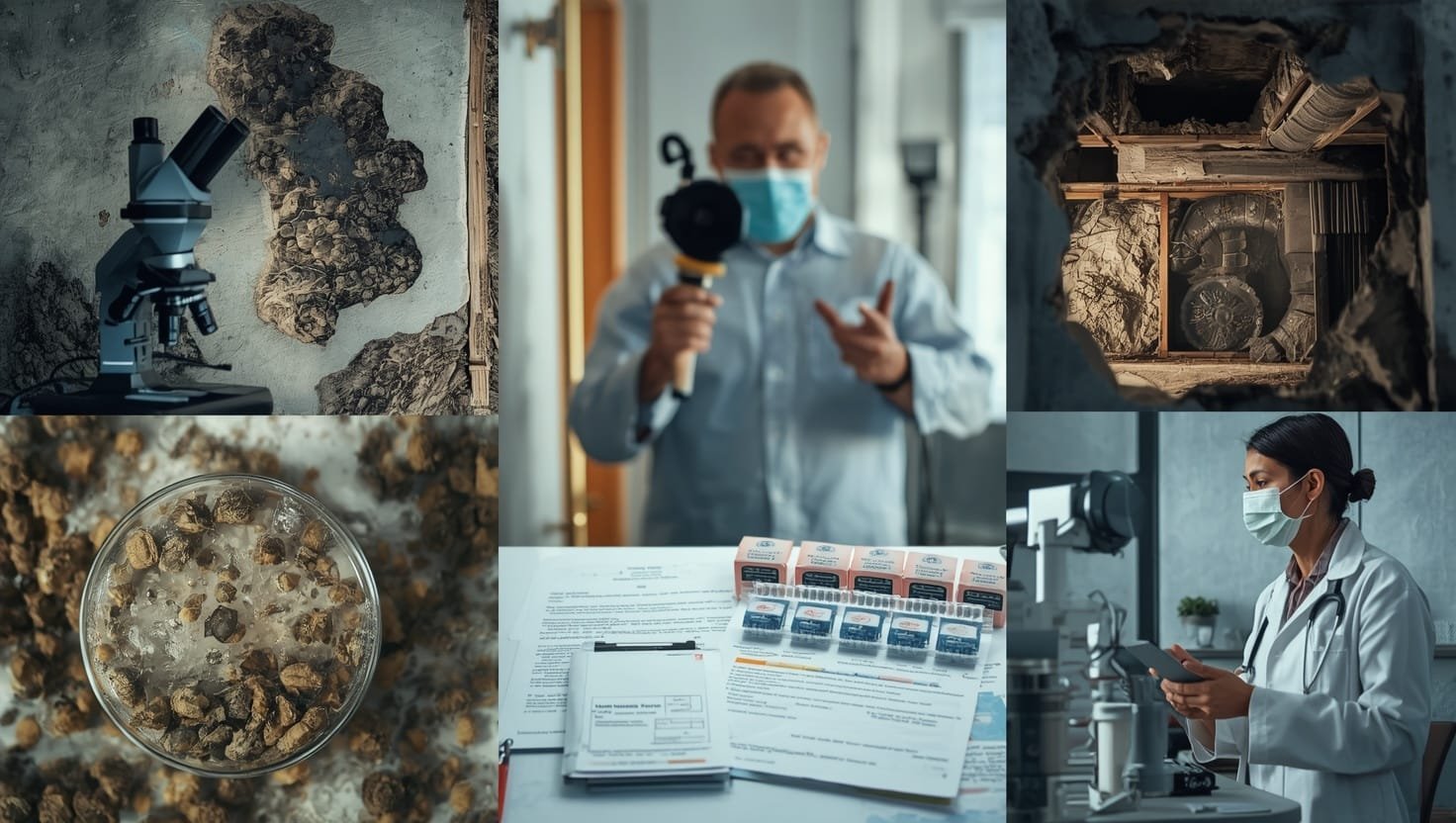
There are three ways people typically test for mold: air quality tests, surface samples, and bulk samples.
Each one tells you something different—and each one misses something important.
Air Quality Tests (Spore Counts)
These measure the concentration of mold spores floating in the air at the moment the test is taken.
Sounds useful, right? Not really—at least not for immunocompromised people.
The problem: spore counts fluctuate wildly depending on when you test. Test on a dry day? You’ll get lower numbers. Test right after someone disturbs mold by cleaning or walking through a moldy basement? The numbers spike. You could test on Tuesday and get a “safe” result, then have mold spores skyrocket on Wednesday just because humidity changed or someone opened a window.
For healthy people, a moderate spike in spore count might be fine. Your immune system handles it. For you? That same spike could trigger an infection you don’t recover from easily. An air test doesn’t capture that risk—it just captures a moment in time.
Also, air tests don’t tell you where the mold is coming from. You could have spores in your breathing space, but the actual mold colony could be hidden inside your walls, ductwork, or crawl space. The test says “yeah, there are spores” but gives you no clue where to look or what to do about it.
Surface Samples (Swabs and Tape Lifts)
Someone takes a swab or tape sample from a visible spot and sends it to a lab.
This tells you what type of mold is on that specific surface.
The catch: you’re only testing what you can see. Mold is growing behind your walls, under your floors, and in your ducts right now—places you can’t swab. A surface sample is like checking your front door lock while a burglar’s already inside through the back window.
One Rochester family with an immunocompromised parent got a surface sample from a small dark spot in their basement. The lab came back: “Aspergillus fumigatus detected.” Nasty stuff, especially for someone with a weak immune system. But the test didn’t tell them how much was there, how long it had been growing, or if there were colonies elsewhere in the house. They got a positive result and a lot of anxiety—but no actionable information about whether the person needed to move out or if professional remediation could handle it safely.
Bulk Samples (Drywall, Insulation, Wood)
A professional cuts out a piece of material and sends it to the lab to see if mold is colonizing it.
This is the most reliable way to find hidden mold—but it requires knowing where to look and being willing to cut into your walls or flooring.
The upside: if there’s mold in your drywall or insulation, a bulk sample will catch it. The downside: you’re creating holes in your house to find out, and you still need professional judgment about where to sample. Sample the wrong spot and you get a false negative. The mold’s there, but your test missed it.
Bottom line: Mold tests give snapshots, not the full picture—risky when your immune system can’t afford guessing games.
What Labs Actually Look For—And What Matters for Immunocompromised People
When a lab analyzes a mold sample, they’re identifying the species.
That’s useful information—but only if you know what to do with it.
Some molds are genuinely more dangerous than others for immunocompromised people. Aspergillus fumigatus? That’s the big threat. It’s small enough to penetrate deep into your lungs and cause invasive aspergillosis—the serious infection we talked about earlier. Stachybotrys (black mold) gets a scary reputation, but for immunocompromised individuals, it’s less of a direct threat than aspergillus.
Here’s what the lab report usually doesn’t tell you:
- Spore load or concentration — They tell you what’s there, not how much. A handful of spores is different from a colony pumping out millions per hour.
- How long it’s been growing — Mold discovered today might’ve been colonizing for three weeks or three months. Older colonies are more established and harder to remove completely.
- Whether there’s mold elsewhere — One positive sample doesn’t mean that’s your only problem. Hidden mold could be spreading in places you haven’t tested.
- Risk level for your specific immune status — A lab report doesn’t say “this is dangerous for someone with your condition.” That’s a medical call, not a lab call.
For immunocompromised people, a mold test result is a starting point—not an ending point. You need professional interpretation and a plan, not just a lab report saying “Aspergillus detected.”
Bottom line: Lab results identify mold type but don’t quantify risk or scope of hidden contamination for immunocompromised residents.
The Real Problem: False Negatives and Hidden Mold
Here’s what keeps Walt Latuik and his team at JetDry busy in Rochester—people get negative mold tests and think they’re safe.
Then they get sick.
False negatives happen all the time. You test for mold, the lab says “no mold detected,” and you feel relief. But mold’s growing inside your walls, in your HVAC system, or under your flooring. You tested the wrong spot, or you tested too early before visible growth appeared, or the sample got contaminated during collection.
For someone who’s immunocompromised, a false negative is dangerous. You’re exposed to mold spores daily, your immune system can’t fight them off, and you think everything’s fine because a test said so. By the time symptoms show up—persistent cough, fever, breathing problems—the infection’s already established.
One of Walt’s clients was immunocompromised from organ transplant medications. They had a musty smell in their home and got an air quality test done. Results came back normal. But three months later, they developed a persistent lung infection that turned out to be aspergillosis. JetDry came in and found black mold thriving inside the HVAC system—the air test had missed it completely because the contamination was in the ducts, not in the main living space air.
The takeaway: a negative test doesn’t mean you’re mold-free. It means you didn’t detect mold in that specific test at that specific moment.
Bottom line: Negative mold tests create false confidence for immunocompromised people—hidden mold keeps growing while you think you’re safe.
When Testing Makes Sense—And When It’s Just Wasting Time
Testing for mold sounds smart, but sometimes it delays the actual solution.
If you’ve got visible mold, water damage, or a musty smell in your home and you’re immunocompromised—you don’t need a test to tell you what to do.
You need remediation.
Testing makes sense in a few specific situations:
- You suspect hidden mold but can’t find the source — The musty smell is real, but you can’t locate it. A professional inspection with moisture detection equipment beats random guessing.
- You’ve had mold remediation done and want to verify it worked — Post-remediation testing confirms the job was complete and spore counts are back to normal.
- You’re trying to track down why you’re having respiratory symptoms indoors — If you’re getting sick inside your home, testing might identify mold as the culprit so you can address it.
- Your insurance company requires it — Some policies won’t cover mold claims without lab documentation.
What doesn’t make sense: testing when you already know there’s a problem. If water damage happened, mold’s coming. If you smell mold, it’s there. Testing delays action, and for immunocompromised people, delay is risk.
The best approach for Rochester homeowners with immune system issues is professional inspection first. A trained eye with moisture detection equipment will find mold faster and more accurately than any lab test. Once you know the scope, you remediate. Testing comes after—to confirm the work was done right.
Bottom line: For immunocompromised people, visible signs or water damage warrant immediate remediation, not testing delays.
Professional Inspection vs. DIY Testing—Why This Matters for Your Health
You could order a mold test kit online for $30 and mail it to a lab.
Don’t.
Here’s why: those kits are unreliable, the instructions are easy to mess up, and the results don’t mean much without professional context. Plus, collecting samples yourself means disturbing potential mold—and we already covered how that’s dangerous for immunocompromised people.
A professional inspection is different. Someone trained in mold detection uses thermal imaging to find temperature anomalies (which indicate moisture), moisture meters to detect hidden water, and visual inspection to spot growth patterns. They know where mold typically hides and what conditions create it. They’ll find problems that DIY tests would miss.
At JetDry, the team combines inspection with remediation planning. They don’t just test—they solve. If mold’s there, they tell you exactly what needs to happen, what equipment they’ll use, and how they’ll keep you safe during removal. For someone who’s immunocompromised, that clarity and professional containment is worth every penny.
Bottom line: Professional inspection beats DIY testing—especially when your immune system can’t handle exposure mistakes.
What to Do If You Get a Positive Mold Test (And You’re Immunocompromised)
So you got tested, and mold came back positive.
First: don’t panic. Positive doesn’t mean you have to evacuate.
Second: don’t try to clean it yourself. You already know this, but it bears repeating because people get test results and think they can handle it with bleach and elbow grease.
Here’s your actual action plan:
Step 1: Get professional remediation quotes immediately. Contact JetDry or another certified mold remediation company and describe your situation—mention that you’re immunocompromised. They’ll prioritize you and give you realistic timelines. Most mold remediation takes 3-7 days depending on scope. That’s not forever.
Step 2: Assess whether you need to leave during remediation. If mold’s in your basement and you live upstairs, you might be able to stay home if they properly contain the area. If it’s in your HVAC system or walls, leaving during work is smarter. Your remediation team will advise you.
Step 3: Ask about post-remediation testing. Once the work’s done, have them test to confirm the mold’s gone and spore counts are normal. This gives you peace of mind and documentation for insurance.
Step 4: Address the moisture source. Mold came back for a reason. Water’s getting in somewhere. The remediation team will identify it, but you need to fix it or the mold returns. That might mean roof repair, gutter cleaning, foundation sealing, or dehumidification—whatever stopped the moisture in the first place.
One Rochester homeowner got a positive mold test in their crawl space. They called JetDry, got a plan in place, stayed with a family member for a week during remediation, and had the area professionally sealed afterward. Total cost: around $3,000. Total peace of mind? Priceless when you’re immunocompromised.
Bottom line: Positive mold test = professional remediation + moisture fix + confirmation testing. Don’t skip steps.
FAQ: Mold Testing and Immunocompromised Health
Can I do a mold test myself if I’m immunocompromised?
No—DIY testing means handling potential mold samples, which releases spores you can’t afford to breathe. A professional does the testing safely.
How long after water damage should I test for mold?
Don’t wait. If water damage happened more than 48 hours ago without proper drying, assume mold is growing. Get professional inspection and remediation started immediately rather than waiting for test results.
What mold types are most dangerous for immunocompromised people?
Aspergillus fumigatus is the top threat because it causes invasive aspergillosis. Candida species and Cryptococcus are also serious risks. Your doctor and remediation team should know which ones you’re dealing with.
Should I get mold testing before buying a house if I’m immunocompromised?
Yes—absolutely. A professional home inspection should include mold assessment. Don’t move into a place with existing moisture problems or hidden mold if your immune system’s already compromised.
If my mold test is negative, am I safe?
Not necessarily. Negative tests can miss hidden mold. If you have symptoms, water damage history, or a persistent musty smell, get professional inspection even if a test said negative.
The Bottom Line on Mold Testing for Immunocompromised People
Mold testing has its place—but it’s not a substitute for professional remediation.
For someone with a compromised immune system, the goal isn’t to collect test data. It’s to eliminate the mold threat before it becomes a medical crisis. Testing might confirm what you already suspect, but it won’t make you healthier. Remediation will.
If you’re in Rochester and dealing with mold concerns while managing immune system issues, don’t waste time on DIY tests or playing the waiting game with lab results. Walt and his team at JetDry have over 20 years of experience handling mold situations for immunocompromised residents. They understand the urgency, they know how to contain and eliminate mold safely, and they’ll explain exactly what’s happening at every step.
Contact JetDry now for a professional inspection and get answers—not just test results. Your health is too important to guess about.
Your Doctor Didn’t Warn You About This—How Mold Exploits Immunocompromised Systems in Ways Medicine Barely Understands
You’re on immunosuppressive medications.
Your immune system is already fighting—or not fighting—to keep you alive.
And then mold shows up.
Not as a visible problem you can see and address. But as something growing silently in the spaces your body can’t protect anymore. The thing is, most immunocompromised people don’t realize how differently their bodies respond to fungal exposure compared to everyone else. Your doctor talks about infection risk in general terms. But mold? That’s a specific threat that hits differently when your immune defenses are compromised.
The gap between what you know about mold risks and what’s actually happening inside your body is dangerous. And nobody’s really talking about it.
Why Mold Spreads Faster in Immunocompromised Bodies—The Biological Reality
When a healthy person’s lungs catch mold spores, white blood cells called macrophages grab them and neutralize them before they can colonize.
It’s automatic.
It’s like having a bouncer at every door in your respiratory tract, checking IDs and tossing out troublemakers before they cause problems.
Your immune system? That bouncer’s either on break, understaffed, or not showing up for his shift.
Aspergillus spores are tiny—3 to 5 microns. They float past your upper airway defenses and lodge deep in your alveoli (the tiny air sacs where gas exchange happens). In a healthy person, this triggers an immune response that kills the spore before it germinates. In an immunocompromised person, that response never comes. The spore germinates. It grows. It branches. Within days, you’ve got a fungal colony expanding in your lungs.
The colonization process is what makes this so dangerous for you specifically.
A healthy person’s body recognizes the mold as an invader and mounts a response. You might cough a bit. You might feel irritated. But your immune system clears it. For immunocompromised individuals, that fungus keeps growing unchecked. It sends out more spores. It penetrates deeper into lung tissue. It can eventually enter the bloodstream and spread to other organs—brain, heart, kidneys, liver.
One Rochester resident undergoing chemotherapy noticed a persistent cough that wouldn’t go away. They assumed it was treatment side effects. After three weeks of it getting worse, a CT scan revealed invasive aspergillosis already colonizing both lungs. They’d been breathing mold spores from their basement for months without knowing it. The infection required aggressive antifungal treatment and a hospital stay that derailed their cancer treatment schedule.
The biological difference matters: your body can’t fight mold the way most people’s can, so exposure turns into infection faster and more aggressively.
Bottom line: Mold colonizes immunocompromised lungs unchecked—spreading faster and deeper than in healthy people.
The Medication Factor—How Your Treatment Makes You More Vulnerable
If you’re on immunosuppressive drugs, you’re in a specific vulnerability window.
Those medications are keeping your immune system dialed down—which is necessary for your survival (transplant rejection is worse than the side effects). But that dial doesn’t just turn down your ability to fight viruses and bacteria. It turns down your ability to fight fungi too.
Different medications hit different parts of your immune response.
Biologic drugs that target TNF-alpha (used for rheumatoid arthritis, Crohn’s disease, and other autoimmune conditions) specifically impair your ability to fight fungal infections. Corticosteroids suppress T-cell function, which is exactly what you need to recognize and kill mold. Calcineurin inhibitors used in transplant patients? They directly reduce your antifungal immune response.
The problem gets worse if you’re on multiple medications. Combination therapy gives you better disease control but worse infection risk—especially fungal infection risk. You’re not just immunocompromised. You’re immunocompromised in ways that specifically target your ability to handle mold.
Add seasonal humidity to the mix—Rochester’s spring thaw and summer moisture create perfect conditions for mold growth—and you’re looking at months where your vulnerability is at its peak.
Some patients don’t even realize their medications are making them more susceptible. They think “immunocompromised” means general infection risk. But when you’re on specific biologics or transplant medications, mold becomes a disproportionate threat compared to other infections.
Talk to your prescribing doctor about your specific medications and fungal infection risk. Most won’t bring it up unless you ask. They’re managing your primary condition, not necessarily thinking about your mold exposure risk at home.
Bottom line: Your medications suppress specific immune defenses—making you uniquely vulnerable to fungal infections from mold.
Why Symptoms Come Late—And Why That Delay Costs You
Here’s what makes mold exposure so treacherous for immunocompromised people: you don’t feel sick until the infection’s already established.
A healthy person exposed to mold might get a scratchy throat or a slight cough within hours. Their immune system’s responding, creating inflammation as it fights back. You feel it. You know something’s wrong.
You don’t get that warning system.
Your immune system isn’t mounting a visible response because it can’t. The mold’s colonizing your lungs silently. You’re breathing spores daily. The fungus is growing. But you feel fine. No cough. No fever. No obvious symptoms.
Then one day—maybe weeks later—you start coughing. Or you feel short of breath after walking up stairs. Or you develop a low-grade fever that won’t break. You think it’s a regular cold. You try over-the-counter stuff. It doesn’t help.
By the time you see a doctor, the infection’s already significant. A chest X-ray shows infiltrates. A blood test shows elevated inflammatory markers. A sputum culture or bronchoscopy confirms aspergillosis or another fungal infection. Now you’re looking at weeks of IV antifungal therapy. Maybe hospitalization. Maybe ICU care if it’s spread.
The delay between exposure and diagnosis is what turns a manageable problem into a crisis.
One family in Rochester had an immunocompromised family member living in a house with undetected mold in the crawl space. The person felt fine for two months. Then respiratory symptoms hit hard—shortness of breath, chest pain, fever. Emergency room visit. CT scan. Diagnosis: invasive pulmonary aspergillosis. They called JetDry immediately to address the crawl space mold, but the damage was already done. The patient spent 10 days in the hospital on antifungal medication.
This is why prevention isn’t paranoid for immunocompromised people. It’s critical. You don’t have the luxury of waiting for symptoms to show up. By then, you’re already fighting a serious infection.
Bottom line: Mold infections in immunocompromised people develop silently—symptoms show up only after significant colonization.
Comorbidity Complications—When Mold Meets Your Existing Conditions
You’re not just immunocompromised.
You probably have other health stuff going on too.
Maybe you have asthma or COPD. Maybe you’re recovering from cancer treatment. Maybe you had a lung transplant. Maybe you have diabetes. Each of these conditions changes how mold affects you—and not in good ways.
If you have asthma or COPD, mold exposure triggers severe exacerbations. Your already-compromised airways get inflamed further. Mucus production increases. You can’t clear your lungs effectively. Suddenly you’re on oral steroids, inhalers, maybe nebulizers. Your respiratory function drops. Recovery takes longer.
If you’re post-transplant, especially lung transplant, mold becomes a chronic rejection trigger. Repeated fungal infections cause inflammation that damages your graft. You develop bronchiolitis obliterans syndrome (BOS)—permanent scarring of your airways. The transplant that saved your life starts failing because of repeated mold exposure.
If you’re in cancer treatment or recently finished it, your bone marrow’s already recovering. Adding a fungal infection on top of that means your body’s fighting two battles at once. Recovery from treatment gets delayed. Cancer surveillance gets delayed. Your overall prognosis suffers.
Diabetes plus immunocompromise plus mold is a triple threat. High blood sugar impairs your remaining immune function. Mold infection becomes more aggressive. Your ability to recover from infection is compromised. Antifungal medications become less effective. You’re stuck in a cycle.
The point: your underlying condition amplifies mold’s threat. It’s not just about the mold. It’s about the mold hitting a body that’s already dealing with serious health challenges.
Bottom line: Existing health conditions amplify mold’s damage—making prevention even more critical for immunocompromised people.
The Cost Reality—What Mold-Related Infections Actually Cost You
Let’s talk money because it matters.
A hospitalization for invasive aspergillosis runs $40,000 to $100,000 depending on ICU time, antifungal medication, and complications. That’s before any lost income, time away from work, or impact on your primary disease treatment.
Antifungal medications like voriconazole or posaconazole aren’t cheap. If you’re on long-term therapy (which some people need), you’re looking at $500 to $2,000 per month out of pocket even with insurance.
Then there’s the indirect cost. If you develop a fungal infection during cancer treatment, your oncology schedule gets disrupted. You miss chemotherapy cycles. Your cancer treatment gets delayed. That delay can affect your prognosis. The cost of delayed cancer care is measured in life expectancy, not just dollars.
If you’re post-transplant and develop fungal infection-related rejection, you might lose your graft. You go back on dialysis or the transplant waiting list. You’re looking at years of additional treatment and significantly reduced quality of life.
Prevention—proper moisture control, professional mold remediation, environmental management—costs thousands. Maybe $5,000 to $15,000 for serious remediation.
Treatment costs tens of thousands to hundreds of thousands.
The math is simple. Prevention costs less. Way less.
Bottom line: Fungal infections from mold cost $40K-$100K to treat; prevention costs a fraction of that.
Creating Your Personal Mold Risk Plan—What You Actually Need to Do
You can’t eliminate all mold risk. But you can manage it strategically.
Start with a professional home assessment. Not a DIY inspection. Not a test kit from the hardware store. A real water damage and mold assessment from someone who knows what they’re looking for. They’ll identify moisture problems, hidden mold, and vulnerability points specific to your home.
Get humidity monitoring in place. Buy a few inexpensive humidity meters (around $15 each) and put them in high-risk areas—basement, bathroom, kitchen, bedrooms. Check them weekly. Keep humidity below 50%. If it’s climbing above that, run dehumidifiers immediately.
Fix water problems fast. That dripping faucet, the slow leak under the sink, the water stain on the ceiling—don’t procrastinate. Every day it sits is another day mold’s potentially growing. Same goes for roof leaks, foundation cracks, or gutter problems. Address them within 24 hours if possible.
Establish a cleaning protocol that doesn’t expose you to mold. You shouldn’t be cleaning visible mold yourself. You shouldn’t be in the room when someone else is cleaning it. If there’s mold growth, professionals handle it. You stay away during the work.
Know your medication’s fungal infection risk. Ask your doctor specifically: “Does my medication increase my risk for fungal infections?” Push for an answer. If it does, you need to be even more vigilant about mold prevention.
Create a list of symptoms that warrant immediate medical attention. Persistent cough that lasts more than a week. Fever that doesn’t respond to typical treatment. Shortness of breath that’s new or worsening. Chest pain. Night sweats. If you get any of these, call your doctor and mention possible mold exposure. Get imaging (chest X-ray or CT) to rule out fungal infection.
Keep emergency contact numbers accessible. Your immunologist or transplant doctor. Your primary care doctor. A local hospital with infectious disease specialists. If you develop symptoms, you need to get evaluated quickly. Don’t wait it out.
Bottom line: Create a personal mold risk plan—professional assessment, humidity monitoring, fast repairs, and symptom awareness.
When to Call a Professional—The Lines You Shouldn’t Cross
Some things you can handle on your own.
Mold is not one of them if you’re immunocompromised.
Call a professional if you see any visible mold. Call if you smell mold and can’t locate the source. Call if you’ve had water damage that wasn’t dried within 48 hours. Call if your humidity’s consistently above 50% despite dehumidification efforts. Call if you’re having respiratory symptoms and suspect mold exposure.
Don’t try to clean mold yourself. Don’t assume bleach will solve it. Don’t think “it’s just a small spot.” Don’t wait to see if it gets worse.
Walt and his team at JetDry understand immunocompromised mold situations. They know you can’t be exposed to spore clouds during remediation. They know the stakes are higher. They’ll contain the work properly, use HEPA filtration, and explain every step so you’re not guessing about whether your home is safe afterward.
In Rochester, mold isn’t a rare problem. It’s seasonal. Spring snowmelt brings water damage. Summer humidity feeds mold growth. Fall moisture creates ideal conditions. Winter ice dams cause leaks. If you’re immunocompromised and living in this climate, professional support isn’t optional—it’s part of your health management plan.
Bottom line: Don’t DIY mold removal when immunocompromised—professionals contain spores and keep you safe.
FAQ: Mold Risks and Immunocompromised Health
Can I get a fungal infection from mold if I’m immunocompromised but asymptomatic?
Yes—fungal colonization can happen without symptoms for weeks. By the time you feel sick, the infection’s already established and needs aggressive treatment.
How quickly can mold cause serious infection in immunocompromised people?
Colonization can happen within days of exposure, but serious infection typically takes weeks to develop—which is why early detection and prevention are critical.
Should I leave my house if mold is found during assessment?
Not necessarily—it depends on the mold’s location and your specific immune status. A professional can advise whether you need to relocate during remediation.
Are all molds equally dangerous for immunocompromised people?
No—aspergillus fumigatus is the highest risk, but candida, cryptococcus, and others are also serious threats. Different molds require different treatment approaches.
Can antifungal medications prevent mold infection if I’m exposed?
Some immunocompromised patients receive prophylactic antifungals, but this depends on your specific condition and risk level—ask your doctor if you’re a candidate.
Walt and his team at JetDry have spent over 20 years protecting Rochester families from water damage and mold—including those with serious health vulnerabilities. If you’re immunocompromised and concerned about mold in your home, don’t guess. Get professional guidance. Contact JetDry now for a comprehensive assessment and a plan that keeps you safe.