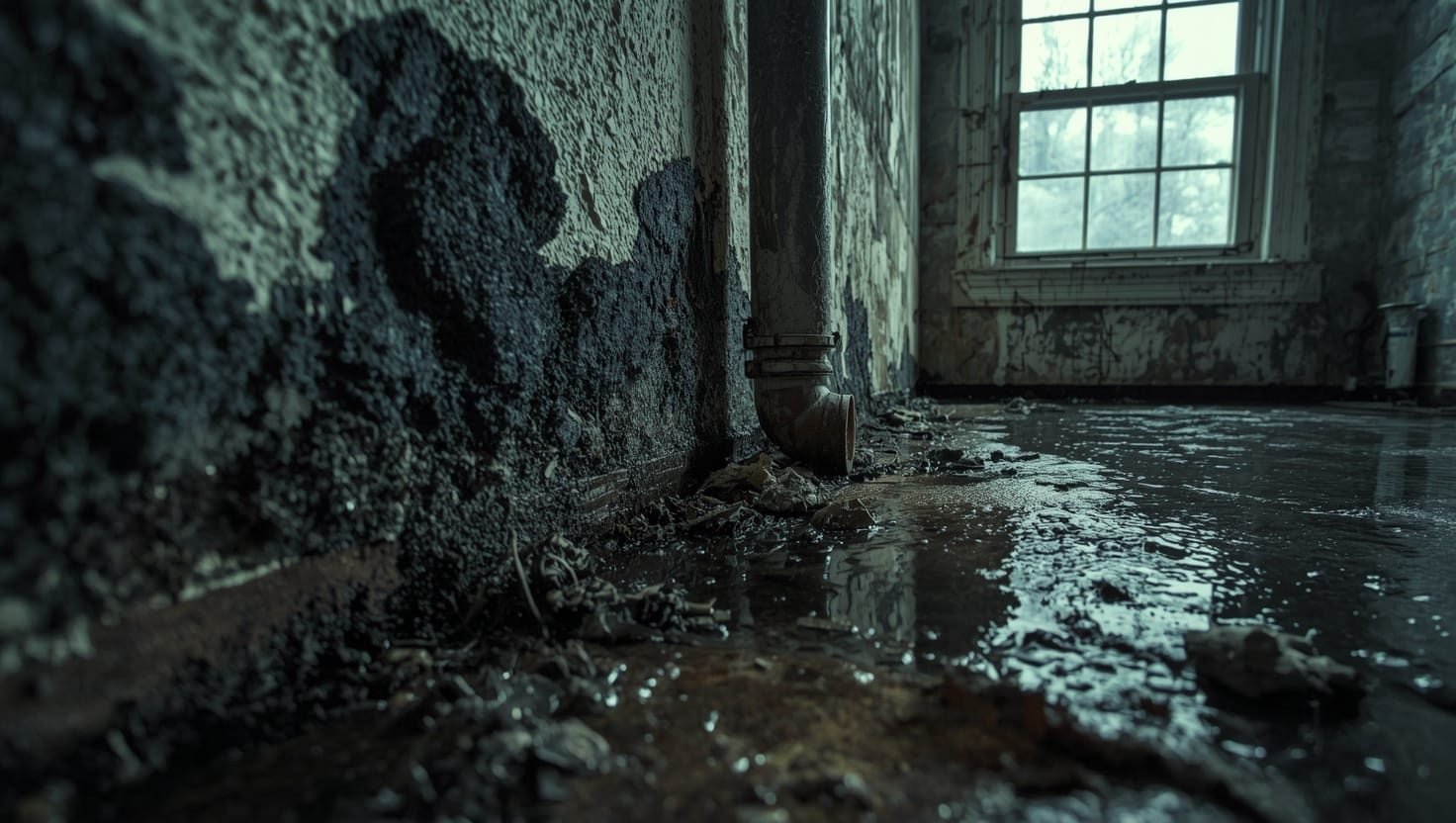
Black Mold In House? Here’s Why
- Wolfe McNeel
Black Mold in House? You’ve Got 48 Hours Before It Takes Over—Here’s What You Need to Know
Black mold spreads fast—really fast.
One homeowner in Rochester discovered mold creeping across their basement drywall on a Monday morning. By Wednesday, it had colonized three walls and was releasing spores into the HVAC system. The repair bill? $18,000. The stress? Immeasurable.
Black mold in a house isn’t just an eyesore or a smell problem. It’s a threat to your property’s structural integrity, your family’s health, and your wallet. The worst part? Most people don’t realize they have it until it’s already become a major problem.
This guide breaks down what black mold actually is, how to spot it before it spreads, what causes it to grow, and most importantly—what to do right now if you’ve found it.
What Is Black Mold, Really?
Black mold—the kind homeowners fear most—is usually Stachybotrys chartarum, though there are other dark-colored molds that look similar and cause similar damage.
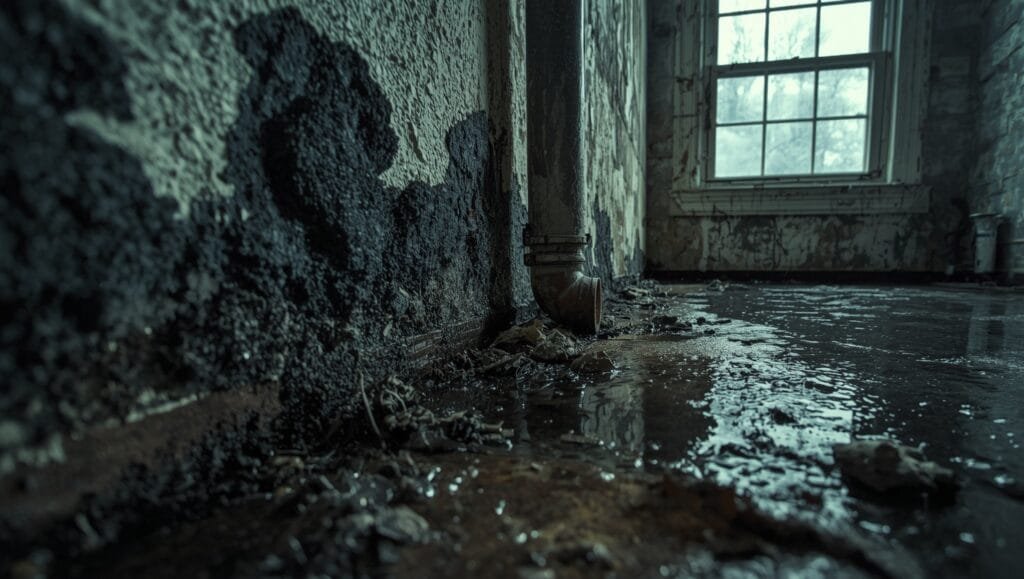
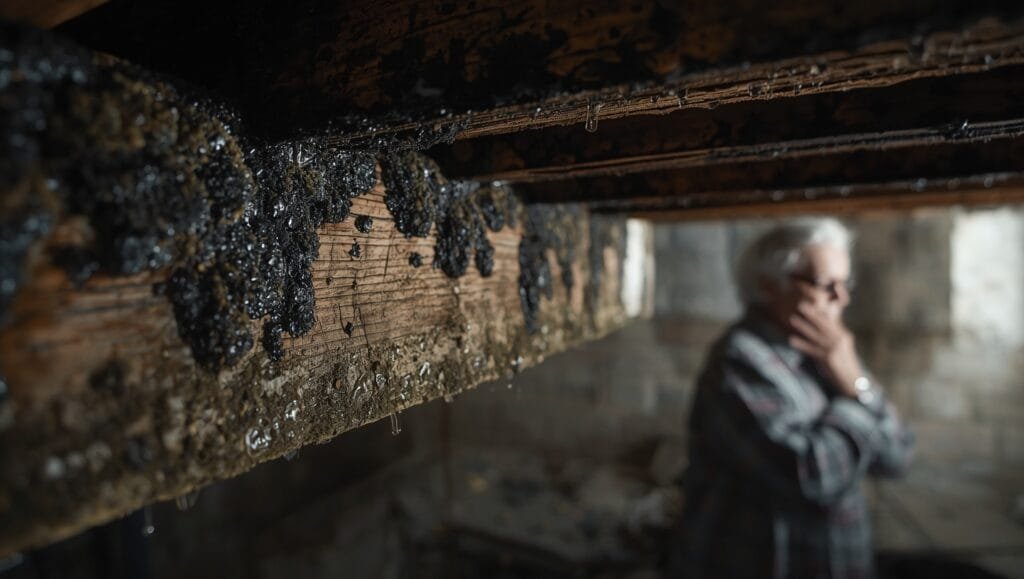
It’s not that black mold is inherently more toxic than other molds. What makes it dangerous is that it loves moisture-rich environments and spreads aggressively once conditions are right. It feeds on organic materials like drywall, wood, and insulation—basically, the bones of your house.
Here’s the thing: black mold thrives in dampness. You won’t find it in dry spaces. It needs humidity levels above 55% and standing water, leaks, or condensation to get started. Once it finds that moisture, it grows silently—sometimes for weeks or months—before you even notice it’s there.
Bottom line: Black mold grows in wet, dark spaces and eats the materials your house is built from—catching it early saves thousands in repairs.
How Black Mold Gets Into Your House (And Why You’re More Vulnerable Than You Think)
Black mold doesn’t appear out of nowhere. It needs a trigger—usually water.
Common sources include:
- Roof leaks. A single shingle gap or missing flashing can let water seep into your attic for months without you noticing.
- Burst pipes. A frozen or corroded pipe can release hundreds of gallons, soaking walls and flooring before you catch it.
- Plumbing failures. Slow leaks under sinks, behind toilets, or in crawl spaces create the perfect breeding ground.
- Basement water intrusion. Groundwater pressure, poor drainage, or cracks in the foundation let moisture seep in constantly.
- HVAC condensation. If your air conditioning system isn’t draining properly, moisture pools in ducts and pans—ideal for mold growth.
- Bathroom and kitchen humidity. Poor ventilation traps moisture in walls and crawl spaces.
- Flood damage. Even after water recedes, mold colonizes damp materials within 24–48 hours.
The sneaky part? Many of these leaks happen behind walls, under floors, or in attics where you can’t see them. By the time you smell something or notice discoloration, the mold has already established itself.
One Rochester homeowner ignored a musty basement smell for three weeks, thinking it was just seasonal dampness. When they finally called JetDry for an inspection, black mold had spread across 40% of the basement walls. The delay cost them an extra $7,000 in remediation.
Bottom line: Water damage—whether visible or hidden—is the doorway black mold uses to invade your house.
Where Black Mold Hides (The Places Most People Miss)
Black mold doesn’t announce itself with a giant sign.
It grows in the spaces you rarely check:
- Behind drywall. Water damage on the surface often means mold is already colonizing the cavity behind it.
- Under flooring. Subfloors stay damp after leaks, creating a mold factory under your feet.
- In attics. Roof leaks and poor ventilation make attics prime mold real estate—and you probably don’t go up there often.
- Crawl spaces. These areas are naturally damp and poorly ventilated, making them mold magnets.
- HVAC ducts and pans. Condensation builds up in cooling systems, and mold spores spread every time air circulates.
- Around window frames. Condensation and poor sealing create moisture pockets that mold loves.
- Basement corners and joints. Water naturally pools in these areas, especially during heavy rain or snowmelt.
- Carpet padding. If your carpet got wet—even slightly—the padding underneath stays moist and becomes a mold breeding ground.
The key insight: black mold often grows where moisture is trapped and air circulation is poor. If a space is damp, dark, and undisturbed, it’s vulnerable.
Bottom line: Check hidden spaces regularly—attics, crawl spaces, behind walls—because that’s where black mold sets up shop.
The Real Cost of Ignoring Black Mold in Your House
Let’s talk money. And health. Because both matter.
Property damage. Black mold eats organic materials. Wood rots, drywall crumbles, and structural integrity fails. A small mold problem caught early might cost $500–$2,000 to remediate. The same problem left untreated for six months? $15,000–$50,000. We’re talking foundation repair, complete wall replacement, and potential structural issues that make your house uninsurable.
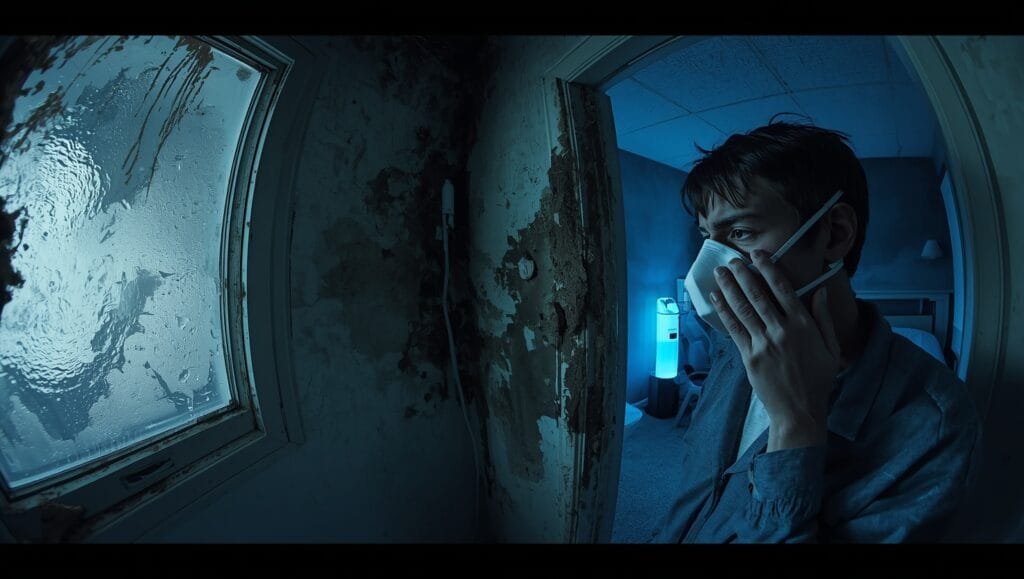
Health effects. Black mold releases mycotoxins—compounds that can trigger respiratory issues, allergic reactions, and asthma attacks. Kids and elderly family members are especially vulnerable. Some people develop chronic health problems from prolonged exposure. Your doctor might not connect the dots to mold, but your lungs will feel the difference.
Resale value. A home with mold history—even if remediated—is harder to sell and commands lower offers. Inspectors will find evidence of past mold, and buyers will use it as a negotiating weapon. You could lose 10–20% of your property’s value.
Insurance complications. Many insurance policies don’t cover mold damage if it results from poor maintenance or neglect. You could end up paying out of pocket for what should be covered.
One homeowner in the Rochester area waited three months to address black mold in their basement, thinking it would go away. It didn’t. The mold spread to the first floor, forcing them to vacate the house during remediation. Total cost: $32,000. Time away from home: six weeks. Emotional toll: immeasurable.
Bottom line: Ignoring black mold costs you tens of thousands in repairs, health problems, and lost property value—act fast to avoid it.
How to Spot Black Mold Before It Becomes a Crisis
Early detection is your best defense.
Black mold has telltale signs—if you know what to look for:
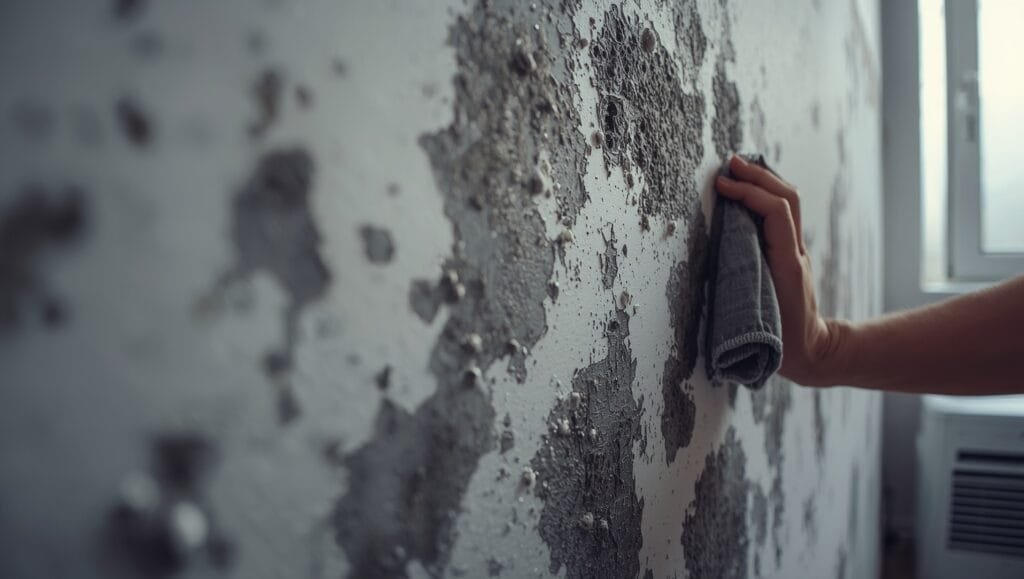
- Visible dark spots or patches. Black, greenish-black, or dark brown discoloration on walls, ceilings, or flooring. It often looks slimy or fuzzy.
- Musty, earthy smell. That distinctive odor is mold spores releasing into the air. If you smell it, mold is present—even if you can’t see it yet.
- Water stains or discoloration. Yellow, brown, or dark rings on walls or ceilings indicate past or present water damage—mold’s favorite starting point.
- Peeling paint or wallpaper. Moisture trapped behind surfaces causes them to bubble and peel. Mold usually grows underneath.
- Warped drywall or soft spots. If drywall feels spongy or crumbles when you touch it, mold has compromised its structure.
- Respiratory symptoms that worsen indoors. If family members develop coughs, congestion, or asthma symptoms that improve when they leave the house, mold exposure could be the culprit.
- Visible condensation or moisture. Sweating pipes, pooling water, or constant dampness means humidity levels are too high—perfect for mold.
Don’t rely on your eyes alone. Mold often hides. If you suspect black mold but can’t see it, trust your nose and your instincts. A professional inspection using moisture meters and thermal imaging can reveal mold behind walls and under floors before it becomes catastrophic.
Bottom line: Musty smells, water stains, and soft drywall are red flags—get them inspected before black mold spreads.
What to Do Right Now If You Find Black Mold in Your House
Found it? Don’t panic. But do act fast.
Step 1: Stop the water source. If there’s an active leak, fix it immediately. No moisture = no growth. Whether it’s a roof leak, burst pipe, or HVAC condensation issue, stopping the water is priority one.
Step 2: Document everything. Take photos and videos of the mold and any water damage. Date them. This matters for insurance claims and for proving you acted quickly if issues arise later.
Step 3: Don’t DIY large mold problems. If the mold covers more than 10 square feet, you need professionals. DIY attempts can spread spores throughout your house, making the problem worse. Seriously—this is not a weekend project.
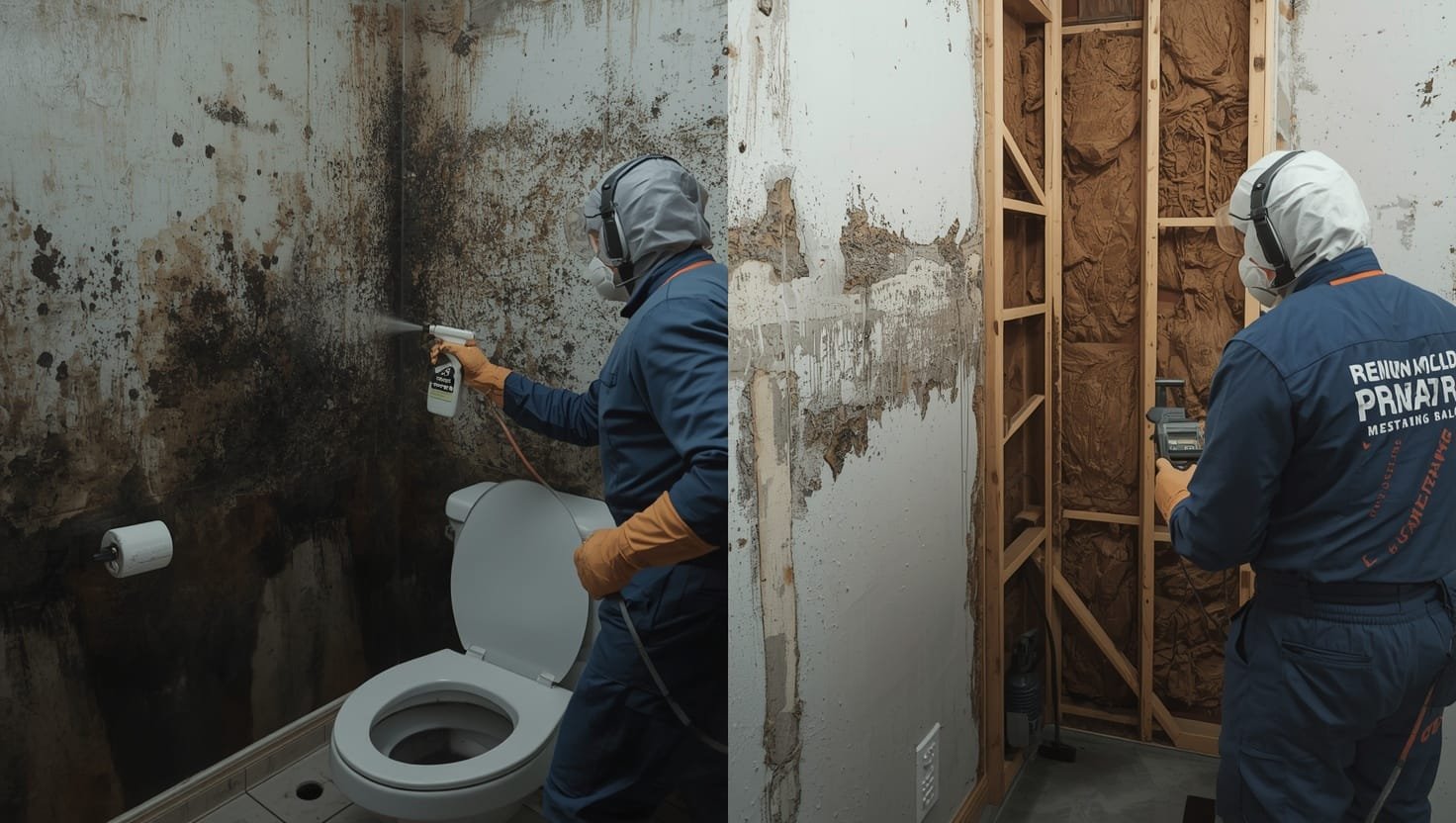
Step 4: Call a mold remediation expert. A professional will assess the extent of contamination, identify hidden mold, and remove it safely using containment and proper disposal methods. They’ll also identify and fix the moisture source so it doesn’t come back.
Step 5: Dry everything thoroughly. After removal, industrial dehumidifiers and air movers bring moisture levels down. Incomplete drying means mold returns within weeks.
Step 6: Test for success. Post-remediation testing confirms mold levels are back to normal. Don’t skip this—it’s your proof that the job was done right.
In Rochester, Walt Latuik and his team at JetDry have handled thousands of black mold cases. They know what to look for, where it hides, and how to eliminate it completely. JetDry’s mold remediation services include moisture detection, containment, removal, and prevention strategies—all backed by 20+ years of experience.
Bottom line: Professional mold removal stops the spread, prevents health risks, and protects your property investment.
Prevention: Stop Black Mold Before It Starts
The best mold remediation is the kind you never need.
Control moisture, and you control mold. Here’s how:
- Fix leaks fast. Don’t wait on roof repairs, plumbing issues, or window seals. Water damage becomes mold damage in 24–48 hours.
- Ventilate bathrooms and kitchens. Run exhaust fans during and 20 minutes after showers and cooking. Moisture needs to escape, not accumulate in walls.
- Keep humidity below 55%. Use a dehumidifier in basements, crawl spaces, and damp areas. Check humidity levels with an inexpensive meter.
- Ensure proper drainage around your foundation. Gutters, downspouts, and grading should direct water away from your house, not toward it.
- Inspect your roof and attic annually. Look for leaks, damaged shingles, and poor ventilation. Attics should have adequate airflow to prevent moisture buildup.
- Maintain your HVAC system. Clean or replace filters regularly, check condensation pans, and ensure drain lines flow freely.
- Seal cracks in foundations and crawl space walls. Even small gaps let water seep in over time.
- Install a sump pump if you have a basement. It removes groundwater before it can settle and create mold conditions.
- Use mold-resistant materials in wet areas. Mold-resistant drywall, paint, and insulation slow colonization if moisture does occur.
Think of it like car maintenance. Regular oil changes cost $50. Ignoring them costs you an engine replacement at $5,000. Same logic with mold prevention—small efforts now prevent expensive disasters later.
Bottom line: Control moisture through ventilation, drainage, and regular maintenance—and black mold never gets a foothold.
The Insurance Question: Will Your Policy Cover Black Mold in Your House?
Here’s the frustrating truth: most homeowner insurance policies don’t cover mold damage.
Why? Because insurers classify mold as a maintenance issue, not a sudden, accidental loss. If your roof leaks because you ignored maintenance, that’s on you. If a pipe bursts due to age, that’s on you. If your HVAC system isn’t draining properly, that’s on you.
However— some policies cover mold if it results from a covered peril like sudden water damage from a burst pipe or storm flooding. The key word is “sudden.” Slow leaks and chronic moisture problems? Not covered.
Your best move: call your insurance agent now and ask specifically about mold coverage. Read your policy. Understand the limits. Don’t assume you’re covered.
For more details on insurance coverage for mold damage, check out JetDry’s resource on whether home insurance covers mold—it breaks down what policies typically cover and how to navigate the claims process.
Bottom line: Most mold damage isn’t covered by insurance—prevention and fast action are your real safety net.
Why Black Mold in Your House Spreads So Fast
Mold doesn’t grow in a straight line. It multiplies exponentially.
A single mold colony can release millions of spores into the air every day. Those spores land on other moist surfaces and start new colonies. Within a week, you’ve gone from a small problem to a large infestation. Within a month, it’s everywhere.
This is why the 48-hour window matters. If you catch mold early and stop the moisture source, you’re dealing with a manageable problem. If you wait two weeks, you’re dealing with something that’s spread through multiple walls and possibly into your HVAC system.
Spores are microscopic and invisible. They travel through air, on clothing, and on shoes. Even after you clean visible mold, if you don’t address the underlying moisture problem, new mold grows back within days or weeks.
This is also why DIY mold removal often fails. People clean the surface but miss the moisture source. The mold returns, and now they’ve wasted time and money.
Bottom line: Mold spreads exponentially—48 hours of inaction turns a small problem into a major one.
Walt Latuik and the team at JetDry have spent over 20 years handling black mold emergencies across Rochester and the surrounding area. They know the signs, the hiding spots, and the solutions. If you’ve found black mold in your house—or suspect you might have it—don’t wait. Contact JetDry now for a fast, professional assessment. Available 24/7 for emergencies. Your home’s health depends on speed.
Black Mold Keeps Coming Back? Here’s Why Your DIY Fix Failed—And What Actually Works
You cleaned it. You scrubbed it. You even bought industrial bleach and a respirator.
Two weeks later, the black mold in your house is back.
This isn’t bad luck. It’s not because you didn’t clean hard enough. The real culprit? You fixed the symptom, not the disease. Black mold returns when the moisture source is still active—and most homeowners miss it entirely. That’s why professionals like Walt Latuik and his team at JetDry’s mold remediation services in Rochester, NY focus on the root cause first, not just the visible growth.
Let’s break down why your black mold keeps coming back and what you need to do differently.
Why DIY Mold Removal Fails Every Single Time
Here’s the brutal truth: bleach kills mold on the surface. It doesn’t kill it inside walls, under flooring, or in the wood fibers where it’s already colonized.
You see a dark patch on your basement wall, spray it down, and watch it disappear. Victory, right? Wrong. The mold’s root system—the mycelium—is still alive beneath the surface, feeding on organic materials. Meanwhile, moisture is still trickling in from that crack in your foundation or that slow leak you haven’t found yet.
Within days, the mold starts reproducing again. The spores multiply. And within weeks, you’re back to square one.
One Rochester homeowner tried cleaning black mold in their crawl space with store-bought products. It looked clean for about ten days. By day twelve, the musty smell returned. When JetDry arrived for a professional assessment, they found the mold had actually spread deeper into the insulation—the cleaning had disturbed spores and driven them further into the structure. The final remediation cost $4,200 instead of the $1,500 it would’ve cost if caught early.
The problem with DIY approaches: they don’t address the moisture source, they don’t reach hidden mold, and they often make things worse.
Bottom line: Surface cleaning fails because mold’s root system stays alive where you can’t reach it.
The Hidden Moisture Source That’s Feeding Your Black Mold
Black mold doesn’t grow without water. Period.
If your mold keeps returning, water is still getting in somewhere. The trick is finding where—because it’s rarely obvious.
Common culprits that homeowners miss:
- Capillary moisture from the soil. Water wicks up through concrete and foundation walls even when there’s no visible leak. Your basement feels dry, but moisture is constantly seeping in at the microscopic level.
- Condensation on cold surfaces. In winter, warm indoor air hits cold basement walls or pipes and creates condensation. You don’t see it as “water damage,” but it’s enough to feed mold colonies.
- Slow plumbing leaks inside walls. A pinhole leak in a copper pipe can drip for months behind drywall without you knowing. By the time you smell something, mold’s been growing in there for a while.
- Bathroom exhaust fans venting into attics. Many older homes have bathroom vents that dump humid air directly into the attic instead of outside. The moisture settles, and mold thrives in that warm, humid environment.
- Gutters that overflow or drain toward your foundation. A clogged gutter doesn’t drain water away from your house—it channels it right toward your foundation and basement.
- Grading that slopes toward your home. Soil around your foundation should slope away to shed water. If it slopes inward, every rainstorm feeds moisture into your crawl space or basement.
Here’s what separates professional mold remediation from DIY disaster: professionals identify and fix the moisture source before touching the mold. No moisture source fix = mold returns. It’s that simple.
Bottom line: Mold returns because water’s still getting in—find the source or the mold never stays gone.
What Professional Mold Remediation Actually Does (That DIY Can’t)
When you call a professional like JetDry, you’re not just paying for someone to spray bleach.
Here’s what a real remediation process includes:
- Moisture mapping. Professionals use moisture meters and thermal imaging to find water in places you can’t see—inside walls, under flooring, in cavities. They identify every wet spot and every potential mold site before visible growth appears.
- Containment. Before touching any mold, they seal off the affected area with plastic barriers and negative air pressure systems. This prevents spores from spreading to clean areas of your house during removal.
- Safe removal and disposal. Contaminated materials are carefully removed, sealed in bags, and disposed of as hazardous waste. This isn’t a garbage bag situation—it’s done by protocol.
- Source identification and repair. They find where the water’s coming from—the roof leak, the foundation crack, the plumbing issue—and fix it. No moisture source repair = no permanent solution.
- Structural drying. After removal, industrial dehumidifiers and air movers run for days (sometimes weeks) to bring humidity levels back to safe ranges. Incomplete drying is why mold returns.
- Post-remediation testing. They test the air and surfaces to confirm mold levels are back to normal. You get proof that the job worked, not just a hope and a prayer.
This is the difference between a band-aid and actual healing.
Bottom line: Pros fix the source, contain the spread, and verify success—DIY just cleans the surface.
The Spore Problem Nobody Talks About
When you disturb mold—even to clean it—you release millions of spores into the air.
These spores are microscopic and invisible. They float through your house, land on moist surfaces, and start new colonies. You could be spreading the problem to your upstairs bedroom, your HVAC system, or your attic without realizing it.
This is why professionals use containment and negative air pressure. They’re literally controlling where spores go so they don’t contaminate the rest of your house.
One homeowner in Rochester tried to clean mold in their basement with a wire brush and shop vac. Within two weeks, their family started experiencing respiratory issues. The spores had traveled through the HVAC system and settled throughout the house. When JetDry arrived, they found mold colonies in the air ducts, the main floor, and the bedrooms. What started as a basement problem became a whole-house problem.
The cost to remediate the entire house? $12,500. The cost to have done it right the first time? $2,800.
Bottom line: Disturbing mold spreads spores—containment stops that from happening.
How to Know If Your Black Mold Remediation Actually Worked
Here’s the thing: you can’t just look at something and know if mold remediation was successful.
Visible mold is gone? Great. But that doesn’t mean the moisture is controlled or the spore count is back to normal. This is why professional remediation includes post-remediation testing.
What gets tested:
- Air quality. Spore counts in your indoor air are measured and compared to outdoor baseline levels. If indoor spore counts are higher than outdoor, mold’s still present.
- Surface testing. Swabs are taken from previously affected areas to confirm no active mold growth.
- Moisture levels. Materials are tested to ensure they’re dry and not conducive to future mold growth.
You get a written report showing mold levels are back to normal. This matters for insurance, resale, and your peace of mind.
Many DIY attempts skip this step entirely. You think you’re done, but you’re just hoping. Professional testing removes the guesswork.
Bottom line: Testing proves remediation worked—hope and guessing are not a strategy.
The Real Cost of Recurring Black Mold in Your House
Let’s talk money because repeated mold problems get expensive fast.
First attempt at DIY: $200 in supplies, your time, and zero results.
Second attempt with better products: $400 in supplies, frustration, and mold’s back again.
Third time calling a pro because you’re done trying: $3,000–$8,000 depending on how far it spread while you were playing chemist.
But here’s the kicker—each time mold returns, it’s eating deeper into your structure. Wood rot gets worse. Drywall degrades further. The moisture source is still active, so damage compounds with each cycle.
That $3,000 remediation could’ve been $1,500 if you’d done it right the first time. Or $500 if you’d fixed the moisture source before mold even started growing.
One homeowner in Rochester ignored a musty smell in their basement for six months, thinking it would go away on its own. When they finally called for help, mold had colonized 35% of the basement walls, the subfloor was soft and failing, and the foundation had visible cracks where water was seeping in. The remediation cost $18,500. The foundation repair cost another $12,000. Total damage from waiting and hoping? $30,500.
If they’d called JetDry at the first smell, the moisture source fix and mold removal would’ve cost about $2,800.
Bottom line: Repeated DIY failures cost more than one professional fix—and damage compounds with every cycle.
How to Prevent Black Mold from Coming Back (For Real This Time)
After remediation, here’s what actually keeps mold gone:
- Humidity control. Keep indoor humidity between 30–50% year-round. A cheap hygrometer ($15) tells you what you’re dealing with. A dehumidifier in damp spaces ($100–$300) solves it.
- Ventilation that actually works. Bathroom exhaust fans should vent outside, not into your attic. Kitchen vents should discharge away from your house. Check them monthly to make sure they’re clear.
- Foundation and basement monitoring. After remediation, check your basement or crawl space monthly for any signs of moisture return. Catch it early before mold starts again.
- Gutter and grading maintenance. Clean gutters twice a year. Check that soil slopes away from your foundation. Fix downspout extensions so water discharges at least 4–6 feet from your house.
- Plumbing inspections. Have an inspection done if you suspect slow leaks. A $200 inspection now beats a $5,000 water damage bill later.
- Regular HVAC maintenance. Change filters monthly during humid seasons. Check condensation pans for standing water. Clean or replace drain lines if they’re clogged.
Prevention is just controlling moisture. Do that, and black mold has nowhere to grow.
Bottom line: Control moisture through maintenance and monitoring—mold can’t survive without it.
When to Call a Professional vs. When You Can Handle It Yourself
Let’s be real: not every mold situation needs a professional.
You can handle it yourself if:
- The mold covers less than 10 square feet.
- It’s on a non-porous surface (tile, sealed concrete) and not spreading.
- There’s no water damage history in that area.
- You can identify and fix the moisture source yourself (clogged vent, leaky faucet, etc.).
Call a pro if:
- The mold covers more than 10 square feet.
- It’s in hidden spaces (walls, crawl spaces, HVAC ducts, attics).
- You can’t find the moisture source.
- It’s returning after you’ve already cleaned it.
- Anyone in your house has respiratory issues or a compromised immune system.
- You’re unsure whether it’s black mold or another type.
When in doubt, call someone. The cost of a professional assessment ($300–$500) is nothing compared to the cost of mold spreading through your house because you guessed wrong.
Bottom line: Small, visible, non-returning mold can be DIY—everything else needs a pro.
FAQ: Black Mold Keeps Coming Back
Why does black mold return after I clean it?
The moisture source is still active. Mold’s root system (mycelium) survives beneath the surface, and as long as water keeps feeding it, new growth returns within days or weeks.
Can I use bleach to permanently kill black mold?
No. Bleach kills surface mold but doesn’t penetrate deep into porous materials or address the moisture that’s keeping it alive. Mold returns once the bleach dries.
How long does it take for black mold to return after cleaning?
If the moisture source isn’t fixed, mold can start growing again within 24–48 hours. Within a week, visible growth often returns.
What’s the difference between mold remediation and mold removal?
Removal just takes out visible mold. Remediation removes mold, identifies the moisture source, fixes it, and verifies success with testing.
How much does professional black mold remediation cost?
It depends on the extent, location, and whether structural repairs are needed. Typical costs range from $2,000–$10,000 for residential homes, though larger jobs can cost more. Early intervention keeps costs down.
Will my insurance cover black mold remediation?
Most policies don’t cover mold from maintenance issues or slow leaks. However, if mold results from a covered peril (burst pipe, storm damage), coverage may apply. Check your policy or read JetDry’s guide on mold insurance coverage for details.
Can black mold cause health problems?
Yes. Black mold releases mycotoxins that can trigger respiratory issues, allergies, asthma, and other health problems—especially in kids, elderly people, and those with compromised immune systems.
How do I know if mold remediation was done correctly?
Professional remediation includes post-remediation testing that confirms mold levels are back to normal and moisture is controlled. Get the test results in writing.
Should I move out of my house during mold remediation?
If the mold is extensive or in your HVAC system, yes. Professional remediators will advise based on your situation. Spore containment is critical, and you don’t want to breathe mold during the process.
Can I prevent black mold from returning?
Yes. Control humidity, fix leaks immediately, maintain proper ventilation, and monitor for moisture. Check JetDry’s mold prevention strategies for a complete guide.
What’s the Difference Between Recurring Mold and New Mold Growth?
Recurring mold is the same colony growing back from a surviving root system in the same location. New mold growth happens in a different area, usually because moisture conditions are right there too.
Both indicate a moisture control problem, but new growth in multiple areas suggests a systemic issue—like high basement humidity, poor ventilation, or foundation seepage.
If you’re seeing mold in different spots around your house, the moisture source isn’t localized. It’s a whole-house problem that needs a professional assessment.
Bottom line: Mold spreading to new areas means your moisture problem is bigger than one leak or vent.
The Bottom Line on Recurring Black Mold in Your House
Black mold comes back because something in your environment is still feeding it.
DIY cleaning fails because it doesn’t address the root cause. Professional remediation works because it finds the moisture source, fixes it, removes the mold safely, and verifies success with testing.
The choice is simple: spend $200 on bleach and watch mold return, or spend $2,000–$5,000 on professional remediation and actually solve the problem.
Walt Latuik and the team at JetDry have handled thousands of recurring mold cases across Rochester, NY. They know why mold comes back and how to stop it permanently. JetDry’s mold remediation services include moisture detection, safe removal, source repair, and post-remediation testing—all backed by 20+ years of restoration experience.
If your black mold keeps coming back, it’s time to stop guessing and start fixing.
Contact JetDry now for a professional mold assessment. Available 24/7 for emergencies in Rochester and the surrounding area. Get the moisture source fixed and mold gone—for good.
Black Mold Testing: Why Your Home Inspector Missed It (And What You Need to Know Now)
Your home inspector gave you the all-clear.
No mold, they said. You’re good to go.
Three months later, you notice a musty smell in the basement. A dark patch appears on the drywall. You call the inspector back—how did they miss this?
The truth? Standard home inspections don’t catch black mold in your house. They’re visual checks only. Mold grows behind walls, under flooring, and in spaces inspectors never access. By the time you see it, it’s been colonizing for weeks—sometimes months.
Black mold testing isn’t a luxury. It’s the difference between catching a problem early and watching it spread into a $15,000 remediation nightmare.
Why Standard Home Inspections Miss Black Mold
Home inspectors have limits.
They walk through your house, look at visible surfaces, and check obvious moisture sources. They don’t open walls. They don’t crawl into attic spaces for extended periods. They don’t use moisture meters or thermal imaging to detect hidden water.
Insurance companies actually restrict what inspectors can do—liability issues, you know. So they stick to what they can see.
Black mold loves this arrangement. It grows exactly where inspectors can’t look.
One Rochester homeowner bought a house that passed inspection with flying colors. The inspector noted a “slight basement smell” but called it normal. Six months in, black mold had colonized the entire basement wall system. The inspector’s report mentioned nothing about moisture levels, humidity, or potential mold risk. The remediation cost $11,200.
Bottom line: Visual inspections catch visible problems, not hidden mold growth waiting to explode.
What Black Mold Testing Actually Reveals (That Your Eyes Can’t)
Professional mold testing uses tools that expose what’s really happening in your house.
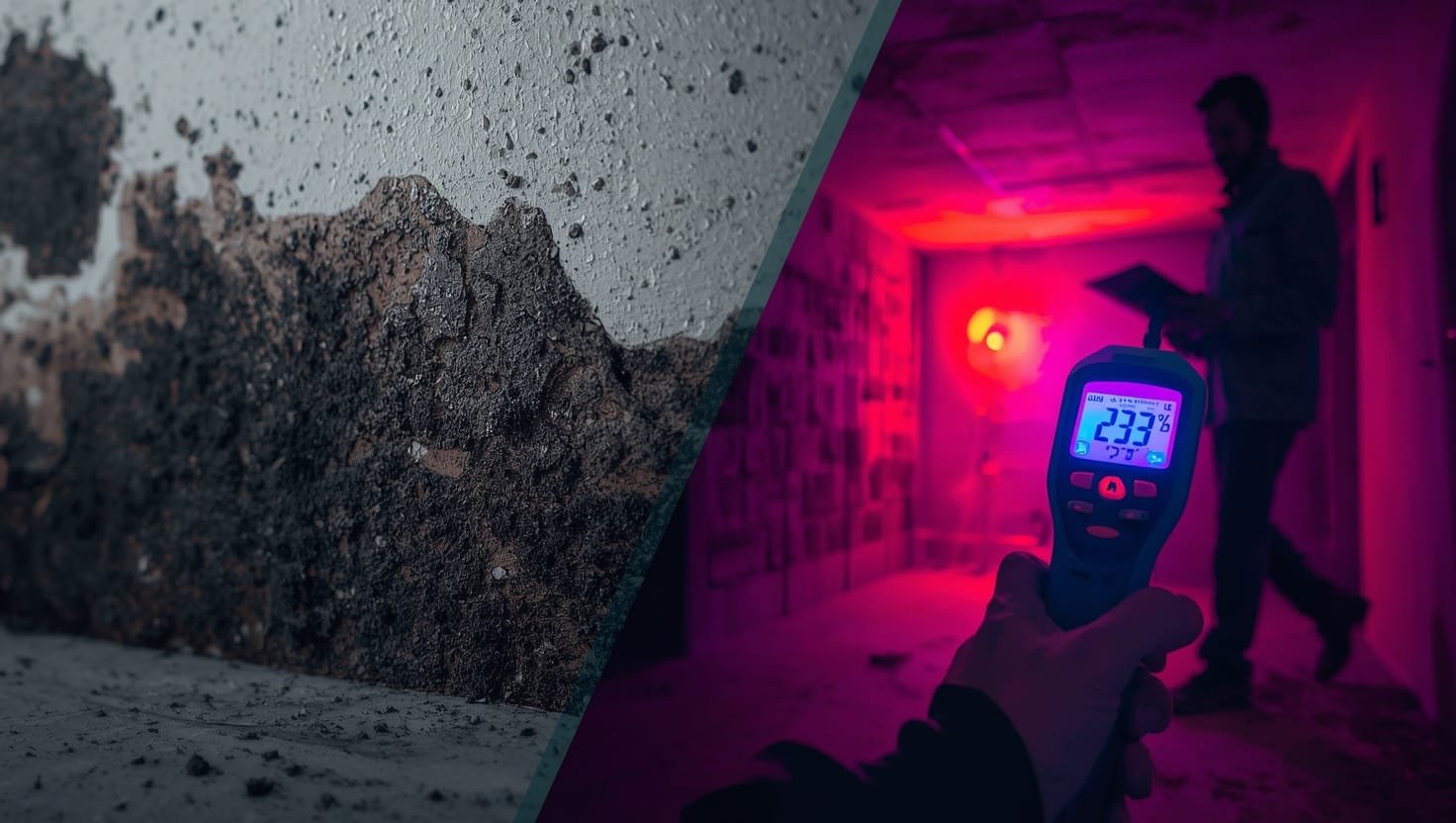
Moisture meters detect water in walls, flooring, and cavities—places where your eyes see nothing wrong. Thermal imaging shows temperature variations that point to moisture accumulation behind surfaces. Air quality testing measures spore levels to determine if mold’s actively releasing toxins into your breathing space.
These aren’t optional add-ons. They’re the only way to know what’s really going on.
A moisture meter reads the water content in materials. If drywall should be around 12–15% moisture, and the meter shows 25%, you’ve got a problem brewing. Mold thrives at 20% and above. Catching it at 25% before visible growth appears saves thousands.
Thermal imaging works differently. Wet materials hold heat differently than dry ones. A thermal camera shows cold spots on walls that indicate moisture trapped inside. You could have perfectly dry-looking drywall on the surface while moisture sits inches behind it, feeding a hidden mold colony.
Air testing measures spore counts. If your indoor spore count is higher than outdoor levels, mold’s actively growing and releasing spores. This matters for health—especially if family members are experiencing respiratory issues they can’t explain.
Bottom line: Testing reveals moisture and mold before they’re visible—catching problems at stage one instead of stage five.
The Three Types of Mold Testing Every Homeowner Should Know
Not all mold testing is the same. Each type answers a different question.
Air quality testing. This measures mold spores floating in your indoor air. A professional takes air samples from multiple rooms, seals them, and sends them to a lab. The lab counts spore types and concentrations. If your indoor spore count exceeds outdoor baseline levels by 25% or more, mold’s actively growing somewhere in your house. This test is critical if anyone in your family has respiratory symptoms, asthma, or allergies that seem worse indoors.
Surface sampling. If you see visible mold or suspect it in a specific location, surface testing confirms whether it’s actually mold and identifies the type. A swab is taken from the suspected area and analyzed. This matters because not all dark spots are mold—some are just staining or mildew. But if it is mold, knowing the type helps determine remediation approach and health risk level.
Moisture mapping. This is what catches hidden mold before it becomes visible. A professional uses moisture meters to scan walls, ceilings, flooring, and cavities. They create a map showing moisture levels throughout your house. Areas reading above 20% moisture are flagged as potential mold sites. This test prevents surprises—you know exactly where moisture is accumulating and can address it before mold colonizes.
Most professionals recommend starting with moisture mapping if you suspect a problem but can’t see mold. If moisture levels are high, follow up with air testing to see if active mold growth is happening.
Bottom line: Air testing finds active mold, surface testing identifies visible growth, moisture mapping prevents hidden problems.
When You Actually Need Mold Testing Done
Testing isn’t necessary for every homeowner every year.
But there are specific situations where it’s not optional.
Get tested if you’ve had water damage of any kind—burst pipes, roof leaks, flooding. Water damage creates the perfect breeding ground for mold. Testing 48–72 hours after the water event reveals whether mold’s already starting to grow. Catching it this early costs a fraction of what remediation costs later.
Test if you’re buying a house and the inspector noted any water stains, moisture concerns, or musty smells. Don’t rely on their visual check alone. Spend $400–$600 on mold testing before closing. It’s insurance against a $20,000 surprise after you move in.
Test if anyone in your family has unexplained respiratory issues, asthma flare-ups, or allergies that worsen indoors. Mold exposure causes these symptoms. Air quality testing can confirm whether mold’s the culprit. If it is, you’ve got a concrete reason to remediate—not just a hunch.
Test if you notice a persistent musty smell but can’t find visible mold. That smell means mold’s present—just hidden. Testing pinpoints where it’s growing so you can address it before it spreads.
Test if you’ve had mold remediation done and want to verify it worked. Post-remediation testing confirms mold levels are back to normal and moisture is controlled. This gives you proof the job was done right.
One Rochester family noticed a musty basement smell but ignored it for months. When they finally decided to sell, they got a mold test as part of the pre-sale inspection. The test revealed active mold in the crawl space and elevated spore counts throughout the main floor. Remediation cost $8,500. The house sold for $35,000 less than comparable properties. Testing would’ve cost $500 and caught the problem when it was smaller.
Bottom line: Test after water damage, before buying, if symptoms suggest mold, or to verify remediation worked.
How Much Does Black Mold Testing Cost?
Price varies based on what you’re testing and how thorough you want to be.
Basic air quality testing runs $200–$400. You’re paying for samples, lab analysis, and a report showing spore counts compared to outdoor baseline.
Moisture mapping with a professional assessment costs $300–$600. They’re scanning your house with meters, identifying problem areas, and giving you a written report with recommendations.
Surface testing for visible mold spots runs $100–$300 per sample. If you’re testing multiple locations, costs stack up.
A comprehensive mold inspection combining moisture mapping, air testing, and surface sampling can run $800–$1,500. It’s thorough, but it’s also your best shot at knowing exactly what’s happening in your house.
Compare that to mold remediation costs—$2,000–$50,000 depending on extent and location. Testing is cheap insurance.
What you’re actually paying for: professional-grade equipment you can’t buy, lab analysis you can’t do yourself, and a written report that holds up for insurance claims and real estate transactions. It’s not just a number—it’s evidence.
Bottom line: Testing costs $200–$1,500 now or remediation costs $2,000–$50,000 later. The math writes itself.
What Happens After Testing: Reading Your Results
You get a report back from the lab. Now what?
Air testing results show spore counts (measured in spores per cubic meter). Your indoor count gets compared to outdoor baseline. If indoors are significantly higher—usually 25% or more above outdoor levels—mold’s actively growing inside. The report lists spore types too. Stachybotrys (black mold) is the one that gets attention, but other mold types matter for health and remediation decisions.
Moisture mapping results show readings from different locations. Anything reading 20% moisture or above in building materials is flagged as a concern. The report includes a map or diagram showing where moisture is concentrated. This tells you exactly where to focus remediation efforts.
Surface testing identifies what the visible growth actually is. If it’s confirmed mold, the report specifies the type. If it’s just mildew or staining, you’ve saved yourself thousands in unnecessary remediation.
Here’s the thing: results aren’t pass/fail. They’re diagnostic. High moisture in one corner of your basement doesn’t automatically mean you need full remediation. It means you need to fix the water source feeding that moisture. High indoor spore counts mean mold’s actively growing somewhere, and you need to find it before it spreads.
A good testing company doesn’t just hand you numbers. They explain what the numbers mean and recommend next steps. JetDry’s testing reports, for example, include moisture source identification and remediation recommendations—not just raw data.
Bottom line: Test results tell you what’s happening and where to focus your efforts.
The Testing vs. Guessing Decision
Some people skip testing and just call a remediation company if they suspect mold.
That’s like going to the doctor with a sore shoulder and agreeing to surgery without getting an X-ray first.
Testing tells you whether you actually have a mold problem or if you’re dealing with something else entirely—condensation, mineral deposits, old water stains. It tells you how bad it is, where it’s located, and what caused it. That information determines your remediation strategy.
Without testing, you’re making expensive decisions based on hunches.
A homeowner in Rochester smelled something musty and immediately called for mold remediation. The company quoted $5,000 for full basement treatment. Before committing, the homeowner got a mold test done. Results showed no active mold—just elevated humidity from a clogged basement drain. The real fix? Clean the drain, run a dehumidifier, improve ventilation. Total cost: $300. The testing saved $4,700.
Testing also protects you legally. If you’re selling your house and mold’s discovered later, documentation that you tested and addressed issues covers your liability. If you’re dealing with an insurance claim, testing provides the evidence insurers need to approve coverage.
Bottom line: Testing prevents expensive mistakes and protects you legally.
FAQ: Black Mold Testing
How long does mold testing take?
The testing process itself takes 30–60 minutes. Lab results come back in 5–7 business days. You’ll have answers within a week.
Can I do mold testing myself?
DIY mold test kits exist, but they’re unreliable. Professional testing uses calibrated equipment and lab analysis. DIY kits often produce false positives or miss active mold entirely. Spend the extra money for professional results.
What should I do if testing confirms mold?
First, stop the water source feeding it. If the mold covers more than 10 square feet or you can’t find the moisture source, call a professional remediation company. They’ll handle safe removal and verify success with post-remediation testing.
Will my insurance cover mold testing?
Most homeowner policies don’t cover mold testing or remediation unless it results from a covered peril like sudden water damage. Check your policy. If you’re unsure, call your agent. For details on coverage, see JetDry’s guide on mold insurance coverage.
How often should I test for mold?
Once every 2–3 years if you live in a humid climate or have a history of water damage. If you’ve had remediation done, test annually for the first couple years to ensure mold doesn’t return. Otherwise, test only when you suspect a problem.
Can testing detect mold before it’s visible?
Yes. Moisture mapping detects high moisture levels before visible mold appears. This is the whole point—catch it at stage one instead of stage five.
What’s the difference between mold testing and a mold inspection?
An inspection is visual—someone looks around and notes concerns. Testing is diagnostic—it uses equipment to measure moisture, spore counts, and mold presence. A professional inspection combined with testing gives you the full picture.
Should I test before buying a house?
Yes, especially if the standard inspection noted any water damage, moisture concerns, or musty smells. Mold testing adds $400–$600 to your inspection costs but saves you from inheriting a $15,000 problem.
Can I be in my house during testing?
Yes. Testing doesn’t involve any chemicals or disturbance. Air samples are collected passively. Moisture meters just touch surfaces. You can be home the whole time.
What if testing shows high moisture but no visible mold?
Fix the moisture source immediately. High moisture means mold will grow soon if it hasn’t already. Address the water intrusion, run a dehumidifier, improve ventilation. This prevents mold from colonizing in the first place.
Who Should You Trust to Test for Black Mold?
Not all testing companies are equal. You want someone with real expertise, not just equipment.
Look for professionals who use calibrated moisture meters and send samples to certified labs. They should provide written reports with clear explanations of what the numbers mean. They should identify moisture sources and recommend specific fixes, not just hand you data.
Avoid companies that test and also do remediation—conflict of interest. They have financial incentive to find mold whether it’s really there or not. Get testing from an independent company, then call a separate remediation company if needed.
Walt Latuik and the team at JetDry’s mold remediation services in Rochester, NY handle testing and remediation. They’re transparent about what testing reveals and only recommend remediation if it’s actually needed. Over 20 years, they’ve built a reputation on honesty—not upselling.
Bottom line: Choose testers with certified equipment, transparent reporting, and no financial incentive to oversell results.
The Real Impact of Early Testing on Black Mold in Your House
Early detection changes everything.
A homeowner in Rochester got their house tested after noticing a musty smell. Testing revealed high moisture in the crawl space but no visible mold yet. They fixed the drainage issue, ran a dehumidifier, and tested again two months later. Moisture levels normalized, spore counts dropped to baseline. Total cost: $800 in drainage repair and dehumidifier rental. No mold remediation needed.
Same house, different scenario: if they’d ignored the smell and waited six months, mold would’ve colonized the crawl space and possibly spread to the main floor. Remediation would’ve cost $6,000–$8,000. Structural repairs might’ve been needed. The house’s resale value would’ve dropped 10–15%.
That’s the power of testing. It catches problems when they’re small and fixable.
Bottom line: Testing catches mold early—when fixes are cheap instead of catastrophic.
Black mold testing isn’t something you do after you see mold. It’s something you do to prevent seeing mold in the first place. Walt Latuik and the team at JetDry have tested thousands of Rochester-area homes and caught problems before they became disasters. If you’ve noticed musty smells, water stains, or just want to know what’s really happening in your house, contact JetDry now for professional mold testing. Available 24/7. Your peace of mind is worth the investment.