Mold On Bedroom Walls Around Children: Stop It Now
- Wolfe McNeel
Your Child’s Bedroom Has Mold on the Walls—And You Didn’t Even Know It
You walk in to tuck them in, flip on the light, and there it is—dark spots creeping across the corner where the wall meets the ceiling.
Mold on bedroom walls around children isn’t just an eyesore.
It’s a silent threat that spreads faster than most parents realize, and the longer it sits there, the worse it gets for your kids’ health and your wallet.
The reality is this: mold doesn’t ask permission before it moves in.
It thrives in moisture, multiplies in darkness, and your child’s bedroom—especially if it’s poorly ventilated or has any history of dampness—is the perfect breeding ground.
Kids’ immune systems are still developing, so they’re more vulnerable to respiratory issues, allergies, and asthma triggered by mold exposure than adults are.
And here’s the kicker—by the time you see visible mold on bedroom walls around children, the problem has usually been growing for weeks.
This guide walks you through what you need to know, what to do right now, and when to call in the professionals.
Why Mold Loves Bedrooms (Especially Around Kids)
Bedrooms are basically mold’s dream vacation spot.
Think about it: your child sleeps there for 8-10 hours a night, breathing out moisture the whole time.
That humidity has to go somewhere, and if the room isn’t ventilated properly, it just sits there—condensing on walls, seeping into drywall, and creating the exact wet environment mold needs to thrive.
Add in a window that leaks, a roof that drips, or even just a poorly insulated exterior wall, and you’ve got a perfect storm.
Mold spores are literally everywhere—floating in the air, sitting on surfaces, waiting for the right conditions to wake up and start reproducing.
Once they land on a damp surface (like your bedroom wall), they don’t need much to get going.
A little moisture, some organic material (like dust or drywall), and boom—you’ve got a colony.
The scary part?
You might not see it for a while.
Mold grows behind surfaces, inside wall cavities, and in places where light doesn’t reach.
By the time it’s visible on your child’s bedroom wall, it’s already established and spreading.
Common Moisture Sources in Bedrooms
Understanding where the moisture is coming from is half the battle.
- Condensation on windows: Cold exterior walls + warm interior air = water droplets running down the glass and pooling at the sill.
- Roof leaks: A small breach in the attic can send water trickling down into the walls below.
- Poor ventilation: No exhaust fan, no air circulation—humidity just builds up.
- Plumbing leaks: A burst pipe in the wall or a slow drip from a supply line creates hidden moisture.
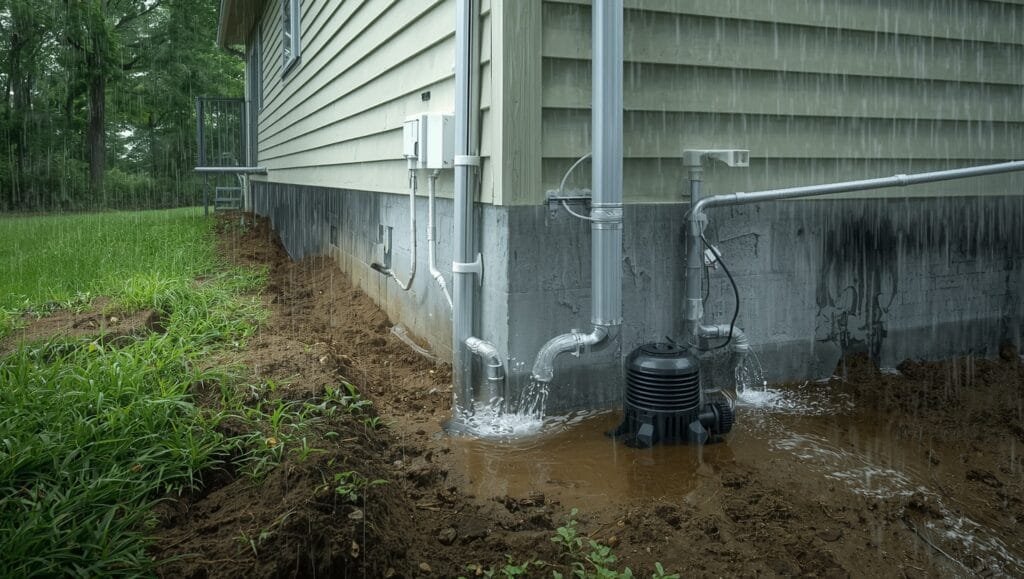
- External water intrusion: Cracks in the foundation, damaged siding, or clogged gutters let water seep in from outside.
- High indoor humidity: In Rochester, NY winters are brutal, and if you’re heating without proper air exchange, moisture gets trapped inside.
Bottom line: Moisture is the enemy—find and fix the source, or the mold keeps coming back.
What Mold on Bedroom Walls Actually Looks Like
Mold isn’t always black, slimy, and obvious.
That’s a misconception that costs homeowners thousands in damage because they miss early warning signs.
Mold on bedroom walls around children can show up in different ways depending on the type and how long it’s been growing.
The Visual Clues You Can’t Miss
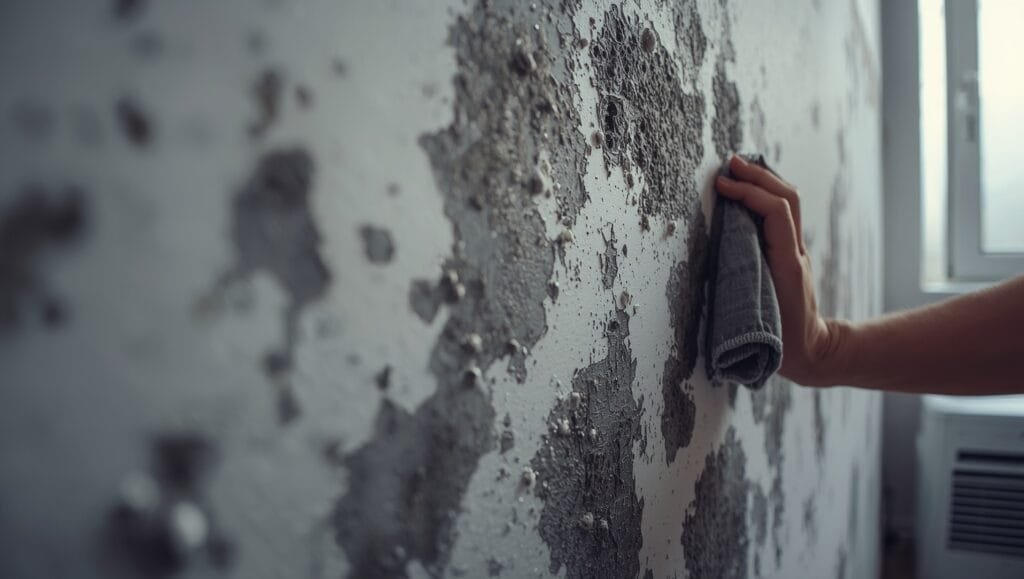
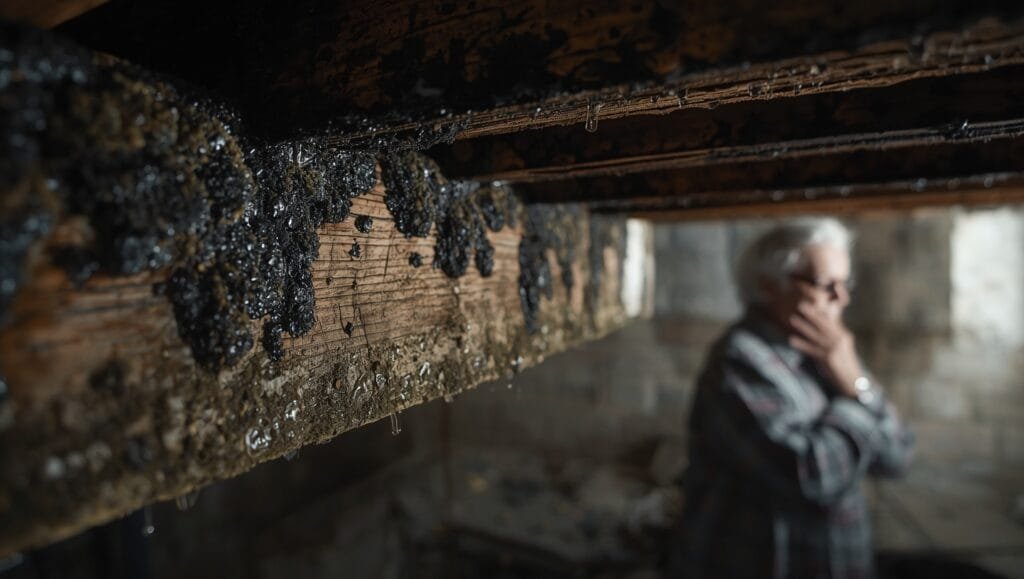
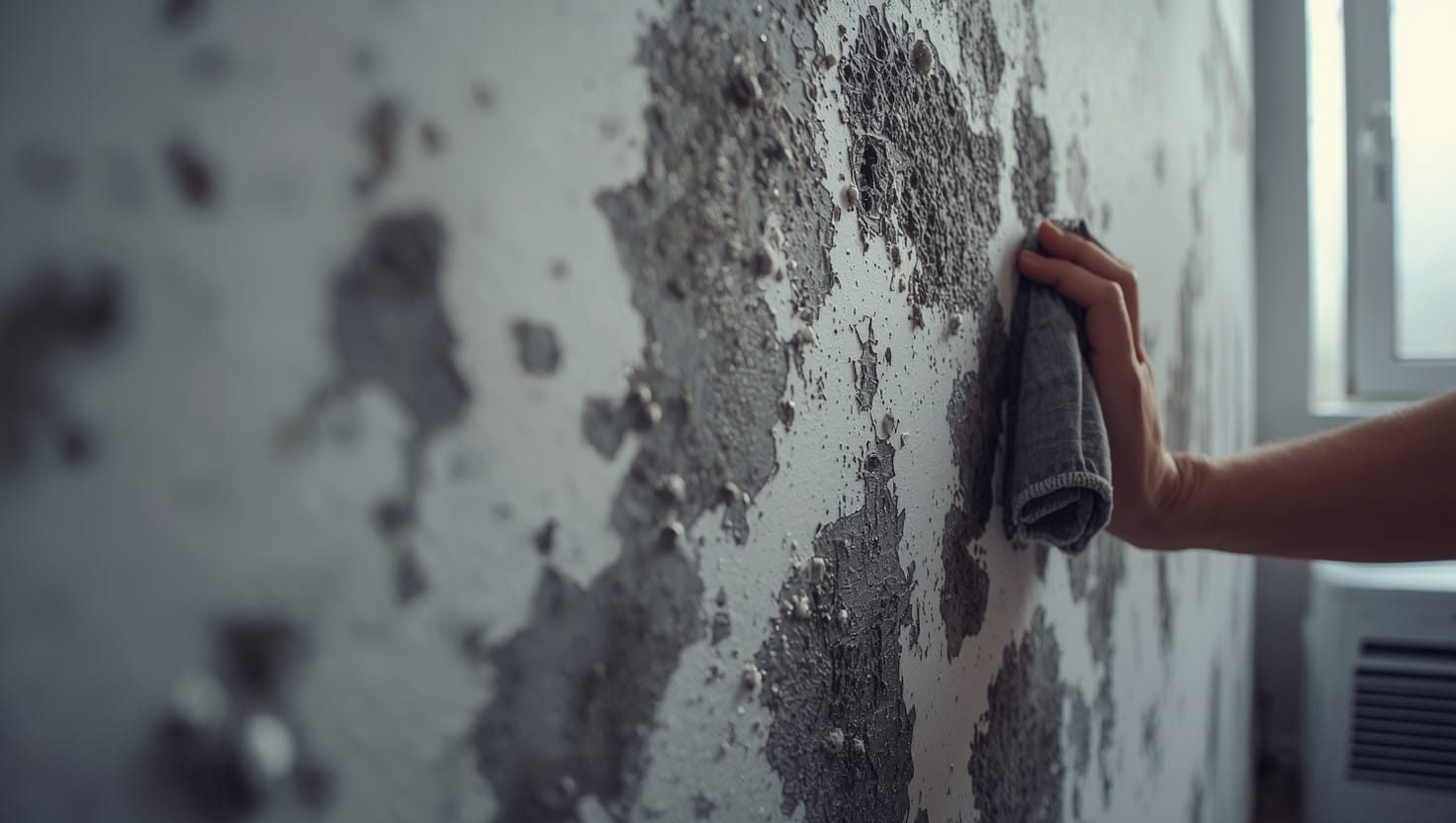
Dark spots or patches: Black, green, or brown discoloration on walls, especially in corners, near windows, or where walls meet the ceiling.
These often start small and spread outward.
Fuzzy or slimy texture: Run your hand over it (gloved, obviously)—real mold has a distinct feel that’s different from dirt or stains.
White or grayish growth: Early-stage mold sometimes appears as a light coating, almost like dust that won’t wipe away.
Pink or orange stains: Not all mold is dark—some varieties are colorful and can appear on bathroom corners or around sink areas.
Discolored drywall: Water stains that won’t fade, or areas where the paint is bubbling, peeling, or warped.
The smell test: Mold has a distinct musty odor—earthy, damp, unmistakable once you know it.
If your child’s bedroom smells off, that’s often the first real warning sign.
A Rochester homeowner named Sarah called JetDry’s mold remediation team after noticing a musty smell in her daughter’s room that wouldn’t go away.
Turns out, mold was growing behind the drywall where a roof leak had been slowly weeping for months.
She caught it before it spread to the attic—saving her family thousands in repairs and her daughter from prolonged exposure.
Bottom line: Trust your nose and your eyes—early detection saves money and protects your kids.
The Health Impact on Your Children
This is the part that keeps parents up at night.
Mold on bedroom walls around children isn’t just a property issue—it’s a health issue.
Kids spend more time in their bedrooms than almost any other room in the house (except maybe the kitchen), so prolonged exposure compounds the risk.
How Mold Affects Growing Bodies
When your child breathes in mold spores, their body treats them as a threat.
The immune system kicks in—sometimes overreacting, especially in kids with asthma, allergies, or other respiratory sensitivities.
Common symptoms include:
- Persistent cough (especially at night or first thing in the morning)
- Wheezing or shortness of breath
- Nasal congestion or runny nose that doesn’t clear up
- Itchy, watery eyes
- Skin rashes or irritation
- Fatigue or trouble sleeping (even though they’re in bed)
- Headaches or difficulty concentrating at school
Here’s what makes it tricky: these symptoms look like allergies or a cold.
Parents often treat the symptom, not the root cause, and the mold keeps doing its damage.
Some kids are more vulnerable than others—those with asthma, eczema, or weakened immune systems can develop serious complications from mold exposure.
And the younger they are, the less equipped their bodies are to fight back.
The Long-Term Risk
Chronic mold exposure in childhood has been linked to increased risk of respiratory issues into adulthood.
We’re talking asthma development, allergic sensitization, and other breathing problems that could follow your kid for years.
That’s not fear-mongering—that’s science backed up by studies from pediatric respiratory specialists.
The good news?
Once you remove the mold and fix the moisture problem, kids typically recover quickly.
Their symptoms improve, sleep gets better, and they stop getting mysterious coughs.
But you’ve got to act fast.
Bottom line: Mold exposure in kids isn’t harmless—remove it now, protect their lungs for life.
How Fast Does Mold Actually Grow?
This is where people get blindsided.
They think they have time to deal with it, and suddenly it’s everywhere.
Mold grows faster than most people expect—especially in a bedroom with the right conditions.
Under ideal circumstances (warmth, moisture, darkness), mold can begin to spread visibly within 24-48 hours of moisture exposure.
But visible growth is just the tip of the iceberg.
By the time you see black spots on your child’s bedroom wall, the colony is already established and has been reproducing for days or weeks.
The real danger is that mold doesn’t just spread outward—it spreads inward, burrowing into drywall, insulation, and the structural materials behind the surface you can see.
A small spot on the wall could mean a much larger problem hiding inside.
Why Speed Matters
Every day you wait, the mold roots deeper.
It damages more material, spreads to new areas, and releases more spores into the air your child breathes.
The longer it sits, the more expensive the remediation becomes—and the more damage you’re looking at.
We’ve seen cases where a homeowner waited three months to address mold on bedroom walls, thinking it wasn’t serious.
By the time they called for help, the drywall needed complete replacement, the framing showed signs of rot, and the bill jumped from a few thousand to tens of thousands.
Bottom line: Mold moves fast—waiting isn’t an option when kids are involved.
DIY vs. Professional Mold Removal: What You Need to Know
Here’s the honest truth: not all mold problems are DIY-friendly.
If you’ve got a small spot (smaller than 10 square feet) in an isolated area with no signs of spread, you might handle it yourself with proper precautions.
But mold on bedroom walls around children?
That’s different.
You’re dealing with an area where your kids spend a huge chunk of their time, breathing and sleeping.
One missed spot, one incomplete job, and you’re right back where you started—except now your child’s been exposed even longer.
When DIY Actually Makes Sense
Small, surface-level mold (like on a shower tile or window sill) that hasn’t spread into the wall structure can sometimes be cleaned with a bleach solution or commercial mold cleaner.
But here’s the catch: you need to fix the moisture problem first, or it’ll come right back.
And you need protective equipment—gloves, a respirator mask (not just a dust mask), and eye protection.
When you scrub mold, you’re releasing spores into the air.
If your child is home, you’re exposing them to a concentrated cloud of the exact thing you’re trying to protect them from.
Why Professional Remediation Is Worth It (Especially for Kids)
Professional mold remediation teams like JetDry’s mold remediation specialists have equipment and expertise that DIY can’t match.
They use containment barriers to prevent spores from spreading throughout your house.
They have commercial-grade air filtration to pull spores out of the air in real-time.
They can identify hidden mold behind walls using moisture meters and thermal imaging.
And they know how to remove the mold without turning your home into a spore factory.
When Walt Latuik and his team at JetDry respond to a mold call in Rochester, they don’t just clean the surface—they find the source, fix the moisture problem, and restore the area properly.
That’s the difference between a quick fix and a real solution.
For mold on bedroom walls around children, that peace of mind is worth every penny.
Bottom line: Hire pros for bedroom mold—your child’s health is too important for amateur work.
The Cost of Waiting vs. Acting Fast
Let’s talk money, because this is where the real pain hits.
A small mold remediation job—catching it early, removing it professionally—might run you $1,000 to $3,000 depending on the size and location.
That’s not cheap, but it’s manageable.
Now compare that to what happens if you wait.
Mold spreads through drywall, into insulation, and eventually into the framing itself.
Wood rots, structural integrity gets compromised, and suddenly you’re not just removing mold—you’re replacing walls, sections of flooring, maybe even parts of the roof.
A homeowner in Rochester waited six months on a bedroom mold problem before calling for help.
What started as a $2,500 remediation job became a $18,000 reconstruction project involving drywall replacement, new insulation, and structural repairs.
The mold had spread into the attic, contaminated the HVAC system, and even started affecting the room next door.
His daughter had been sleeping in that room the whole time, breathing in spores every night.
He wished he’d acted immediately.
That’s the real cost of waiting—not just money, but your child’s exposure and your own stress.
Insurance Rarely Covers Mold (And Here’s Why)
Before you think insurance is going to bail you out, know this: most homeowner’s insurance policies don’t cover mold damage.
Why?
Because mold is considered preventable—it’s the result of moisture you should have managed.
If your mold came from a sudden pipe burst or a covered water damage event, you might get some help.
But slow leaks, condensation, poor ventilation?
That’s on you.
Check your policy, call your agent, but don’t count on it.
This is why acting fast isn’t just smart—it’s necessary.
Bottom line: Fast action saves thousands; waiting costs tens of thousands and puts kids at risk.
What to Do Right Now (Your Action Plan)
If you’ve spotted mold on bedroom walls around children, here’s exactly what to do—starting today.
Step 1: Confirm It’s Actually Mold
Take a clear photo of the spot (good lighting, close-up).
If it’s black, green, or brown with a fuzzy or slimy texture, and especially if it smells musty, you’re dealing with mold.
Dirt or stains won’t have that musty smell and won’t feel slimy to the touch (wear gloves).
Step 2: Identify the Moisture Source
Look around the affected area.
Is there a window nearby with condensation?
Does the wall feel damp to the touch?
Is there a water stain above it suggesting a roof leak?
Is the room poorly ventilated?
Finding the source is critical because without fixing it, the mold will come back.
Step 3: Reduce Moisture Immediately
Open windows when weather permits to increase air circulation.
Run a dehumidifier in the room if humidity is high.
Fix any obvious leaks or condensation problems (like caulking a leaky window).
Don’t let moisture accumulate while you’re arranging professional help.
Step 4: Call a Professional Mold Remediation Service
This is where you stop DIYing.
Contact JetDry for professional mold remediation in Rochester, NY.
They’ll assess the scope, identify hidden mold, and create a plan to remove it safely while protecting your family.
With 24/7 emergency availability, they can often respond quickly.
Bottom line: Act now—confirm, locate source, reduce moisture, call professionals.
Understanding Professional Mold Remediation
When professionals show up to handle mold on bedroom walls around children, they’re not just wiping things down.
There’s a process—and understanding it helps you know what to expect and why it costs what it costs.
The Assessment Phase
First, they inspect the visible mold and look for hidden growth.
Using moisture meters and thermal imaging, they can detect damp areas inside walls before mold is visible.
They ask questions: How long has this been here?
When did you first notice it?
Any water damage history in this room?
This information helps them understand the scope and find the root cause.
Containment and Protection
Before removing anything, they set up containment barriers—plastic sheeting and negative air pressure systems that keep mold spores from spreading to other rooms.
They use HEPA air scrubbers (high-efficiency particulate air filters) that capture spores as they’re released.
Your kids won’t be breathing in a cloud of contamination while the work happens.
Removal and Cleaning
Depending on how deep the mold has penetrated, they might clean the surface, remove affected drywall, or even replace framing in severe cases.
Once the mold is gone, they clean all surfaces with appropriate antimicrobial treatments.
Drying and Restoration
Industrial dehumidifiers and fans dry out the area completely.
No moisture left behind means no comeback.
Then they restore the wall—new drywall, paint, whatever’s needed to return the room to normal.
Source Fix
This is the part that prevents it from happening again.
Whether it’s sealing a leak, improving ventilation, or addressing condensation, they tackle the moisture source directly.
Bottom line: Professional remediation is thorough, safe, and prevents mold from coming back.
Your Child’s Bedroom Smells Off—But You Can’t Find the Source. Here’s Why.
That musty odor creeping into your kid’s room isn’t going away on its own.
You’ve opened windows, sprayed air freshener, even cracked the door at night hoping a breeze would help.
Nothing works.
The smell gets worse, especially when it rains or the humidity spikes.
And your kid’s been coughing more lately—nothing serious, just enough to make you wonder if something’s wrong.
Here’s what’s actually happening: mold on bedroom walls around children often announces itself through scent long before you see a single dark spot.
Your nose is smarter than your eyes in this case.
That earthy, damp smell is mold releasing spores into the air your child breathes every single night.
And the longer you ignore it, the deeper the problem burrows into your walls.
Why the Smell Comes Before You See Anything
Mold doesn’t start on the surface where you can see it.
It starts inside—behind drywall, inside insulation, tucked into cavities where light never reaches.
By the time you smell it, the colony’s already established and spreading.
The odor is actually mold spores and microbial volatile organic compounds (MVOCs) floating through your bedroom air.
Think of it like this: you’re smelling the mold’s waste products before you see the mold itself.
A homeowner in Rochester noticed a musty smell in her son’s bedroom for weeks.
She assumed it was just humidity from the winter heating cycle.
When she finally called JetDry’s mold specialists, they found active mold growth behind the exterior wall—the wall had been slowly weeping moisture from a roof leak for months.
The smell was the first warning sign she should’ve trusted.
Bottom line: Trust a musty smell in your kid’s room—it means mold’s already there.
The Hidden Moisture Problem Creating the Perfect Storm
Every breath your child takes while sleeping releases moisture into the air.
Eight to ten hours of that, night after night, and you’re looking at serious humidity buildup if the room isn’t properly ventilated.
Bedrooms are notorious for poor air circulation—they’re usually closed off, especially at night when kids are sleeping.
That moisture has nowhere to go.
It condenses on cold surfaces (like exterior walls and windows), soaks into drywall, and creates the exact environment mold needs to thrive.
Add a roof leak, a window that doesn’t seal properly, or even a plumbing issue hidden in the wall, and you’ve got a compound problem.
The moisture sources can be sneaky too.
Sometimes it’s not a dramatic leak—it’s slow, steady seeping that goes unnoticed for weeks or months.
That’s actually worse because the damage compounds without anyone knowing.
Here’s what makes bedroom humidity especially dangerous: kids can’t tell you something’s off.
They just know their room feels stuffy or they’re coughing more than usual.
As a parent, you’re left guessing whether it’s allergies, a lingering cold, or something environmental.
Spoiler: if it’s persistent and tied to that musty smell, it’s environmental.
Bottom line: Bedroom humidity + poor ventilation + hidden moisture = mold factory in your kid’s room.
How to Actually Hunt Down the Moisture Source
Finding where the moisture is coming from is critical because treating the symptom (the mold) without fixing the cause is a waste of money.
The mold will be back within weeks.
Start by looking at the wall where you smell the mold most strongly.
Is it an exterior wall?
Those are the usual suspects because they’re exposed to temperature swings and outdoor moisture.
Check for obvious signs: water stains, discoloration, soft spots in the drywall, or peeling paint.
Feel the wall—is it damp or cold compared to interior walls?
That’s a red flag.
Look up at the ceiling where that wall meets the roof.
Any water stains, sagging, or dark spots?
That could mean a roof leak directly above.
Check the window in that room too.
Is there condensation pooling at the sill?
Does the caulk look old or cracked?
Windows are a common entry point for water—cold exterior glass + warm interior air = condensation that can seep into the wall frame.
Look outside the room as well.
Is there guttering near that wall?
Are the gutters clogged or overflowing?
That water’s running down the side of your house and finding cracks or gaps to seep through.
If the mold smell is coming from the floor or lower part of the wall, check for plumbing.
Is there a supply line or drain running through that wall?
A slow leak in hidden plumbing can create moisture for months without you knowing.
Once you’ve identified the likely source, write it down and take photos.
This information is gold when you talk to professionals.
Bottom line: Find the moisture source first—fixing it stops mold from coming back.
The Immediate Steps to Stop Spore Exposure
Your kid’s health is the priority right now, so let’s talk about reducing their exposure while you arrange professional help.
First: improve air circulation in that room immediately.
Open the window when weather permits (even if it’s just 15 minutes in the morning).
Crack the door so air can flow between rooms.
If you have a portable dehumidifier, run it in that bedroom—it’ll pull moisture out of the air and help slow mold growth.
Empty it daily or set it to drain continuously.
Second: reduce moisture sources where you can.
If there’s a humidifier running in that room (some parents use them for dry winter air), turn it off immediately.
That’s adding fuel to the fire.
Make sure your child’s wet clothes and towels aren’t piling up in the room—move laundry to a different space to dry.
Third: consider temporarily moving your child’s sleeping area to a different bedroom if the mold smell is strong.
I know that’s not ideal, but every night they’re breathing in mold spores is another night of exposure.
If you can’t move them, at least close the door at night and run a fan in the hallway to push air away from the bedroom.
Fourth: don’t DIY clean the mold yourself—not yet.
If you scrub it without proper containment, you’re releasing spores into the air and making things worse.
You need professionals with the right equipment for this.
Bottom line: Ventilate, dehumidify, reduce moisture, and protect your kid until pros arrive.
When Professional Intervention Becomes Non-Negotiable
At this point, you’ve done what you can as a parent.
Now it’s time to bring in the experts.
Mold on bedroom walls around children isn’t something to stretch out or handle halfway.
The stakes are too high—your child’s lungs, your home’s structure, and your wallet are all on the line.
Professional mold remediation teams have tools you don’t.
They use moisture meters that detect water behind walls before mold is visible.
They have thermal imaging cameras that show temperature variations indicating hidden moisture.
They can identify exactly where the problem is and how far it’s spread.
When JetDry responds to a bedroom mold call, they don’t just look at the visible spot.
They assess the whole room—checking for hidden growth in walls, attic spaces, and cavities.
They identify the moisture source and create a plan to fix it permanently.
And they do all this with containment barriers and HEPA filtration running, so your child isn’t breathing in a cloud of spores while work happens.
The timeline matters too.
Professional teams in Rochester, NY can often respond within 24 hours for mold issues.
Some offer emergency availability—meaning if your kid’s health is visibly affected (serious respiratory symptoms, worsening cough), they can prioritize your call.
Don’t wait for a “good time” to call.
There isn’t one.
Bottom line: Professional mold remediation protects your kid’s health and prevents costly structural damage.
What Happens After the Mold Is Gone
Once professionals remove the mold and fix the moisture source, recovery is usually fast.
Kids are resilient.
Within days of the mold being gone, you’ll notice changes.
That persistent cough starts to fade.
The musty smell disappears.
Your kid sleeps better because they’re not irritated by spores all night.
Energy levels improve, concentration at school gets better, and that nagging worry you’ve had stops.
But here’s the thing: the work doesn’t end when the visible mold is gone.
Professionals will dry out the affected area completely using industrial dehumidifiers and fans.
Moisture left behind means mold will come back.
They’ll replace any damaged drywall, insulation, or framing.
They’ll paint with antimicrobial primer to prevent regrowth.
And most importantly, they’ll address the root cause—whether that’s sealing a roof leak, caulking a window, improving ventilation, or fixing a plumbing issue.
That’s what separates a real remediation from a quick fix.
A homeowner in Rochester had mold removed once, didn’t fix the roof leak, and the mold came back within four months.
The second time around, it was worse—and it cost him twice as much.
Don’t be that guy.
Make sure the moisture source is actually fixed.
Bottom line: Mold removal + moisture fix = permanent solution and a healthy kid’s room.
FAQ: Mold on Bedroom Walls Around Children
Can I use bleach to clean mold in my child’s bedroom?
Bleach kills surface mold but doesn’t reach mold growing inside walls or prevent it from coming back if moisture is still present.
For bedroom mold around kids, professional removal with proper containment is safer and more effective.
How long does it take for mold to cause serious health problems in kids?
Symptoms like coughing and congestion can develop within days of exposure, but long-term respiratory issues develop after weeks or months of chronic exposure.
Act fast to prevent lasting damage.
Will my homeowner’s insurance cover mold remediation?
Most policies don’t cover mold unless it’s tied to a covered water damage event like a burst pipe.
Check your policy, but assume you’ll be paying out of pocket.
How much does professional mold remediation cost in Rochester, NY?
Small jobs (under 100 square feet) typically run $1,500–$3,500, while larger or more complex cases can reach $5,000–$10,000+.
Early detection saves thousands compared to waiting.
What’s the difference between mold remediation and mold removal?
Remediation includes finding and fixing the moisture source so mold doesn’t come back; removal is just cleaning it away.
You need remediation, not just removal.
Can mold in a bedroom spread to other rooms?
Yes—mold spores travel through air, HVAC systems, and can spread to adjacent rooms if left untreated.
That’s why early professional intervention is critical.
The Real Cost of Ignoring Mold on Bedroom Walls Around Children
Let me be direct: this isn’t a problem that gets better on its own.
It gets worse—faster than you’d expect.
Every day you wait, mold spreads deeper into your walls.
It damages framing, rots wood, contaminates insulation, and fills the air your kid breathes with spores.
The financial cost is brutal too.
A small mold problem caught early runs $2,000–$4,000.
The same problem caught six months later?
$15,000–$25,000 when structural damage is involved.
And that’s just the money.
The real cost is watching your kid struggle with respiratory issues that could’ve been prevented.
It’s the stress of not knowing if their chronic cough is allergies or mold damage.
It’s the guilt of realizing you could’ve acted sooner.
One parent in Rochester waited three months to address a small musty smell in their daughter’s room.
They thought it was nothing serious.
When they finally called for help, mold had spread into the attic, contaminated the HVAC system, and started affecting the master bedroom too.
The remediation took two weeks, cost $22,000, and their daughter had to stay at her grandparents’ house the whole time.
They told me they’d pay that amount ten times over if they could go back and call a professional after that first week of smelling something off.
Bottom line: Act now—waiting costs time, money, and your kid’s health.
Get Professional Help Before It Gets Worse
Mold on bedroom walls around children isn’t something you can manage alone.
You’ve done the right thing by reading this and understanding what’s at stake.
Now take action.
If you’re in Rochester, NY and you’ve noticed a musty smell, visible mold, or your child’s persistent cough, contact a professional immediately.
JetDry’s mold remediation team has over 20 years of experience removing mold from homes where kids live.
Walt Latuik and his crew respond quickly—often within 24 hours—and they handle everything: assessment, containment, removal, drying, restoration, and fixing the moisture source.
They know what to look for because they’ve seen it all.
They know how to protect your family while work happens.
And they know how to make sure it doesn’t come back.
Your child’s bedroom should be a safe, healthy space—not a breeding ground for mold.
Contact JetDry now for a free assessment.
With 24/7 emergency availability, they can get you help fast.
Don’t wait for the problem to get worse.
Bottom line: Call professionals now—your kid’s lungs depend on it.
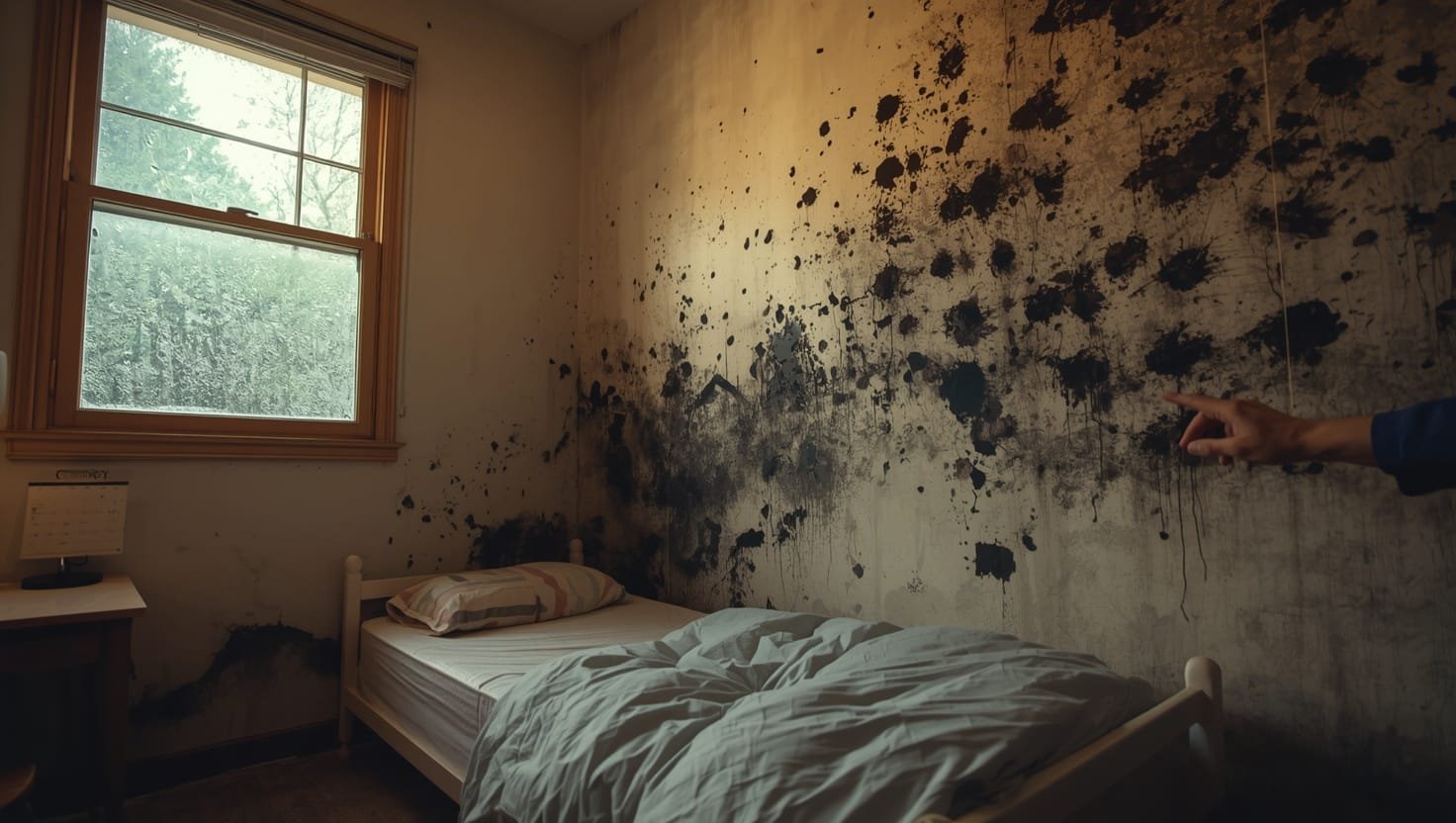
Your Child’s Bedroom Mold Isn’t Just a Spot—It’s a Timeline. Here’s What Happens Next.
Mold doesn’t care about your schedule.
You find that dark patch on Monday, tell yourself you’ll handle it this weekend, and by Friday it’s doubled in size.
Now you’re in damage-control mode instead of prevention mode.
The truth about mold on bedroom walls around children is that it operates on a predictable timeline—and knowing what that timeline looks like changes everything about how you respond.
Most parents think they have more time than they actually do.
They see a small spot and assume it’s been there for a few days.
Nope.
That visible mold is the end result of weeks of hidden growth.
What you’re seeing is just the tip of the iceberg breaking the surface.
Week 1: The Invisible Invasion
Mold starts its work before you know it exists.
A moisture source—maybe a roof leak, a sweating window, or just poor ventilation—creates dampness on a wall surface.
Mold spores, which are literally everywhere in the air, land on that damp spot and begin to germinate.
We’re talking within the first 24-48 hours.
Your child is sleeping in the room, breathing normally, completely unaware.
The mold colony is establishing itself in the wall cavity, behind the paint, inside the drywall layers where you can’t see it.
At this stage, there’s no smell yet.
There are no visible signs.
But the damage is starting.
Mold is consuming the cellulose in your drywall and insulation, weakening the structural integrity of your walls one spore at a time.
Your child might start coughing at night—just a little—but you chalk it up to dry air or the start of a cold.
Bottom line: Week 1 mold is invisible but actively spreading through your walls.
Week 2-3: The Smell Arrives (And You’ll Miss It If You’re Not Paying Attention)
By the second week, the mold colony has grown large enough to release volatile organic compounds into the air.
That’s when the musty smell shows up.
It’s faint at first—easy to ignore or blame on the season, humidity, or your kid’s sports gear piling up in the corner.
But it’s there.
Parents often don’t connect the dots because the smell seems minor compared to other concerns.
One Rochester parent told us she noticed a weird odor in her daughter’s room for about ten days but didn’t act on it.
She thought maybe the air vent needed cleaning or the carpet had absorbed something.
By the time she called JetDry for mold remediation services, the problem had already spread behind the drywall and into the attic cavity above.
That ten-day delay cost her an extra $8,000 in repairs.
Your child’s cough might get a little worse during this phase.
They’re not sleeping as well, though they might not complain about it directly.
Their immune system is responding to the mold spores they’re inhaling every night.
If your kid has asthma or allergies, this is when symptoms start to flare.
It looks like seasonal allergies getting worse, but it’s actually mold exposure ramping up.
Bottom line: Week 2-3 brings the musty smell—trust your nose, not your schedule.
Week 4-6: Visible Growth Appears (And You’re Already Behind)
Now the mold is aggressive enough that it starts to break through to the surface.
You see dark spots, maybe some fuzzy patches, or discoloration on the wall or ceiling.
You finally take action and call someone.
But here’s the problem: what you see is maybe 10-20% of the actual mold growth.
The rest is hidden inside the wall, spreading deeper into the drywall, insulation, and framing.
If the mold is visible, it’s been multiplying for at least three weeks, probably longer.
The colony is now mature and producing spores at a high rate.
Your child’s symptoms are more pronounced—persistent cough, runny nose, fatigue, or difficulty concentrating at school.
Teachers might mention that your kid seems tired or distracted.
You’re probably scheduling a pediatrician appointment thinking it’s an infection or allergies.
Meanwhile, the mold is actively damaging the structural materials in your walls.
Wood framing starts to soften and lose strength.
Drywall becomes compromised and may start to sag or feel soft to the touch.
The moisture continues to feed the growth, and if you haven’t fixed the source yet, it’s just getting worse.
Bottom line: Visible mold means weeks of hidden damage—the clock’s running fast now.
Week 7-12: Structural Damage Begins
If you haven’t acted by this point, the mold has likely spread beyond the original wall.
It’s migrating through the drywall, into adjacent cavities, possibly into the attic or crawl space.
The moisture problem that started the whole thing is still there—still feeding the growth.
Wood rot becomes a real concern now.
The framing behind your walls has been damp for weeks, and mold is breaking down the cellular structure of the wood.
Structural engineers call this “soft rot,” and it’s expensive to fix because you’re not just removing mold anymore—you’re replacing wood.
Your child’s health symptoms are likely more serious by now.
The cough isn’t going away.
They might have developed asthma symptoms or their allergies have become more severe.
Sleep quality is definitely affected.
Some kids start showing behavioral changes—irritability, difficulty focusing, mood swings—because they’re not sleeping well and their body is fighting off chronic mold exposure.
The HVAC system is at risk too.
If mold spores have made their way into your air ducts, you’re circulating contaminated air throughout your entire house.
Now it’s not just the bedroom that’s the problem—it’s spreading.
One homeowner in Rochester discovered mold in his son’s bedroom at week 8 and waited another three weeks to call for help.
By then, the mold had contaminated the main HVAC trunk line, affected three rooms, and required air duct mold remediation in addition to wall restoration.
His final bill: $24,000.
If he’d called at week 4 when he first saw the spot, it would’ve been $4,000.
Bottom line: Month 2 mold damages structure and spreads to other systems—costs skyrocket.
Month 4+: The Point of No Return
At this stage, you’re not dealing with a mold problem anymore.
You’re dealing with a restoration project.
Walls need to be torn out.
Framing might need replacement.
Insulation is compromised and has to be removed and replaced.
The HVAC system probably needs professional mold remediation for HVAC systems.
Paint and finishes need to be completely redone.
This isn’t a quick weekend project—it’s a multi-week restoration that disrupts your entire household.
Your child might need to stay somewhere else while work is being done.
The costs are in the five-figure range, sometimes six figures if the damage is severe.
Insurance almost certainly won’t cover it because mold damage is considered preventable.
You’re paying out of pocket.
And your child has been breathing mold spores for months at this point.
The respiratory damage might be permanent or require ongoing treatment.
Some kids develop asthma that lasts into adulthood after chronic childhood mold exposure.
Others have lingering allergies or sensitivities.
The emotional toll on your family is real too—the stress, the disruption, the guilt of not catching it sooner.
Bottom line: Month 4+ means structural damage, massive costs, and lasting health impacts.
The Cost Comparison: Acting Fast vs. Waiting
Let me break down what this actually costs in real dollars.
Week 2-3 (smell stage, before visible growth): You call a professional, they identify the source, fix the moisture problem, and clean the area before mold becomes established. Cost: $1,200–$2,500. Your child avoids significant exposure.
Week 4-6 (visible mold stage): Professional assessment, containment, mold removal, drywall repair, and source fix. Cost: $3,500–$7,000. Your child has had weeks of exposure, but damage is still localized.
Week 8-12 (spreading stage): Multiple walls affected, possible structural damage, HVAC contamination. Cost: $8,000–$18,000. Your child’s health symptoms are serious.
Month 4+ (restoration stage): Full wall replacement, framing repair, HVAC cleaning, complete interior restoration. Cost: $20,000–$50,000+. Your child has chronic health issues.
The difference between catching it at week 2 and waiting until week 8 is roughly $15,000 in your pocket.
That’s not an exaggeration—that’s what we see in Rochester homes repeatedly.
Parents delay, thinking they’ll handle it “eventually,” and by then the problem has compounded exponentially.
Bottom line: Early action costs 80% less than waiting—and your kid’s health depends on speed.
Why You Keep Missing the Early Signs
Parents aren’t ignoring the problem on purpose.
The early signs of mold on bedroom walls around children are deliberately sneaky.
A musty smell is easy to dismiss as seasonal or environmental.
A mild cough looks like a cold.
A slightly damp wall corner is easy to overlook if you’re not specifically looking for it.
Your brain is wired to ignore low-level threats, especially when they develop slowly.
A sudden, dramatic event (like a pipe burst) gets immediate attention.
A gradual problem that develops over weeks?
Your brain files it under “probably nothing” unless you actively challenge that assumption.
Plus, life is chaotic.
You’re managing work, school, activities, and a hundred other things.
A weird smell in the kid’s room gets added to the mental to-do list, but it never quite bubbles up to the top because it doesn’t feel urgent.
And that’s exactly how mold wins.
It doesn’t announce itself dramatically.
It just quietly establishes itself while you’re busy with everything else.
Bottom line: Mold exploits your brain’s blind spot for slow threats—awareness is your first defense.
The Action Timeline: What You Should Do Right Now
If you notice a musty smell: Don’t wait for visible mold. Call a professional within 48 hours. The smell means mold is already established—you’re just not seeing it yet. A quick assessment costs nothing and can save you thousands.
If you see visible mold: Call immediately. Same day if possible. Every day you wait, the growth spreads deeper. Containment needs to happen before the problem gets worse.
If your child has a persistent cough tied to their bedroom: Get a professional mold inspection. Don’t assume it’s allergies. A $300 inspection now beats a $20,000 restoration later.
If you’ve already had water damage in that room: Schedule preventive mold testing. Water damage almost always leads to mold if the moisture isn’t properly dried out. Catch it before it becomes visible.
Walt Latuik and his team at JetDry’s mold remediation services in Rochester respond within 24 hours for most calls, often faster for bedrooms with kids.
They know the timeline.
They know what early-stage mold looks like before it becomes a structural problem.
They’ve seen the cost difference between fast action and waiting.
And they’ll be honest about what you’re dealing with—no upselling, no drama, just the facts.
Bottom line: Your action timeline determines your financial and health outcome—speed matters more than perfect planning.
What Happens During Professional Assessment
When you call a mold professional, they’re not just looking at the spot you can see.
They’re assessing the entire situation—the timeline, the damage, and what’s hidden.
A good assessment includes moisture meter readings to find damp areas inside walls.
It includes looking at the roof, gutters, windows, and exterior for water entry points.
It includes checking your HVAC system and attic space.
And it includes asking you detailed questions about when you first noticed the problem, whether there’s been any water damage history, and what the symptoms are.
All of this information helps them understand where you are on the timeline and how aggressively the mold is spreading.
A professional can tell you if you’re at week 2 or week 8 based on the extent of hidden growth they find.
That determines the scope of work and the timeline for remediation.
It also determines whether you need emergency water damage restoration in addition to mold removal—because sometimes the moisture source is still actively leaking.
Bottom line: Professional assessment reveals your true timeline and prevents missed damage.
FAQ: Understanding the Mold Timeline
How fast does mold actually grow in a child’s bedroom?
Mold can start germinating within 24 hours of moisture exposure and become visible within 3-4 weeks under ideal conditions (warmth, humidity, darkness).
Bedrooms are perfect breeding grounds because they check all these boxes.
Can I wait to address mold until after the school year ends?
No—every week you wait, your child is breathing spores and the mold is spreading deeper into your walls.
Waiting costs you money, health, and structural integrity.
What if the mold smell is faint—is it still early stage?
Not necessarily—a faint smell means the mold colony is producing compounds, but there could be significant hidden growth behind the walls.
Faint smell doesn’t mean early stage; it means you’re at week 2-3 minimum.
If I see mold on the surface, how much is hidden behind the wall?
Typically 50-80% of the mold growth is hidden inside walls, insulation, and cavities.
Surface mold is just what broke through—the real problem is behind it.
Does mold stop growing if I just open windows and reduce humidity?
If the moisture source is fixed, mold growth slows down, but existing mold colonies won’t die on their own.
You need professional removal plus source elimination to truly stop it.
How long does mold remediation take once you start?
Small jobs (under 100 square feet, early stage) take 3-5 days; larger jobs with structural damage can take 2-4 weeks.
The earlier you catch it, the faster the process.
Your Child’s Timeline vs. Mold’s Timeline
Here’s what keeps me up at night about this problem.
Your child’s body is still developing.
Their lungs, immune system, and respiratory defenses are still maturing.
Chronic mold exposure during childhood—even low-level exposure over weeks—can cause lasting respiratory issues.
Some kids develop asthma in response to mold that never would’ve developed otherwise.
Others develop allergic sensitivities that follow them into adulthood.
The damage isn’t always reversible.
So when you’re thinking about timelines, don’t just think about the cost or the inconvenience of remediation.
Think about your child sleeping in that room every night, breathing air that’s getting progressively more contaminated.
Think about the cough that won’t go away, the sleep disruption, the missed school days.
Think about the long-term health consequences.
That’s your actual timeline—not the mold’s timeline, but your kid’s timeline.
And that timeline says you need to move fast.
Bottom line: Your child’s developing lungs can’t wait—mold exposure now means health problems later.
Get Help Before the Timeline Gets Worse
You’re reading this because something feels off in your child’s bedroom.
Maybe it’s a smell you can’t place.
Maybe it’s a cough that’s lingering longer than it should.
Maybe you’ve already spotted visible mold and you’re trying to figure out how bad it really is.
Whatever the reason, the timeline is ticking.
The good news is that at any point in the timeline, professional help stops the progression and prevents it from getting worse.
Week 2 smell becomes a $2,000 fix.
Week 4 visible mold becomes a $5,000 fix.
Week 8 spreading becomes a $15,000 fix.
The pattern is clear—the sooner you act, the better the outcome and the lower the cost.
Walt and the team at JetDry now have been handling mold in Rochester bedrooms for over 20 years.
They know every stage of this timeline.
They know what to look for at each phase.
They know how to stop it before it becomes a structural disaster.
Call them today for a free assessment—no obligation, no pressure, just honest answers about where you are on the timeline and what needs to happen next.
Your child’s health and your wallet will thank you.
Bottom line: Stop the timeline now—call professionals before mold becomes a structural and health crisis.