Basement Water Restoration: Stop Mold Now
- Wolfe McNeel
Water’s Taking Over Your Basement—Here’s What Basement Water Restoration Actually Means
You walk downstairs and smell it before you see it—that musty, wet-carpet smell that makes your stomach drop.
Your basement’s wet.
Maybe it’s a slow seep from heavy rain, maybe a pipe burst, or maybe your sump pump decided to quit.
Whatever caused it, you’re standing in water that shouldn’t be there, and now you’re wondering: what’s my next move?
Basement water restoration isn’t just about mopping up puddles and calling it a day.
It’s a systematic process that stops ongoing damage, removes water safely, dries everything out, and prevents mold from turning your basement into a health hazard.
The clock starts the moment water hits your floor—and yeah, it moves fast.
In Rochester, NY, Walt Latuik and his team at JetDry have been handling basement water crises for over 20 years.
They know the difference between a quick fix and a real solution.
And they know that waiting—even just a few hours—can cost you thousands in extra damage.
Why Your Basement Flooded (And Why Speed Matters)
Basements flood for predictable reasons, and most of them are preventable if you catch them early.
Sump pump failure.
Your sump pump works 24/7 to keep groundwater out of your basement.
When it fails—whether from age, power loss, or just bad timing during a storm—water backs up fast.
One Rochester homeowner’s pump quit during a heavy downpour, and by the time he realized it, three feet of water filled his basement.
Restoration took two weeks and cost him $8,500.
Foundation cracks and seepage.
Concrete ages.
It shrinks, settles, and cracks.
Water finds those cracks like it’s got a GPS.
Sometimes it’s a slow trickle that builds over months; sometimes it’s a gush after a hard rain.
Either way, it’s not getting better on its own.
Burst or leaking pipes.
A copper pipe corrodes.
A PEX line gets pinched during construction.
A connection under the basement ceiling starts weeping.
You might not notice for hours or even days—and by then, you’ve got drywall damage, insulation that’s soaked through, and structural wood that’s starting to swell.
Window well overflow.
Those basement window wells look small, but when the ground is saturated and rain keeps coming, they can overflow right into your living space.
It’s one of the sneakiest ways water gets in.
Grading and drainage problems.
If the ground around your house slopes toward the foundation instead of away from it, water’s going to find its way down.
Poor gutters, missing downspout extensions, or a clogged perimeter drain can turn a normal rain into a basement disaster.
The reason speed matters?
Mold starts growing in as little as 24 to 48 hours.
Drywall begins to break down within days.
Wooden support beams swell and warp.
The longer water sits, the more of your basement—and potentially your home’s structural integrity—you lose.
Bottom line: Basement flooding isn’t always avoidable, but the damage is—if you act now, not tomorrow.
The Basement Water Restoration Process: What Actually Happens
When you call for professional basement water restoration, you’re getting a lot more than a wet vac and a prayer.
Water extraction (hours 1–2).
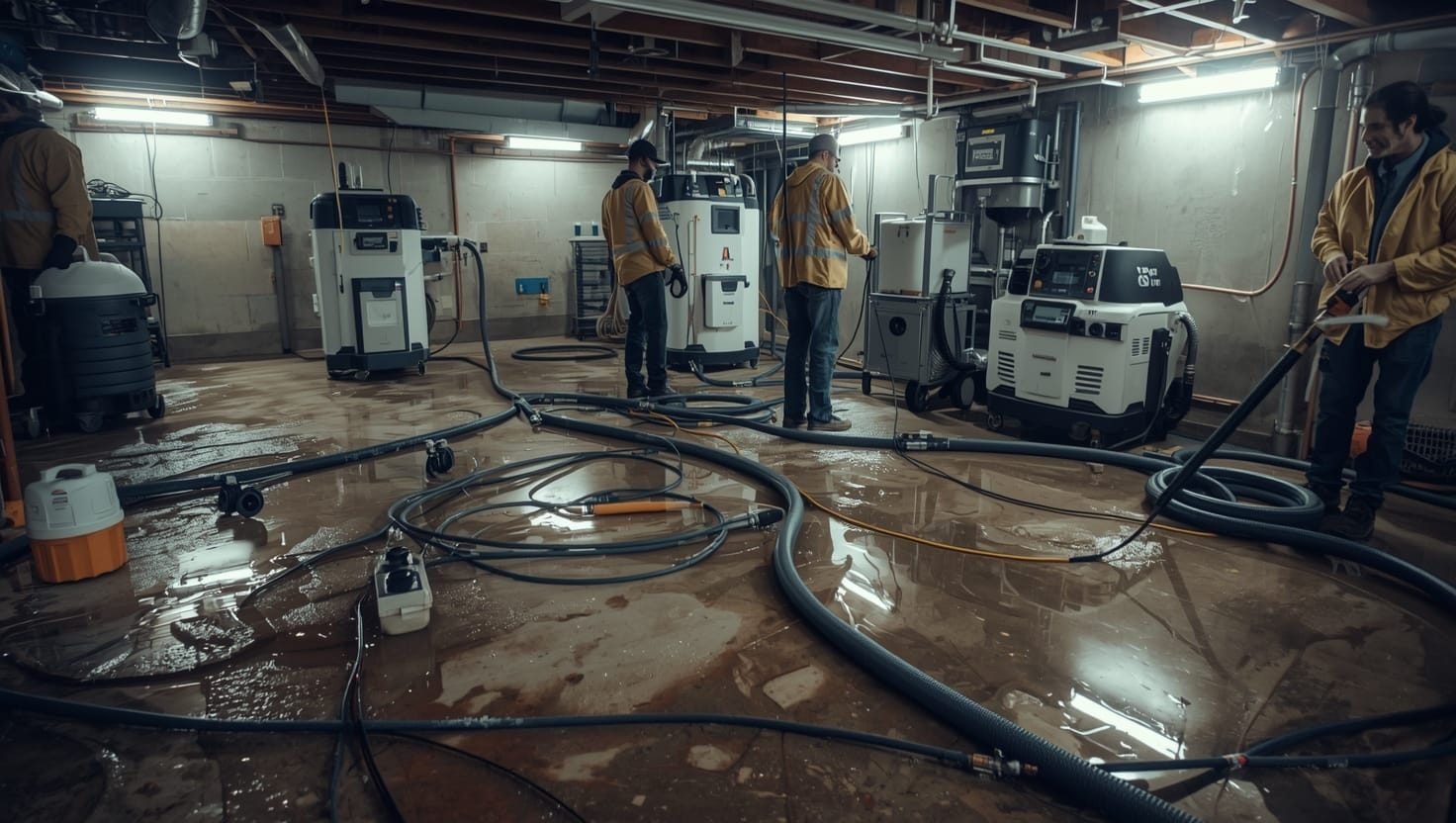
This is where the heavy equipment comes in.
Submersible pumps pull water out of your basement faster than you can imagine.
For a typical basement, this takes a couple of hours—but the team doesn’t just pump and leave.
They’re checking for water trapped in walls, under flooring, and in crawl spaces.
One missed pocket of water can turn into a mold colony weeks later.
Moisture assessment (day 1).
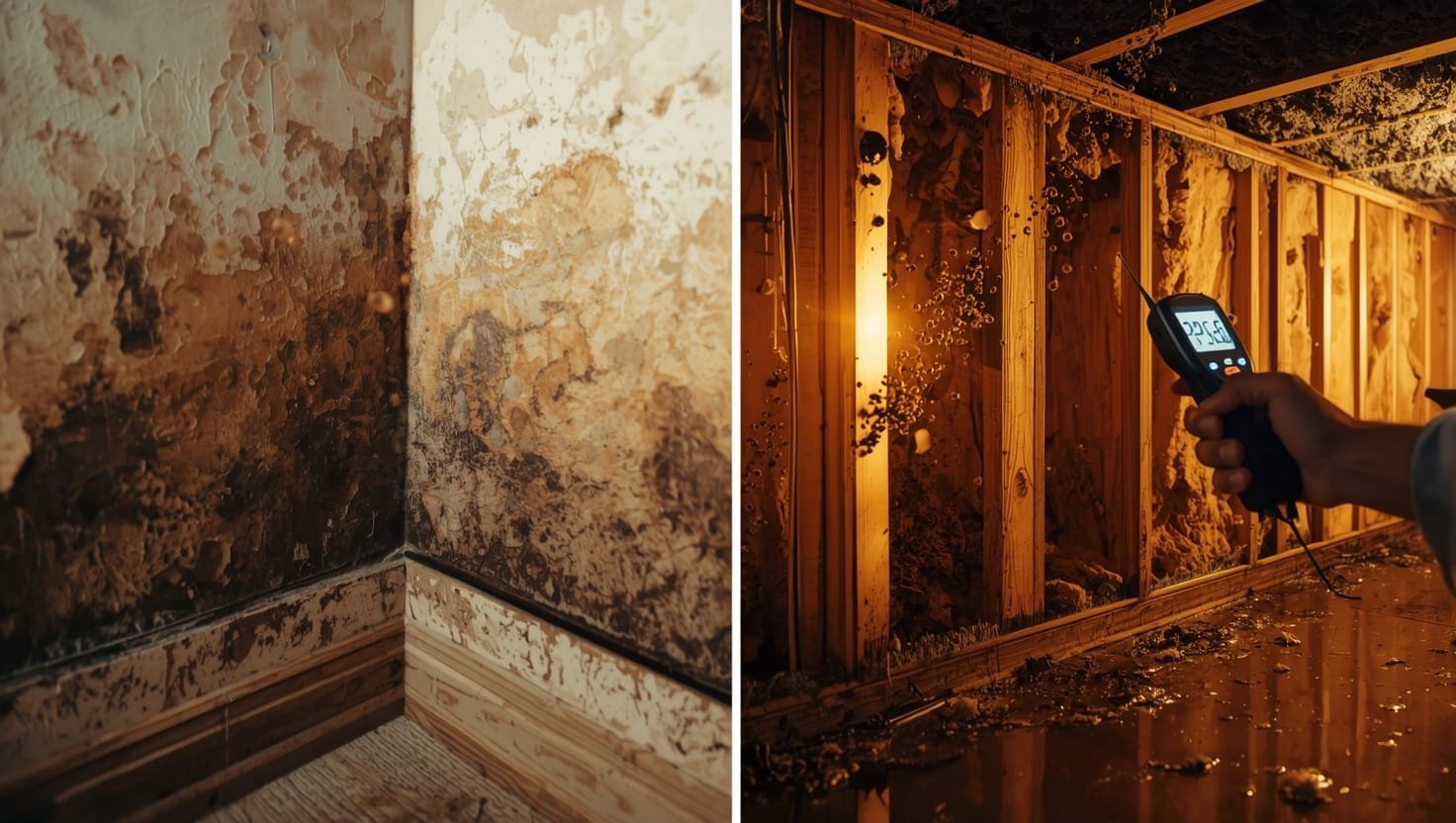
Pros use moisture meters and thermal imaging to find water hiding in places you can’t see.
Drywall can look dry on the surface but stay saturated behind the wall.
Concrete can trap moisture deep inside.
This step separates a real restoration from a half-baked cleanup.
Professional water damage inspection catches problems before they become disasters.
Drying (days 2–7).
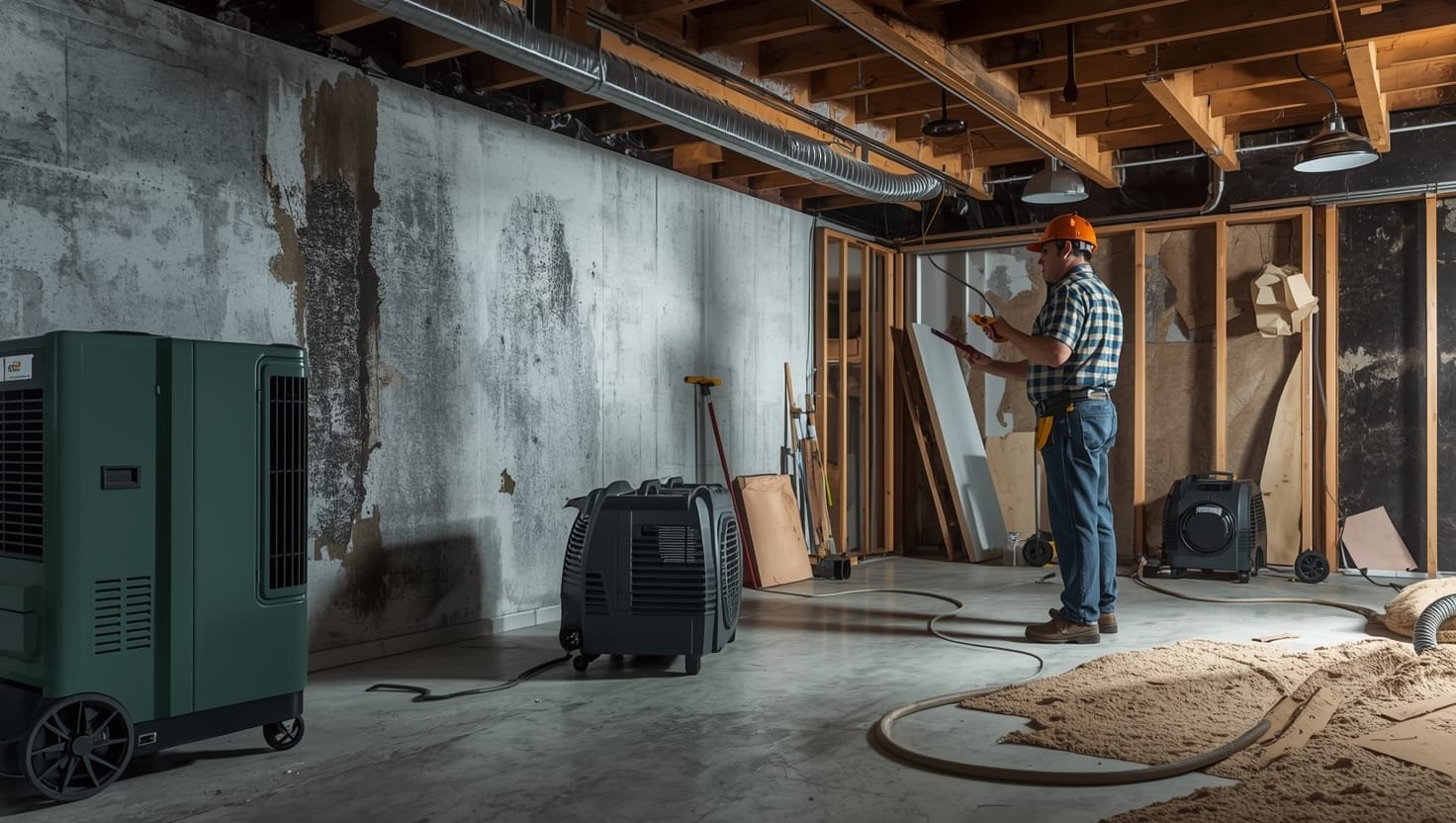
Industrial dehumidifiers and air movers run constantly to pull moisture out of every surface.
This isn’t like leaving your windows open—it’s controlled, strategic drying that targets specific problem areas.
Your basement might look dry after 24 hours, but pros know it needs to stay dry for days to prevent mold.
Removal of damaged materials (ongoing).
Drywall that’s absorbed water beyond the first inch usually has to go.
Carpet padding is almost always replaced.
Insulation that’s gotten wet loses its R-value and becomes a mold nursery.
This step is painful because it’s visible—but it’s non-negotiable.
Mold prevention and treatment (day 1 onwards).
While drying is happening, pros treat surfaces with antimicrobial solutions to stop mold before it starts.
Mold remediation is way more expensive than prevention, so this step saves you real money.
Cleanup and restoration (days 7–14).
Once everything’s dry and safe, the real rebuild starts.
New drywall, new flooring, fresh insulation, paint—your basement goes from disaster zone back to usable space.
Bottom line: Real basement water restoration takes time, equipment, and expertise—cutting corners turns a $3,000 problem into a $15,000 problem.
Why DIY Doesn’t Work (And Why You Shouldn’t Try)
Here’s the truth: you can rent a wet vac and pump out the water yourself.
But that’s like removing a splinter with a chainsaw—you might get the splinter, but you’ve made everything else worse.
When you DIY, you miss the hidden moisture.
You don’t have thermal imaging or moisture meters.
You pump the water out, open the windows, and hope.
A week later, you start noticing a smell.
Two weeks later, black mold appears in the corner.
Three weeks later, you’re calling a pro anyway—but now the mold is established, the damage is worse, and your restoration costs have tripled.
There’s also the safety issue.
Floodwater isn’t clean water.
It carries sewage, chemicals, bacteria, and contaminants you can’t see.
If your basement flooded from a backed-up sewer or a contaminated source, you’re exposing yourself to serious health risks by wading in and cleaning it yourself.
Emergency water damage restoration includes proper containment and safety protocols that protect your family.
And then there’s insurance.
Most homeowners’ policies require that you document the damage and hire licensed professionals for the restoration to be covered.
If you DIY and something goes wrong—or if mold develops later—your claim gets denied.
One Rochester homeowner tried to save money by drying his basement himself after a sump pump failure.
He rented a dehumidifier, opened the windows, and thought he was good.
Six weeks later, mold was growing behind the walls, and the insurance company wouldn’t cover the remediation because he’d skipped the professional assessment and treatment.
His final bill: $12,000 instead of the $3,500 it would’ve cost if he’d called a pro on day one.
Bottom line: Basement water restoration requires pro-grade equipment, expertise, and documentation—DIY saves money upfront but costs you everything later.
How Long Does Basement Water Restoration Actually Take?
This depends on three things: how much water, how much damage, and how fast you call.
Small seepage (a few gallons): 3–5 days.
You’ve caught it early, damage is minimal, and drying happens quickly.
Moderate flooding (50–200 gallons): 7–14 days.
Water extraction takes a day, drying takes 5–7 days, and material replacement adds another week.
Major flooding (500+ gallons): 2–4 weeks or longer.
Structural damage, extensive mold prevention, possible wall removal, and full rebuild—this is the long game.
The timeline also depends on whether you act fast.
If you call within the first 24 hours, drying and restoration can start immediately.
If you wait a week, mold’s already growing, and now the team has to stop and remediate first.
That adds days—sometimes weeks—to your timeline.
Bottom line: Fast action cuts your restoration time in half and saves thousands in hidden damage costs.
What Happens If You Ignore Basement Water Damage
Ignoring a wet basement doesn’t make it go away.
It makes it exponentially worse.
Mold takes over.
Within 48 hours, spores are colonizing wet surfaces.
Within a week, you’ve got visible growth.
Within a month, you’re breathing mold spores, your family’s getting respiratory issues, and your home’s resale value just dropped 20%.
Structural damage accelerates.
Wood rots.
Concrete erodes.
Steel reinforcement corrodes.
A basement that was salvageable on day two becomes a structural liability by day thirty.
Your foundation gets weaker.
Prolonged moisture weakens the foundation’s structural integrity.
Cracks expand.
Settling becomes worse.
You’re not just dealing with a wet basement anymore—you’re dealing with a foundation that’s literally deteriorating.
Your home’s value tanks.
Buyers see water stains, smell mold, and walk away.
Even if you eventually fix it, the history of water damage stays on your property record.
You’ll lose $10,000 to $50,000 in resale value depending on the severity.
Insurance claims get denied.
If you wait too long and mold develops, your insurance company will argue you had time to mitigate the damage and didn’t.
They won’t pay for restoration or remediation.
You’re on the hook for everything.
Bottom line: Every day you wait, your basement water restoration becomes more expensive and more complicated.
The Cost of Basement Water Restoration: What You’ll Actually Pay
This is the question everyone asks, and the answer is: it depends on what you’ve got going on.
Minor seepage and drying: $800–$2,500.
You caught it early, damage is surface-level, and restoration is straightforward.
Moderate water damage with some material replacement: $3,000–$8,000.
You need water extraction, drying, some drywall replacement, and mold prevention.
Major flooding with structural damage: $10,000–$50,000+.
You’re looking at extensive water extraction, wall removal, mold remediation, foundation repair, and full basement rebuild.
The variables that drive cost up?
How much water, how long it sat, whether mold’s already growing, what materials need replacement, and whether there’s structural damage.
Here’s what most people don’t realize: the cost to repair water damage skyrockets if you wait.
A $2,000 restoration on day one becomes a $10,000 restoration on day seven because mold’s now involved.
That’s not just more expensive—it’s also a health hazard.
Most homeowners’ insurance policies cover water damage from sudden, accidental causes (burst pipes, storms, appliance failure).
They typically don’t cover damage from neglect, poor maintenance, or sump pump failure (though some policies offer sump pump coverage as an add-on).
Mold remediation is almost never covered unless it resulted from a covered water event that you addressed immediately.
Bottom line: your insurance covers the water damage, but only if you act fast and document everything.
Bottom line: Basement water restoration costs $800 to $50,000+ depending on severity—but waiting always makes it more expensive.
What You Need to Do Right Now (The First 24 Hours)
If your basement is wet right now, here’s your action plan.
Stop the water source if you can.
If it’s a burst pipe, shut off your water main.
If it’s rain coming in, move belongings away from the wet area.
If it’s a sump pump failure, you can’t stop groundwater, so skip this and move to the next step.
Get people and pets out of the wet area.
Contaminated floodwater carries bacteria and chemicals.
Don’t let anyone wade through it without protection.
Document everything with photos and video.
Take pictures of the water, the damage, your belongings—everything.
This is for your insurance claim.
Timestamp your photos (your phone does this automatically).
Call your insurance company.
Report the damage immediately.
Don’t wait to see how bad it is.
Your insurer needs to know right away.
Call a professional restoration company.
This is the critical step.
Don’t try to handle this yourself.
A pro will extract the water, assess hidden damage, and start drying before mold shows up.
In Rochester, NY, contact JetDry for 24/7 emergency response.
Walt’s team responds fast because they know that every hour matters.
Don’t throw away damaged items yet.
Your insurance adjuster needs to see what was damaged to process your claim.
Take photos, but keep the items (if safe to do so) until the adjuster has looked at them.
Bottom line: First 24 hours: stop the source, document damage, call your insurer and a pro—order matters.
Your Basement Water Restoration Isn’t Over When the Water’s Gone—Here’s What Comes Next
The water’s pumped out.
The equipment’s running.
You’re thinking the hard part’s done.
Wrong.
This is actually where most homeowners mess up—they think restoration ends when drying starts, but that’s like thinking a car’s fixed once the dent’s popped out.
Real basement water restoration has layers.
And if you skip or rush any of them, you’re setting yourself up for problems that’ll haunt you for years.
Walt Latuik and his crew at JetDry in Rochester, NY have seen homeowners cut corners on the backend of restoration and regret it hard.
They’ve watched mold creep back in months later.
They’ve seen structural damage spread because somebody didn’t handle the moisture right.
The difference between a real fix and a band-aid comes down to what happens after the initial cleanup.
The Hidden Phase Nobody Talks About: Post-Extraction Monitoring
After the pumps stop running and the water’s out, your basement isn’t actually dry yet.
Not even close.
Water’s trapped in concrete, drywall, wood—places you can’t see.
Pros call this “bound moisture,” and it’s sneaky because it looks like you’re good, but you’re not.
This is where professional water damage inspection earns its keep.
Real restoration teams don’t just run dehumidifiers and hope.
They monitor moisture levels daily using meters that check inside walls, under flooring, and in crawl spaces.
One Rochester homeowner had his basement pumped and dried by a handyman crew—looked good after a week.
By week three, moisture was still trapped behind the walls, and mold started growing where nobody could see it.
By the time he called JetDry for a second opinion, the remediation cost him $6,000 extra.
The monitoring phase usually runs 5–7 days for moderate flooding.
The team checks specific spots—problem areas where water lingered longest.
If moisture levels aren’t dropping at the expected rate, they adjust equipment placement or add more dehumidifiers.
It’s not glamorous, but it’s the difference between a solved problem and a future disaster.
Bottom line: Drying takes longer than you think—monitor moisture daily or risk hidden mold growth.
Material Removal: The Painful but Non-Negotiable Step
At some point during restoration, you’re going to hear words you don’t want to hear: “That drywall has to come out.”
Or “The carpet padding’s gone.”
Or “Those wooden beams are compromised.”
This is the part that hurts your wallet and your pride.
You’re watching someone rip out parts of your basement—parts that looked fine on the surface.
But here’s the thing: once drywall absorbs water past the first half-inch, it’s structurally compromised.
The paper facing breaks down.
The gypsum core becomes a breeding ground for mold.
It looks okay on day five, but by day thirty, you’ve got a mold colony growing behind what looks like a normal wall.
Carpet padding is almost always a total loss.
It absorbs water like a sponge and never fully dries from the bottom up.
Leaving it in place is basically saying “I want mold in my basement.”
Insulation that’s gotten wet loses its R-value by 30–50% and becomes a perfect environment for mold spores to colonize.
The material removal phase usually takes 1–3 days depending on how much damage there is.
It’s messy, it’s loud, and it sucks to watch.
But here’s what makes it worth it: you’re preventing $15,000 in mold remediation costs by spending $2,000 on removal now.
One homeowner in Rochester tried to save money by keeping drywall that had absorbed water “just to the knee level.”
He figured it wouldn’t spread.
Six months later, mold had traveled up the walls, across the ceiling, and into the floor joists above.
Removal and remediation cost him $18,000.
The original drywall removal would’ve cost him $1,500.
Bottom line: Damaged materials must go—keeping them costs you way more down the road.
Antimicrobial Treatment: Your Mold Prevention Insurance
While drying’s happening, professionals are treating every surface with antimicrobial solutions.
This isn’t a magic spray that kills all mold forever—it’s more like a training bra for your basement’s immune system.
It stops mold spores from colonizing while the space dries out.
The treatment goes on concrete, wood, any porous surface that’s been exposed to water.
It’s applied strategically—not everywhere, just where mold’s most likely to start growing.
This step is critical because mold doesn’t wait for you to be ready.
It starts growing within 24–48 hours of water exposure, and if you’re not treating surfaces during the drying phase, you’re basically rolling dice.
Here’s what’s wild: most homeowners don’t realize antimicrobial treatment and mold remediation are completely different things.
Prevention during restoration costs maybe $500–$1,000.
Actual mold remediation after the fact costs $3,000–$10,000.
That’s not a coincidence—that’s math.
Bottom line: Antimicrobial treatment during drying prevents mold before it starts—skip it and pay triple later.
The Rebuild Phase: When Your Basement Comes Back
Once everything’s dry and safe, the rebuild starts.
New drywall.
New flooring.
Fresh insulation.
Paint.
This is where your basement goes from disaster zone back to something you’d actually use.
The rebuild phase is the one people see and understand.
It’s visible, it’s straightforward, and it’s the light at the end of the tunnel.
But here’s what matters: the quality of the rebuild depends entirely on the quality of the drying and material removal that came before it.
If you rushed the drying or didn’t remove all the damaged materials, your new drywall and flooring are going on top of a foundation that’s still compromised.
A solid rebuild takes 7–14 days for moderate damage.
The team’s not just slapping up new drywall—they’re making sure everything’s properly ventilated, insulated, and sealed.
They’re checking that any pipes or electrical work that got wet is functioning correctly.
They’re making sure the new materials aren’t going to trap moisture against old, damp surfaces.
Bottom line: The rebuild only works if the drying and removal phases were done right—no shortcuts.
Post-Restoration Verification: Making Sure It Actually Worked
Here’s something most restoration companies don’t do but should: they come back after the rebuild and verify that moisture levels are actually normal.
Not “looks dry.”
Not “smells okay.”
Actual, measured moisture readings that prove the space is safe.
This verification phase usually happens 10–14 days after the rebuild is complete.
The team runs moisture meters on new materials, checks inside walls one more time, and confirms that humidity levels in the basement are back to pre-flood conditions.
If they’re not, they adjust HVAC settings or add ventilation until they are.
This step is what separates a professional restoration from a contractor who just wants the job done.
It’s your proof—in writing, with measurements—that the restoration actually worked.
It’s also what your insurance company wants to see before they close out your claim.
Bottom line: Verification with moisture meters proves the restoration actually worked—get it in writing.
Common Restoration Mistakes That Cost You Thousands
Rushing the drying phase.
A homeowner dries their basement for three days, sees no visible moisture, and thinks they’re done.
Hidden moisture’s still there.
By week two, mold’s growing behind the walls.
Real drying takes 5–7 days minimum for moderate flooding.
There’s no shortcut.
Keeping damaged materials “just to be safe.”
“Maybe it’ll dry out.”
It won’t.
Wet drywall, carpet padding, and insulation don’t bounce back.
Once they’ve absorbed water, they’re compromised.
Keeping them is just delaying the problem.
Not treating surfaces with antimicrobial solution.
The budget’s tight, so they skip the treatment.
Mold shows up two weeks later.
Now they’re paying for remediation on top of everything else.
Prevention costs a fraction of remediation.
Inadequate ventilation during drying.
Dehumidifiers pull moisture out of the air, but if you don’t have air movement, moisture just hangs around.
Real drying requires both dehumidifiers and air movers working together.
One without the other means you’re only halfway there.
Not monitoring moisture levels daily.
You can’t see bound moisture.
You need a meter to know if it’s actually dropping.
Without daily monitoring, you’re just guessing—and guesses cost you money.
Bottom line: Most restoration fails happen because homeowners rush, cut corners, or skip the invisible phases.
How Long Should the Whole Process Actually Take?
If you want a real answer instead of a guess, here’s the breakdown:
Days 1–2: Water extraction and initial assessment.
Pumps run, moisture meters come out, the damage gets documented.
Days 2–7: Active drying phase.
Dehumidifiers and air movers run 24/7.
Daily moisture monitoring happens.
Antimicrobial treatment gets applied.
Days 7–10: Material removal.
Damaged drywall, carpet, insulation come out.
The space gets cleaned and prepped for rebuild.
Days 10–17: Rebuild phase.
New drywall, flooring, insulation, paint.
Your basement starts looking like a basement again.
Days 17–21: Final verification.
Moisture meters confirm everything’s actually dry.
HVAC gets adjusted if needed.
You get your signed-off completion report.
Total timeline for moderate flooding: 3 weeks.
Not 5 days.
Not 10 days.
Three weeks.
If someone’s telling you they can restore your flooded basement in a week, they’re either lying or cutting corners.
And cutting corners in basement restoration is how you end up spending $25,000 on mold remediation a year later.
Bottom line: Real restoration takes 3 weeks minimum—anything faster means something’s being skipped.
What to Expect From a Professional Restoration Company vs. Everyone Else
A contractor with a wet vac will pump out your water and charge you $500.
A professional restoration company will do that plus extract water from walls, monitor moisture for a week, treat surfaces with antimicrobial solution, remove damaged materials, rebuild, and verify the work—then give you a report proving it’s done right.
The difference in price?
Maybe $2,000–$4,000.
The difference in outcome?
Everything.
Real restoration companies have equipment that homeowners don’t have access to.
Moisture meters that measure water deep inside walls.
Thermal imaging cameras that show temperature differences that indicate trapped moisture.
Industrial dehumidifiers that pull 200+ pints of water a day.
Air movers that create proper air circulation.
Antimicrobial solutions rated for flood restoration.
They also have the knowledge to know what to do with all that equipment.
They know where water hides.
They know how long different materials take to dry.
They know when a space is actually ready for rebuild versus when it just looks ready.
One more thing: they have insurance and licensing.
If something goes wrong during restoration, they’re covered.
If you hire your cousin with a wet vac and something gets damaged, you’re on the hook.
Bottom line: Professional restoration costs more upfront but prevents $10,000+ in future problems.
The Role of Your Insurance Company in the Restoration Process
Your insurance company wants to know every detail of the restoration.
Not because they’re nosy—because they’re paying for it, and they want to make sure it’s done right.
A good restoration company will communicate with your insurance adjuster throughout the process.
They’ll send photos of the damage, documentation of what was removed, progress updates, and final verification reports.
This isn’t busywork—it’s how your claim gets paid and how you’re protected if something goes wrong later.
If your basement floods again in two years and it turns out the original restoration was inadequate, your insurance company will look at the documentation.
If the work was done professionally and verified, they’ll cover the new damage.
If it was a DIY half-measure, they might deny your claim and say you should’ve done it right the first time.
That’s why hiring a professional isn’t just about fixing your basement now—it’s about protecting yourself later.
Bottom line: Insurance covers professional restoration with proper documentation—DIY leaves you exposed.
Frequently Asked Questions About Basement Water Restoration
How do I know if my basement is actually dry after restoration?
You don’t—not without a moisture meter.
Visual inspection and smell aren’t reliable.
Professional restoration companies use calibrated meters to measure moisture content in walls, flooring, and concrete.
Readings should be back to pre-flood levels (typically 10–15% moisture content) before the job’s considered complete.
Can I move back into my basement while it’s still drying?
No.
Active drying equipment needs to run continuously, and the space needs to be clear for proper air circulation.
Plus, you’ll be exposed to whatever contaminants were in the floodwater.
Wait until the restoration’s complete and verified before using the space.
What if mold shows up after restoration is done?
If the restoration was done professionally and verified, your insurance should cover remediation as part of the original claim.
If mold appears and the restoration company didn’t monitor or treat properly, you might have a claim against them.
This is why documentation matters—it protects you either way.
Do I need to replace everything that got wet?
Not everything, but most things.
Drywall, carpet, padding, and insulation almost always need replacement.
Items like furniture or belongings depend on what they are and how long they were wet.
Your insurance adjuster will make the call on what’s salvageable and what’s not.
How much will basement water restoration actually cost me?
For moderate flooding, you’re looking at $3,000–$8,000 if your insurance covers it.
Out-of-pocket costs depend on your deductible (usually $500–$2,500).
If you wait and mold develops, costs jump to $10,000–$25,000.
Acting fast keeps costs down.
Should I use a restoration company or just hire a contractor to rebuild?
Use a restoration company.
They handle extraction, drying, monitoring, and remediation.
Contractors rebuild after the restoration’s done.
Skipping the restoration company means you’re guessing about whether the space is actually dry—and that guess will cost you.
The Bottom Line on Basement Water Restoration
Basement water restoration isn’t a weekend project.
It’s not something you can rush.
It’s not something you can shortcut without consequences.
The water’s the obvious problem.
The real work is making sure the space is actually dry, treated, and safe before you put it back together.
That takes time, equipment, expertise, and daily monitoring.
Skip any of those steps and you’re gambling with your basement’s future—and your wallet.
Walt Latuik and the team at JetDry have been handling basement water restoration in Rochester, NY for over 20 years.
They know the difference between a quick fix and a real solution.
They know that waiting costs money.
They know that cutting corners costs even more.
If your basement’s wet right now, don’t guess.
Don’t DIY.
Don’t wait.
Contact JetDry for 24/7 emergency response.
Walt’s team will extract the water, monitor the drying, treat the surfaces, remove the damaged materials, rebuild it right, and verify the work.
They’ll handle the insurance company.
They’ll make sure your basement’s actually restored—not just temporarily fixed.
Because a real basement water restoration means you never have to deal with this again.
Your Basement Water Restoration Isn’t Over When the Drying Stops—The Real Threat Comes After
The dehumidifiers shut down.
The air movers stop running.
Your basement looks dry.
You think you’re done.
Then, three weeks later, you smell it—that musty odor creeping back in.
Or you notice a dark spot on the wall that wasn’t there before.
Or your allergies start acting up for no reason.
This is the part nobody warns you about with basement water restoration.
The visible damage gets fixed.
The equipment goes away.
But the invisible damage?
That’s still lurking, waiting to become a much bigger (and way more expensive) problem.
The Post-Restoration Phase That Decides Everything
Most homeowners think restoration ends when the contractor leaves.
It doesn’t.
The real work—the stuff that determines whether your basement stays healthy or becomes a mold factory—happens in the weeks after the visible cleanup.
Your basement absorbed a ton of water.
Even though it looks dry, moisture is still hiding in places you can’t see.
It’s in the concrete.
It’s trapped between wall cavities.
It’s in the wood framing.
And if that moisture doesn’t fully evaporate, mold’s going to colonize it.
One Rochester homeowner called JetDry after his basement dried out following a sump pump failure.
He figured he was good—the space looked fine, smelled okay.
Six weeks later, his teenage daughter started getting headaches and respiratory issues.
Walt’s team came back for a follow-up inspection and found black mold growing behind the newly installed drywall.
The post-restoration monitoring had been skipped, and now the family was dealing with a health hazard that cost an extra $8,000 to remediate.
That’s what happens when you skip the phase that comes after the drying stops.
Bottom line: Drying completion and actual safety are two different things—one ends fast, the other takes weeks.
Humidity Control: The Silent Killer That Nobody Expects
Even after your basement looks dry, humidity levels can stay elevated for weeks.
This is because concrete and wood release moisture slowly over time—it’s called “drying lag.”
Your basement might feel comfortable, but a moisture meter will tell you the humidity is still 60–70% when it should be 40–50%.
High humidity creates the perfect environment for mold.
It doesn’t matter if there’s standing water or not.
If the air is saturated with moisture, mold spores will find a place to grow.
And they’ll do it silently, hidden behind walls and under flooring.
Real basement water restoration companies don’t just pack up their equipment and leave after the drying phase.
They leave dehumidifiers running in strategic locations for another week or two.
They monitor humidity levels daily.
They adjust ventilation settings to pull moisture out of the air continuously.
Some teams even install temporary HVAC modifications—like running exhaust fans or opening supply ducts—to keep air circulating and humidity dropping.
It’s not sexy work, and it doesn’t show up in before-and-after photos.
But it’s what separates a real restoration from a half-finished one.
If your restoration company doesn’t mention humidity control in the post-drying phase, ask them about it.
If they can’t explain how they’re managing it, that’s a red flag.
Bottom line: Humidity control after drying stops prevents mold better than any treatment ever could.
The Inspection That Proves You’re Actually Safe
Before you move furniture back in or call your basement “restored,” there should be one final inspection.
Not a visual walk-through—an actual inspection with moisture meters, thermal imaging, and documentation.
This inspection answers the question: is my basement actually dry, or does it just look dry?
A professional inspection checks moisture levels in:
Concrete floors and walls.
Behind newly installed drywall.
Inside wall cavities where water could have traveled.
Under flooring materials.
In any crawl spaces adjacent to the basement.
The team uses calibrated moisture meters to get actual readings.
They compare those readings to pre-flood baseline levels.
If readings are back to normal (typically 10–15% moisture content), the restoration’s legit.
If they’re still elevated, more drying time is needed—or there’s a hidden water source still leaking.
One Rochester family had their basement restored after a heavy rain flooded the space.
The contractor said it was done after five days of drying.
Walt’s team did a post-restoration inspection and found moisture still trapped in the concrete at 35% MC (moisture content).
That meant mold was going to start growing within days.
They ran additional equipment for another week, re-tested, and only then cleared the space as safe.
Without that inspection, that family would’ve had a mold problem within a month.
Bottom line: Post-restoration moisture testing proves safety—visuals and smell don’t cut it.
Ventilation: Creating Airflow Where Water Damage Happened
Stagnant air is mold’s best friend.
When your basement is drying out, air needs to move.
It needs to circulate constantly, pulling moisture from wet surfaces and carrying it out of the space.
But here’s the thing—after the industrial equipment gets packed up, that airflow stops.
And if your basement wasn’t properly ventilated to begin with, moisture starts settling again.
This is why some restoration teams recommend leaving a window cracked or installing a permanent exhaust fan in the basement after restoration.
The goal is to keep air moving and humidity low, even after the emergency’s over.
Some basements need upgraded HVAC ducting to handle moisture removal long-term.
Others just need a simple exhaust fan running 8–12 hours a day to keep humidity down.
The specifics depend on your basement’s size, existing ventilation, and whether there’s an ongoing moisture source (like groundwater seepage).
If your post-restoration plan doesn’t include ventilation strategy, that’s something to discuss.
Ask your restoration company: “How do we keep this basement dry long-term?”
A good answer involves air movement.
A bad answer is “it should be fine.”
Bottom line: Post-restoration ventilation keeps humidity down and prevents mold from coming back.
The Moisture Barrier Question: Do You Need One?
After water restoration, some contractors recommend installing a vapor barrier on the basement floor or walls.
This is where opinions get split.
A vapor barrier can help prevent groundwater from wicking up through concrete and re-saturating your floor.
But it can also trap moisture underneath if not installed correctly, creating a mold problem instead of preventing one.
The real answer: it depends on why your basement flooded.
If it was from a burst pipe or appliance leak, you probably don’t need a vapor barrier—the water source is gone.
If it was from groundwater seepage or poor grading, a vapor barrier might help prevent future problems.
This is one of those decisions that should be made after a professional water damage inspection identifies the root cause of the flooding.
If your restoration company recommends a vapor barrier without explaining why, ask for details.
If they can’t justify it based on your specific situation, skip it.
Bottom line: Vapor barriers help some basements, hurt others—install only if the cause justifies it.
What Happens If You Skip Post-Restoration Monitoring
You’re cutting your own throat if you skip this phase.
Here’s what typically happens:
Week 1 after restoration: Basement looks and smells fine.
You think you’re good.
You’re not.
Week 2–3: Humidity is still elevated, but you don’t have a meter so you don’t know.
Mold spores are starting to colonize damp surfaces.
Still invisible.
Week 4: First signs show up—a musty smell, maybe a small dark spot on a wall or corner.
You’re thinking “that’s weird, we just fixed this.”
Week 6–8: Mold’s spreading.
Your family’s getting allergies or respiratory issues.
You call a mold company and get hit with a $5,000–$15,000 remediation bill.
Meanwhile, if you’d done post-restoration monitoring, you would’ve caught the elevated humidity in week 1, run equipment longer, and prevented the mold entirely.
The cost difference: $500 in extra drying time versus $10,000 in mold remediation.
That’s not a close call.
Bottom line: Skipping post-restoration monitoring costs you thousands in mold remediation later.
The Documentation Phase: Your Insurance and Legal Protection
After everything’s done—drying, removal, rebuild, inspection—you need documentation.
Written proof that the restoration was completed correctly.
This includes:
Daily moisture readings throughout the drying phase.
Photos of the damage, removal, and rebuild stages.
Final inspection report with moisture measurements.
Signed verification that the space is safe for occupancy.
Any warranty or guarantee the restoration company offers.
This documentation matters because:
Your insurance company needs it to close out your claim.
If mold develops later and you need to file a claim, you’ll need proof that the original restoration was done properly.
If you ever sell your home, disclosure of water damage is required—but you can show the documentation of professional restoration to mitigate buyer concerns.
One Rochester homeowner’s basement flooded, got “restored” by a contractor who didn’t document anything.
Two years later, mold showed up.
His insurance company asked for proof that the original restoration was adequate.
With no documentation, the claim was denied.
He ended up paying $12,000 out of pocket for mold remediation that his insurance would’ve covered if he had proper paperwork.
Always ask for complete documentation before you sign off on a restoration project.
If the company can’t provide it, that’s a bad sign.
Bottom line: Documentation proves your restoration was done right—get everything in writing.
How Long Should Post-Restoration Monitoring Actually Take?
This depends on the severity of the water damage and your basement’s conditions.
Light seepage or small water events: 5–7 days of post-restoration monitoring.
Moderate flooding: 10–14 days.
Major flooding with structural damage: 2–3 weeks of monitoring, sometimes longer.
During this time, your restoration company should:
Check moisture levels daily using calibrated meters.
Adjust equipment placement or add more dehumidifiers if readings aren’t dropping.
Monitor humidity levels and adjust ventilation accordingly.
Take photos documenting the drying progress.
Communicate with your insurance adjuster about the timeline.
The monitoring phase is done when moisture readings are back to baseline levels and humidity is consistently below 50%.
Not when it looks dry.
Not when it smells okay.
When the actual measurements say it’s safe.
Bottom line: Post-restoration monitoring takes 1–3 weeks depending on damage severity.
Common Post-Restoration Mistakes That Create New Problems
Moving furniture back too soon.
You want your basement back to normal, so you move the couch back in after a week.
But if moisture is still elevated, that furniture’s going to absorb moisture and potentially develop mold on the underside.
Wait for the final inspection before bringing things back.
Turning off ventilation to save energy.
The restoration company leaves a fan or dehumidifier running.
You think it’s wasting electricity, so you turn it off.
Humidity spikes, and mold starts growing again.
Leave the equipment running for the full post-restoration period.
Skipping the final moisture inspection.
The contractor says it’s done, so you assume it’s done.
But without actual moisture readings, you’re guessing.
Get the inspection done before you sign off.
Not addressing the root cause of the flooding.
Your sump pump failed, so you had it restored.
But if you don’t fix or replace the pump, you’re setting yourself up for the same problem next time it rains.
Post-restoration is the time to fix the underlying issue.
Assuming new materials mean new problems won’t happen.
You’ve got fresh drywall and flooring, so everything’s fine.
But if the underlying moisture problem isn’t solved, new materials will fail the same way old ones did.
The rebuild only works if the drying and root-cause fix were done right.
Bottom line: Post-restoration mistakes usually stem from rushing or assuming visuals mean safety.
Frequently Asked Questions About Post-Restoration Care
How long should I wait before using my basement after restoration?
Wait until the final moisture inspection is complete and approved.
For most moderate flooding, that’s 2–3 weeks after the initial water damage.
Don’t move furniture or occupy the space before then—you risk exposing yourself to mold or moisture issues.
What if I notice moisture or mold after restoration is supposedly done?
Call your restoration company immediately.
Most reputable companies offer a warranty on their work (usually 1–2 years).
If mold develops within that period and the restoration was done correctly, it’s typically covered.
Document everything with photos and get a follow-up inspection.
Should I run a dehumidifier in my basement permanently after water damage?
Not necessarily permanently, but definitely for the post-restoration period.
After that, it depends on your basement’s conditions.
If it stays dry naturally, you might not need one.
If humidity tends to be high or you’re in a wet climate, running a dehumidifier seasonally (spring/summer) is smart.
Can I do post-restoration monitoring myself?
You can buy a basic moisture meter, but professional-grade meters are more accurate.
More importantly, professionals know where to test and what readings mean.
A DIY approach will miss hidden moisture in walls and crawl spaces.
Pay for professional monitoring—it’s cheap insurance against mold.
What’s the difference between post-restoration monitoring and post-restoration maintenance?
Monitoring is what happens in the weeks immediately after restoration—checking moisture levels and humidity to ensure the work was done correctly.
Maintenance is what you do long-term—running exhaust fans, keeping gutters clean, maintaining your sump pump, etc.
Both matter, but monitoring comes first.
Get Your Post-Restoration Right the First Time
Basement water restoration doesn’t end when the pumps stop running.
The most critical phase—the one that determines whether your basement stays healthy or becomes a mold breeding ground—happens after the visible work is done.
Post-restoration monitoring, humidity control, ventilation, and final verification are what separate a real restoration from a band-aid fix.
Skip any of these steps and you’re rolling dice with your home’s health and your wallet.
Walt Latuik and his team at JetDry in Rochester, NY have been handling the complete restoration process—including the critical post-restoration phase—for over 20 years.
They know that the real work happens after the water’s gone.
They monitor daily, document everything, and don’t consider a job done until moisture readings prove it’s actually safe.
If your basement’s been flooded or is currently drying out, don’t assume it’s fine just because it looks okay.
Get a professional post-restoration inspection.
Get daily monitoring.
Get documentation proving the work was done right.
Contact JetDry now for post-restoration inspection and monitoring.
Walt’s team will make sure your basement restoration is actually complete—not just visible.